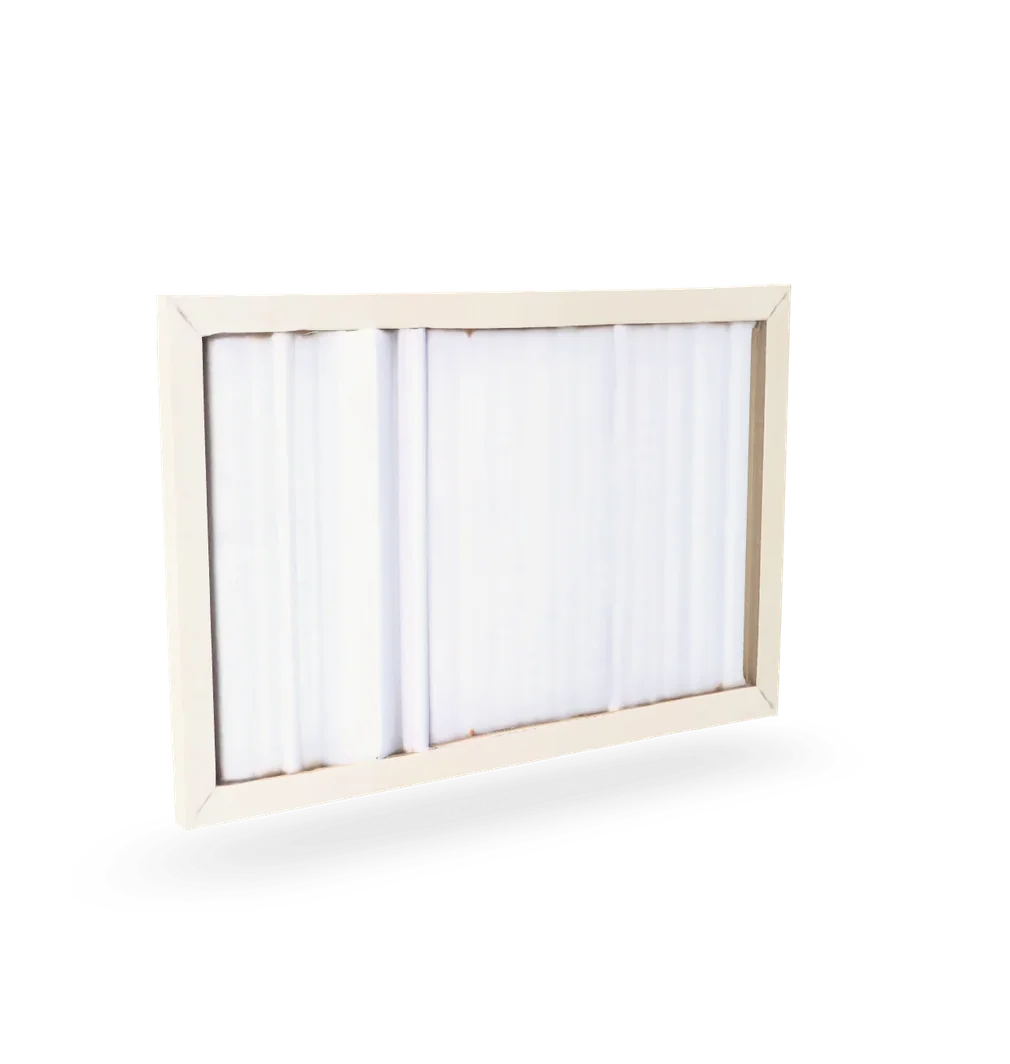
Furnace air filter: size, MERV and how often to change it
Good news: this is the cheapest, easiest fix on the whole furnace. Five minutes, no tools, and it heads off a lot of the other problems on this site.
- Difficulty
- Anyone can do it
- Time
- 5–15 min
- Typical part cost
- $5–$25Pro: $50–$200
- Tools
- 1See the list
No tools for most furnaces. The only things to get right are the size and which way the arrow points.
What it does
What the air filter does
Every bit of air your furnace heats is pulled in through the return ducts and passes through the filter first. The filter traps dust, lint and other particles so they do not coat the blower, the heat exchanger and your rooms.
As it does its job it fills up. The more it holds, the harder the blower has to pull to get air through it.
Why it fails
A filter does not break. It just gets full. A packed filter slows the airflow, so the furnace runs longer and uses more energy to heat the house.
Starve the furnace of air for long enough and it overheats. The high limit switch shuts the burners off to protect it, and you get a furnace that keeps shutting off early.
Pets, allergies, dusty rooms, remodeling and heavy use in winter all fill a filter faster.
Symptoms
Signs of a bad air filter
Packed with dust
Pull it out and look. A gray, matted filter packed with dust and debris is due. Check it once a month.
Weak airflow at the vents
A clogged filter slows the air moving through the system, so less warm air reaches the rooms.
Runs, then shuts off early
The furnace overheats from lack of air, the high limit trips and the burners cut out. The blower keeps running for a while to cool things down.
Full diagnosisHigher bills, longer run times
A dirty filter makes the furnace work harder and run longer to keep the house warm.
How to test it
Test the air filter before you buy
- Turn the furnace off at the thermostat or the service switch.
- Slide the filter out of its slot or from behind the return grille.
- Look at both sides. Then hold it up to a bright window or a flashlight.
High MERV filters block more light even when they are new, so judge those mostly by how dirty they look and how long they have been in.
- Good
- You can see light through the media and the surface is light colored. It is fine for now. Check again next month.
- Bad
- It is gray and matted with dust, or you can barely see light through it. Replace it.
Safety first
Before you touch anything
- 1
Turn the system off
Set the thermostat to off, or flip the furnace service switch, so the blower is not pulling air while the filter is out.
Tools you'll need
Grab these first
Tool and part links are affiliate links. We may earn a commission at no extra cost to you, and it never changes what we tell you to check first. How this works
- Tape measureMeasures the filter slot when the old filter has no readable size on it.Typically $6–$15Shop this tool
- Multi-bit screwdriverPhillips, flat, squareOptionalSome return grilles and filter doors are held by a screw or two.Typically $10–$25Shop this tool
- HeadlampOptionalHelps you read the size printed on the frame in a dark basement or closet.Typically $12–$30Shop this tool
- Dust maskN95OptionalA loaded filter sheds dust when you pull it out. Handy if you have allergies.Typically $10–$25Shop this tool
Step by step
How to replace the air filter
- 1
Turn the furnace off
Set the thermostat to off, or flip the service switch on or near the furnace to off. The blower should stop.
- 2
Find the filter
Most furnace filters sit in a slot on the return air side of the furnace, or in a tray or door on the blower compartment. Look for a narrow cover where the big return duct meets the cabinet.
No filter at the furnace? Check behind the return air grilles in your walls or ceiling. Some homes have a filter behind every return grille.
Tip. Found a thick filter in a cabinet of its own beside the furnace? That is a media filter. The steps are the same, but it is changed less often.
- 3
Note the size and the arrow
Before you pull it, look at the frame. Most filters have the size printed on the edge, like 16 x 25 x 1. The last number is the thickness. Write it down.
Also notice which way the printed airflow arrow points. It should point toward the furnace, in the direction the air travels.
- 4
Slide the old filter out
Open the filter door or grille and slide the filter straight out. Go slowly so the dust stays on the filter instead of falling into the duct.
If there is no size printed on it, measure the filter with a tape measure: width, height and thickness.
Tip. A bag held under the slot catches anything that falls.
- 5
Get the right replacement
Buy the size printed on the old filter. That number is the nominal size, rounded for shopping. The real filter measures a little smaller so it slides in, so a slightly smaller tape measure reading is normal.
Pick a MERV rating your furnace can handle. MERV 8 to 13 is the usual range for homes. A thin 1 in. filter slows the air more than a thick one of the same rating, so check your furnace manual before you go toward the top of that range.
Buy the part
Air filter
Opens AppliancePartsPros in a new tab. Where’s my model number?
What to look for
- The exact size printed on the old filter's frame, including the thickness: 1, 2, 4 or 5 in.
- A MERV rating your furnace can handle. MERV 8 to 13 is the usual range for homes. Check your furnace manual for the highest rating it allows.
- A pleated filter. Higher ratings catch finer particles, which helps with allergies.
- For a thick 4 or 5 in. media cabinet, a filter that fits that cabinet. A 1 in. filter will not seal in it.
Filters are sold by size, not by furnace brand, so any filter of the right size and a suitable MERV rating will fit. Buying a multi-pack makes the monthly check easy to keep up with.
- 6
Slide the new filter in, arrow toward the furnace
Find the airflow arrow on the new filter's frame. Point it toward the furnace, which is the way the air flows. On a ceiling grille that means pointing up into the ceiling.
Slide it all the way in so it sits flat with no gaps around the edges.
Careful. A filter put in backwards can restrict airflow. Check the arrow twice.
- 7
Close up and turn it back on
Close the filter door or the grille so the slot is sealed and all the air goes through the filter.
Set the thermostat back to heat. You should feel steady airflow at the vents once the blower starts.
Tip. Write today's date on the new filter's frame. Next month, you will know exactly how long it has been in.
Buy the part
Get the right replacement
Buy the part
Air filter
Opens AppliancePartsPros in a new tab. Where’s my model number?
What to look for
- The exact size printed on the old filter's frame, including the thickness: 1, 2, 4 or 5 in.
- A MERV rating your furnace can handle. MERV 8 to 13 is the usual range for homes. Check your furnace manual for the highest rating it allows.
- A pleated filter. Higher ratings catch finer particles, which helps with allergies.
- For a thick 4 or 5 in. media cabinet, a filter that fits that cabinet. A 1 in. filter will not seal in it.
Filters are sold by size, not by furnace brand, so any filter of the right size and a suitable MERV rating will fit. Buying a multi-pack makes the monthly check easy to keep up with.
Know your limits
When to call a pro
Stop and call a pro if
- The filter is clean but airflow is still weak. A dirty blower wheel, a failing blower motor or a duct problem may be the cause.
- The furnace still shuts off early with a clean filter and open vents. See the high limit switch guide, then call a pro.
- You want a higher MERV or a thicker media filter than your furnace was built for. A pro can check that the blower and ducts can handle it.
- You find no filter anywhere, or the filter slot has no cover and leaks air.
FAQ
Air filter questions
How often should I change my furnace filter?
Check it every month, and change it whenever it looks dirty. A 1 in. filter typically lasts 1 to 3 months. Thick 4 to 5 in. media filters often last 6 to 12 months, though some makers call for sooner. Check your filter's packaging or the media cabinet's manual.
Change it more often with pets, allergies, a dusty home or remodeling, or heavy winter use.
What MERV rating should I use?
MERV is a scale from 1 to 16 for how well a filter catches particles. Higher numbers catch smaller particles. MERV 8 to 13 is the usual range for home furnaces. For cleaner air, the EPA suggests MERV 13 or as high as your system's fan and filter slot can handle.
Higher ratings also slow the air more, and a thin 1 in. filter slows it more than a thick media filter of the same rating. A filter that is too restrictive can hurt comfort and raise your bills. Check your furnace manual, or ask a pro, before going above what it was designed for.
Why is my filter a different size than the label says?
The printed size is the nominal size, rounded for shopping. The actual filter is usually a little smaller so it slides into the slot. Buy the printed size, not your tape measure reading.
Which way does the furnace filter arrow go?
Toward the furnace. The arrow shows the direction the air flows, from the return duct into the blower. On a ceiling return grille, that means it points up.
Can a dirty filter make my furnace shut off?
Yes. Without enough air the furnace overheats, and the high limit switch shuts the burners off. Change the filter first whenever your furnace keeps stopping early. It is the cheapest fix there is.
Related
Keep going
- SymptomFurnace short cyclingThe furnace starts, runs briefly, shuts off, and starts again before the house warms up. A clogged filter is the most common cause. A dirty flame sensor is next.Open guide
- SymptomFurnace blowing cold airThe vents blow, but the air is cool or room temperature. Often the thermostat fan is set to On. Otherwise the burners are not lighting, or are shutting down early.Open guide
- Furnace partHigh limit switchThe high limit switch shuts the burners off if the furnace gets too hot. It trips most often because of poor airflow, so check the filter and the blower before you replace it.Open guide
- Furnace partBlower motor and wheelThe blower motor spins a squirrel-cage wheel that pushes warm air through your ducts. A dusty wheel chokes airflow, and a worn motor hums, squeals or stops. You can clean both, and replace a standard motor yourself.Open guide