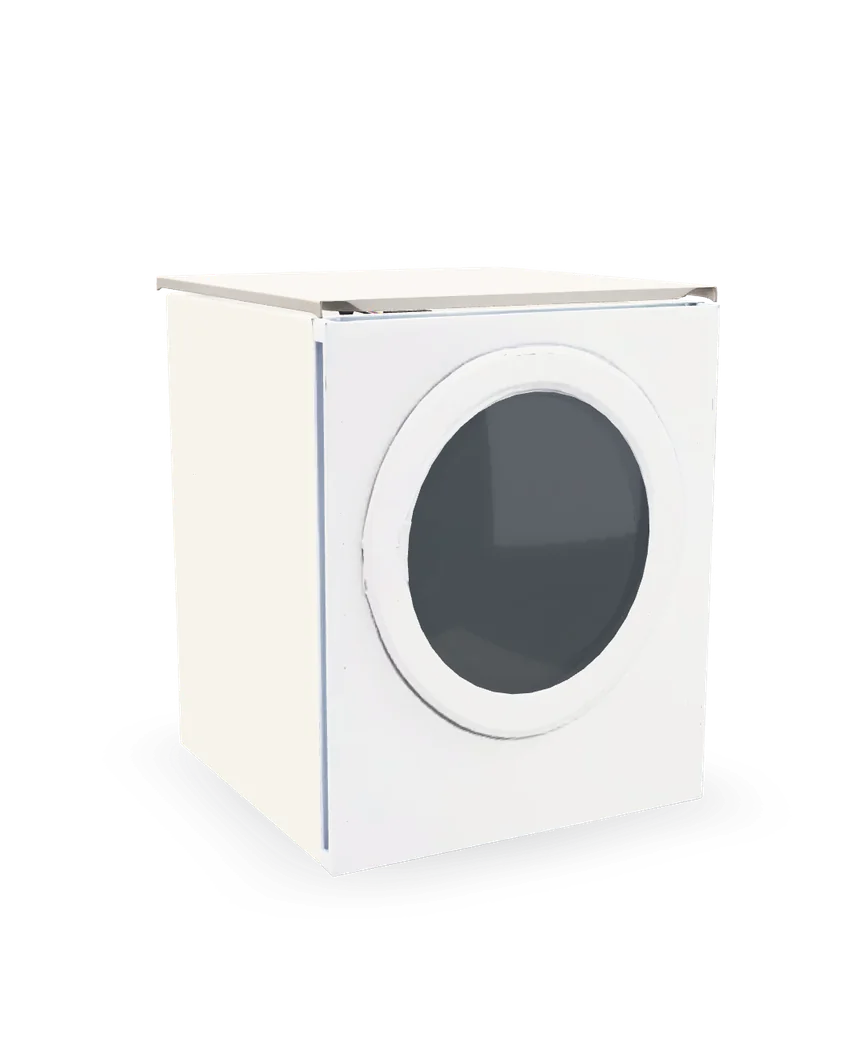
Clothes dryer (gas or electric)
Dryer repair, from the inside out
A dryer does three jobs: it turns a drum, heats air, and blows that air through your clothes and out a vent. Most breakdowns are one of those three stopping, and the symptom usually tells you which.
Gas and electric dryers are close cousins. They share the drum, belt, motor, blower, thermostats and thermal fuse. Only the heat source differs: an electric heating element, or a gas burner lit by a glowing igniter.
Spin this generic dryer, open it up, and tap any part to see what it does, how it fails, and how to swap it. If a repair involves the gas valve, burner or gas line, we will tell you plainly: that one is for a licensed pro.
Parts
Dryer parts that fail most
- Thermal fuseThe thermal fuse is a one-time safety fuse that blows when the dryer overheats. Gas and electric dryers both have one. A blown fuse is a warning about airflow, so clean the vent before you replace it.Most common30 min–1 hr$5–$60Fix it
- Drum beltThe drum belt wraps around the drum and the motor pulley and turns the drum. When it breaks, the drum stops tumbling. Gas and electric dryers both have one, and the swap is the same on both.30 min–2 hr$10–$70Fix it
- Heating elementElectric dryers only. The heating element is a coil of resistance wire that heats the air on its way into the drum. A broken coil means no heat. A quick ohm test confirms it.45 min–2 hr$30–$90Fix it
- Gas dryer igniterGas dryers only. The igniter is a small ceramic element that glows hot enough to light the gas. When it fails, the drum turns but the dryer never heats. You can test it with a meter and, on many dryers, swap it without touching any gas fittings.30 min–1 hr$15–$85Fix it
- Exhaust vent and ductThe exhaust duct carries hot, damp air and lint from the back of the dryer to a hood outside. When lint packs into it, drying slows and the dryer runs hot. Gas and electric dryers both need it cleaned about once a year.30 min–1.5 hr$15–$30Fix it
- Idler pulleyThe idler pulley is a small spring-loaded wheel that keeps the drum belt tight. When its bearing wears, it squeals. Gas and electric dryers both have one.30 min–1.5 hr$8–$30Fix it
- Drum support rollersDrum support rollers are small wheels the drum rides on. When they wear flat or their bearings dry out, the dryer thumps, rumbles or squeaks. Gas and electric dryers both have them.45 min–3 hr$15–$60Fix it
- Cycling thermostatThe cycling thermostat switches the heat on and off to hold the drying temperature. Gas and electric dryers both use one. When it fails, the dryer gets no heat or runs too hot.20–45 min$5–$60Fix it
- Gas valve coilsGas dryers only. The gas valve coils are small electric windings that open the dryer's gas valve. A classic sign of failing coils is an igniter that glows, then goes out, with no flame. Because they sit on the gas valve, testing and replacing them is pro work.Call a proPro: $115–$340Learn more
- Door switchGas and electric dryers both have one. The door switch tells the dryer the door is shut. If it fails, the dryer will not start, even with the door closed. It is cheap, easy to test, and usually comes out with a plug and a clip or one screw.20 min–1 hr$5–$35Fix it
- Gas dryer flame sensorGas dryers only. The flame sensor is a small heat-sensing switch on the side of the burner. It tells the gas valve when the igniter is hot enough. A bad one can stop the dryer heating, or make it heat for a few minutes and then go cold.20–45 min$10–$40Fix it
- High-limit thermostatThe high-limit thermostat cuts the heat if the dryer overheats. Gas and electric dryers both have one, at the heat source. If it fails open, the dryer tumbles with no heat.20–45 min$5–$35Fix it
- Lint screenThe lint screen catches fluff before it reaches the vent. A clogged or coated screen slows drying and makes the dryer run hot. Gas and electric dryers both have one, and cleaning it takes a minute.5–20 min$20–$100Fix it
- Drive motorThe drive motor turns the drum through the belt and, on many dryers, spins the blower fan too. It is one of the bigger dryer repairs. Gas and electric dryers both have one.1 hr–3 hr$60–$200Fix it
- Timer or control boardGas and electric dryers both have one. Older dryers use a mechanical timer with a dial. Newer ones use an electronic control board with buttons and a display. Either can fail, but they cost more than most dryer parts, so rule out the cheaper causes before you buy one.15 min–2 hr$50–$300Fix it
- Blower wheelThe blower wheel is the fan that pulls air through the drum and pushes it out the vent. A cracked, loose or lint-packed wheel means slow drying and odd noises. Gas and electric dryers both have one.45 min–2 hr$10–$60Fix it
- Burner assemblyGas dryers only. The burner assembly is the tube where gas mixes with air and burns, plus the small orifice that meters the gas. The igniter and flame sensor mount on it. Burner problems are uncommon, and any work on it is for a qualified pro.Call a proPro: $115–$450Learn more
Symptoms
What is it doing?
- Dryer runs but won't heatThe drum tumbles but the air stays cold. On an electric dryer, start with the breaker and the thermal fuse. On a gas dryer, start with the gas shutoff and watch the igniter.
- Dryer won't startThe dryer is dead, the lights come on but the drum never turns, or it hums without starting. Start with the breaker and the door, then the thermal fuse, the door switch and the start switch.
- Dryer runs but won't tumbleThe dryer starts and the motor runs, but the drum stays still or barely moves. The usual cause is a broken drum belt, then the idler pulley that keeps it tight, then worn drum rollers.
- Dryer squealing, squeaking or thumpingA squeal or squeak usually comes from the idler pulley or a motor bearing. A rhythmic thump usually comes from worn drum rollers, drum glides or a damaged belt. A rattle or knock can be the blower wheel.
- Dryer takes too long to dryLoads need two cycles, or come out damp. On gas and electric dryers alike, the usual cause is restricted airflow: a clogged lint screen, a blocked vent or a crushed duct. Load size matters too.
- Dryer shuts off earlyThe cycle ends, or the dryer stops mid-cycle, and the clothes are still damp. On gas and electric dryers, the usual causes are a blocked vent making it overheat, a coated moisture sensor, or a door that will not stay shut.
How it works
How a dryer works
One motor turns the drum and the blower. Electric dryers heat the air with an element, gas dryers with a small burner. Everything else is the same.
- 1
Start runs through a chain of switches
When you press Start, power has to pass the door switch, the start switch or control, and on many dryers the thermal fuse before it reaches the motor. One open switch anywhere in that chain and nothing turns.
- 2
One motor turns the drum and the blower
One end of the motor shaft drives a long, thin belt wrapped around the drum. A spring-loaded idler pulley keeps that belt tight. The other end of the shaft spins the blower wheel, which moves all the air.
- 3
Electric dryers: the element heats the air
On an electric dryer, air is pulled past a coiled heating element on its way into the drum. The element needs the full 240 V supply. The cycling thermostat switches it on and off to hold the temperature you picked.
- 4
Gas dryers: igniter, flame sensor, valve and burner
On a gas dryer, the igniter glows hot first while the flame sensor watches it. Once the igniter is hot enough, the sensor lets the gas valve coils open the valve. Gas flows into the burner, lights off the igniter, and the flame heats the air. The cycling thermostat turns the gas on and off to hold the temperature.
- 5
Hot air dries the clothes and leaves through the vent
The blower pulls the hot air through the tumbling load, where it picks up moisture. The air then passes the lint screen and is pushed out the vent duct to the hood outside.
- 6
Safeties watch for overheating
If air cannot get out, heat builds up. The high-limit thermostat shuts the heat off and resets as it cools. If things get hotter still, the thermal fuse blows for good. A blown fuse usually means a clogged vent, so clean the vent before you replace it.
Model number
Where to find your model number
Open the door and look around the door opening: on the frame around the drum opening or on the inside edge of the door. If it is not there, check the back of the dryer.
- Copy the full model number exactly, including any letters, dashes or digits at the end.
- Write down the serial number (S/N) as well, in case a parts search asks for it.
Safety first
Before you open a dryer
- Unplug the dryer before you remove any panel. Electric dryers run on 240 V, and a gas dryer's 120 V can still shock you. On a gas dryer, also close the gas shutoff behind it.
- If you smell gas, do not light anything or touch any switches. Get everyone out and call your gas supplier from outside or a neighbor's phone. If you cannot reach them, call the fire department.
- If your carbon monoxide alarm goes off, get everyone outside to fresh air, then call 911 or the fire department from outside.
- Clean the lint screen every load and the vent duct regularly. Not cleaning out lint is the leading factor in dryer fires.
- A blown thermal fuse is a warning about airflow. Clean the vent before you replace it, and never bypass a fuse or thermostat to get heat.
- Gas valve, gas valve coil, burner and gas line work is for a licensed pro.