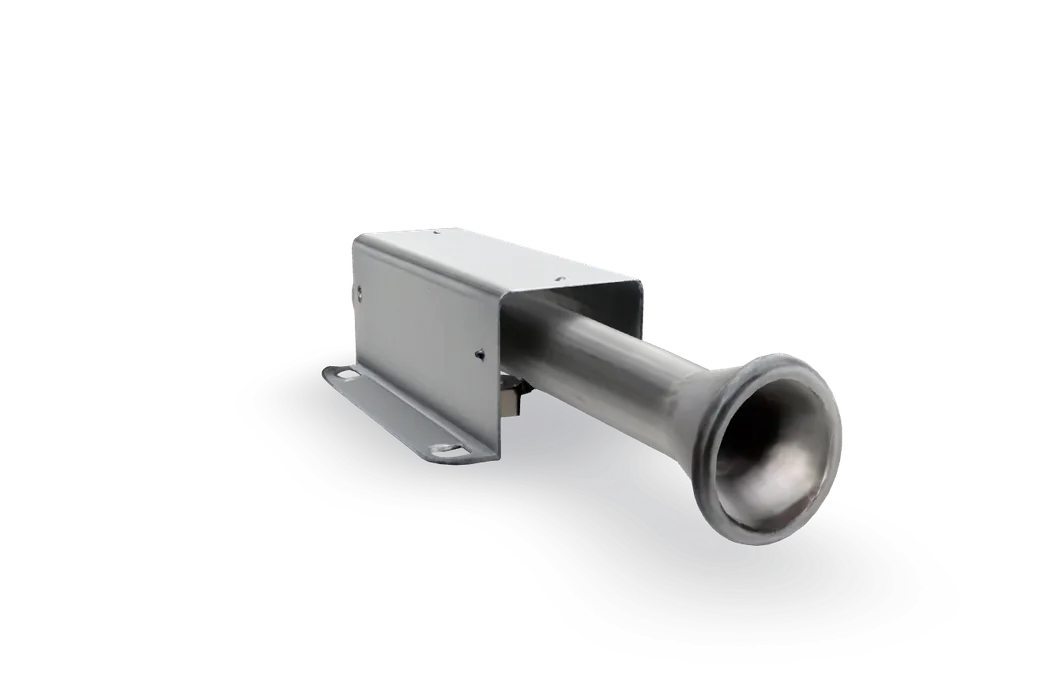
Gas dryer burner: what it does and when to call a pro
Gas dryers only. The burner is where the gas actually burns. Problems with it are rare, and fixing them is pro work. Here is how to spot them.
- Who fixes it
- A licensed pro
- Typical pro cost
- $115–$450
- Typical gas side repair range. A full burner and valve assembly sits at the high end. Varies by model and region
Gas work. Removing or adjusting the burner, changing an orifice or converting gas type means working on gas parts and checking for leaks after. That is for a qualified pro only.
What it does
What the burner does
Gas comes from the dryer's gas valve through a small brass orifice into the burner tube. The orifice is sized to let in just the right amount of gas for the type of gas your home uses.
Inside the tube the gas mixes with air. On many burners an adjustable air shutter sets how much air gets in, so the flame burns clean.
The igniter and the flame sensor mount on the burner. The flame heats the air that the blower pulls into the drum.
Why it fails
The burner tube can corrode over the years. A badly corroded tube can stop the dryer heating or keep the flame from staying lit.
A wrong or damaged orifice, or a poorly set air shutter, gives a poor flame. This often shows up after a dryer is moved to a home with a different gas type and not converted properly.
An igniter or bracket that sits wrong on the burner tube can glow without lighting the gas.
Symptoms
Signs the burner is failing
Yellow, lazy or sputtering flame
A healthy dryer burner flame is steady and mostly blue. A big yellow, lazy or sputtering flame points to a gas or air setting problem. Turn the dryer off and call a pro.
Lights, then will not stay lit
The burner lights and goes out over and over. A blocked vent, the [flame sensor](/dryer/flame-sensor) or the [gas valve coils](/dryer/gas-valve-coils) can all do this too. Rule out the vent first.
Full diagnosisProblems after a move or gas change
The dryer was moved to a home with propane instead of natural gas, or the other way around, and now the flame looks wrong or it will not heat well.
Gas smell near the dryer
A rotten-egg smell can mean a leak. Do not look for it. Leave the house and call your gas supplier from outside.
Safety first
Stay safe until it is fixed
- 1
Smell gas? Leave first
Do not light anything, touch electrical switches or use a phone inside. Leave right away and call your gas supplier from outside or a neighbor's phone. If you cannot reach them, call the fire department.
- 2
CO alarm going off? Get out
Get everyone, pets included, into fresh air and call 911 from outside. Do not go back in until responders say it is safe.
- 3
Leave it off until it is checked
If the flame looks wrong, unplug the dryer and close the gas shutoff behind it. Leave it off until a pro has looked. Do not adjust the burner, the orifice or the air shutter.
What a pro does
What to expect from the service call
- Check that the gas supply and the dryer's gas type match, and that the right orifice is installed.
- Watch the flame through a heat cycle and set the air shutter, if the burner has one, until it burns clean.
- Look at the burner tube, the igniter mounting and the flame sensor for corrosion, damage or poor fit.
- If parts are bad, shut off the gas and replace them with the ones listed for the model, or install the correct conversion kit.
- Check every gas connection they touched for leaks with a leak detection solution, then run the dryer on high heat to confirm it lights and burns properly.
Know your limits
When to call a pro
Stop and call a pro if
- You smell gas at any point. Leave the house and call your gas supplier from outside.
- A carbon monoxide alarm goes off. Get everyone outside and call 911 or the fire department from outside.
- The flame is yellow, lazy, sputtering or rolling out of the burner.
- The dryer needs converting between natural gas and propane.
- You see scorch marks or soot around the burner area.
FAQ
Burner assembly questions
Can I clean or adjust the burner myself?
We do not cover it. The burner, the orifice and the air shutter are gas parts, and work on them should end with a leak check and a flame check. Leave it to a qualified pro.
My dryer will not heat. Is it the burner?
It is rarely the first suspect. Start with the cheaper DIY parts: the thermal fuse, the igniter and the flame sensor. Our no heat guide shows the order.
Can I convert my gas dryer to propane?
Not yourself. Manufacturers say a qualified technician must do the conversion, using the kit listed for your model. It involves changing the orifice and checking the flame and every gas connection.
Related
Keep going
- SymptomDryer runs but won't heatThe drum tumbles but the air stays cold. On an electric dryer, start with the breaker and the thermal fuse. On a gas dryer, start with the gas shutoff and watch the igniter.Open guide
- SymptomDryer takes too long to dryLoads need two cycles, or come out damp. On gas and electric dryers alike, the usual cause is restricted airflow: a clogged lint screen, a blocked vent or a crushed duct. Load size matters too.Open guide
- Dryer partGas dryer igniterGas dryers only. The igniter is a small ceramic element that glows hot enough to light the gas. When it fails, the drum turns but the dryer never heats. You can test it with a meter and, on many dryers, swap it without touching any gas fittings.Open guide
- Dryer partGas dryer flame sensorGas dryers only. The flame sensor is a small heat-sensing switch on the side of the burner. It tells the gas valve when the igniter is hot enough. A bad one can stop the dryer heating, or make it heat for a few minutes and then go cold.Open guide
- Dryer partGas valve coilsGas dryers only. The gas valve coils are small electric windings that open the dryer's gas valve. A classic sign of failing coils is an igniter that glows, then goes out, with no flame. Because they sit on the gas valve, testing and replacing them is pro work.Open guide