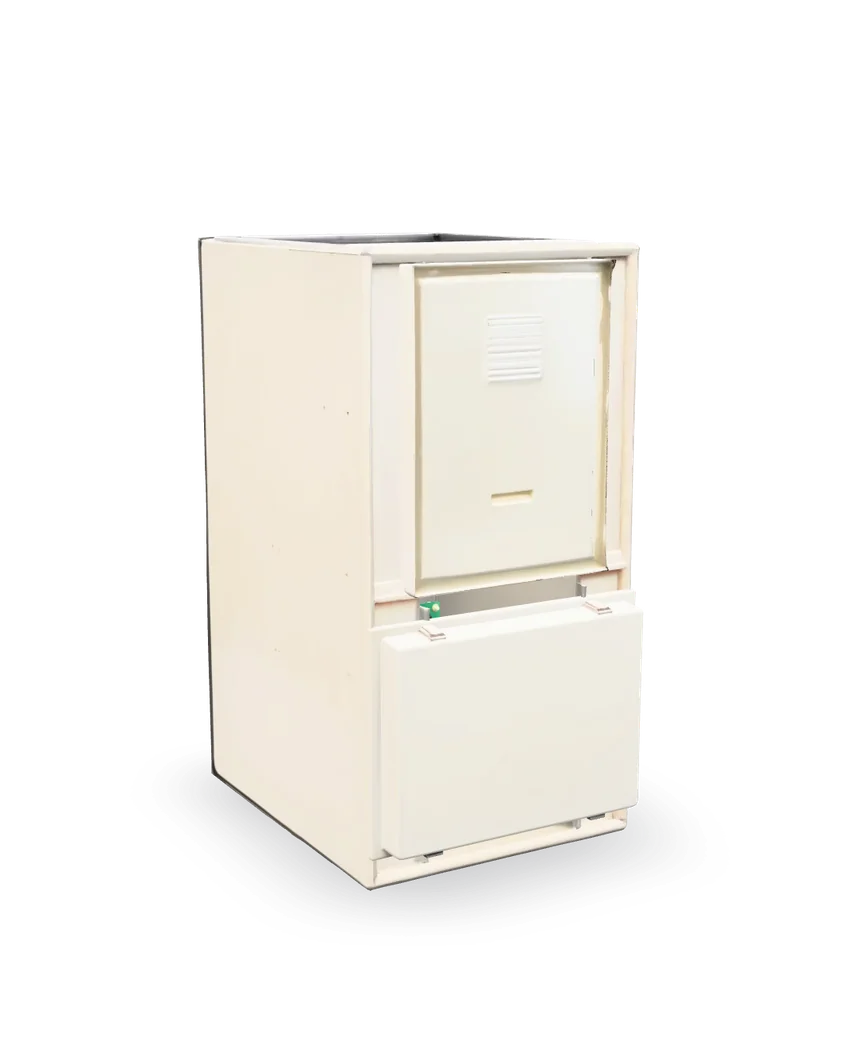
Gas furnace (forced air)
Furnace repair, from the inside out
Most furnace breakdowns come down to a handful of small, inexpensive parts. An igniter that cracked. A flame sensor with a film of soot on it. A capacitor that got tired. A filter nobody has looked at since last winter.
This is a generic gas forced-air furnace, the kind found in most homes. Spin it, pull it apart, and tap any part to see what it does, how it fails, and how to swap it yourself. If a repair involves the gas valve, burners or heat exchanger, we will tell you plainly: that one is for a licensed pro.
Good news: many of the most common furnace fixes need only basic hand tools and an afternoon at most.
Parts
Furnace parts that fail most
- Hot surface igniterThe igniter glows bright orange to light the burners. It is one of the most common reasons a furnace clicks but never lights, and it is usually a one-screw swap.Most common15–30 min$15–$80Fix it
- Flame sensorThe flame sensor is a thin metal rod that proves the burners are really lit. A dirty one is a classic reason a furnace lights and then shuts off seconds later. Cleaning it, or swapping it, is a one-screw job.10–20 min$10–$50Fix it
- Air filterThe air filter catches dust before it reaches the blower and heat exchanger. A clogged one chokes airflow, makes the furnace work harder and can trip it off on high heat. Check it monthly.5–15 min$5–$25Fix it
- Pressure switchThe pressure switch proves the inducer fan is pulling exhaust out before the furnace is allowed to light. When it stays open, the inducer runs and nothing else happens. Often the real fix is a clear hose or vent.20–45 min$20–$100Fix it
- Blower motor run capacitorThe run capacitor is the small metal can that helps the blower motor start and run. A weak one leaves the blower humming, slow or dead. It is cheap and easy to test and replace, once you discharge it safely.15–30 min$10–$50Fix it
- High limit switchThe high limit switch shuts the burners off if the furnace gets too hot. It trips most often because of poor airflow, so check the filter and the blower before you replace it.20–40 min$20–$80Fix it
- Inducer motorThe inducer motor is the small fan that pulls exhaust through the furnace and out the vent before the burners light. When it wears out it gets loud, slows or stalls, and the furnace will not start.1 hr–2 hr$100–$500Fix it
- Blower motor and wheelThe blower motor spins a squirrel-cage wheel that pushes warm air through your ducts. A dusty wheel chokes airflow, and a worn motor hums, squeals or stops. You can clean both, and replace a standard motor yourself.1 hr–2.5 hr$150–$450Fix it
- Control boardThe control board runs the furnace's start-up sequence and flashes a code when something fails. Read the blink code first, because most codes point at a part the board is reporting on.30 min–1.3 hr$50–$300Fix it
- Gas valveThe gas valve opens to let gas reach the burners and closes when the control board says stop. Several cheaper parts cause the same symptoms. Testing or replacing the valve is licensed pro work.Call a proPro: $200–$600Learn more
- Burner assemblyThe burners mix gas with air and fire a row of flames into the heat exchanger. Dirty or rusty burners cause late, loud ignition and poor flames. Burner work is for a licensed pro.Call a proPro: $100–$300Learn more
- Heat exchangerThe heat exchanger is a set of sealed metal tubes the flames fire into. It keeps exhaust gases out of your home's air, and a crack can let carbon monoxide through. Diagnosis and repair are for a licensed pro.Call a proPro: $1,000–$3,000Learn more
Symptoms
What is it doing?
- Furnace clicks but won't igniteThe inducer runs and the gas valve clicks, but the burners never light. After a few tries the furnace locks out. The usual culprit is a cracked igniter.
- Furnace lights, then shuts off after a few secondsThe burners light, then go out a few seconds later. The furnace waits, tries again, and eventually locks out. A dirty flame sensor is the usual cause, and cleaning it is a 15-minute job.
- Inducer runs but the furnace never tries to lightThe draft inducer starts and keeps running, but the igniter never glows. The board is waiting for the pressure switch to say the vent is clear. Check the vent pipes and the switch hose first.
- Furnace blower won't turn onThe big fan that pushes warm air to your vents does not start. A humming motor that never spins points to the run capacitor. Silence points to the door switch, a fuse, the board or the motor.
- Furnace blowing cold airThe vents blow, but the air is cool or room temperature. Often the thermostat fan is set to On. Otherwise the burners are not lighting, or are shutting down early.
- Furnace short cyclingThe furnace starts, runs briefly, shuts off, and starts again before the house warms up. A clogged filter is the most common cause. A dirty flame sensor is next.
- Furnace won't turn on at allNothing happens when the thermostat calls for heat. The cause is usually a switch, a breaker, the thermostat or a loose blower door. After that, look at the board fuse and the control board.
- Furnace making loud or unusual noisesSqueals and grinding usually mean a worn motor or a loose blower wheel. Rattles mean something is loose. Humming points to a motor or capacitor. A boom at start-up is delayed ignition and needs a pro.
- Furnace control board blinking an error codeThe light on the control board flashes a code when something fails. Count the flashes, match them to the chart inside the blower door, and write the code down before you reset anything.
How it works
How a furnace works
A gas furnace runs the same short checklist every time it starts. When it stops partway through, the step it stopped on tells you which part to look at.
- 1
The thermostat calls for heat
When the room drops below your set temperature, the thermostat closes a low-voltage circuit. That signal reaches the control board, which runs the whole start-up sequence.
- 2
The inducer clears the way
A small fan called the draft inducer starts first. It pulls air through the heat exchanger and pushes exhaust up the flue. The pressure switch feels that draft and closes, which tells the board it is safe to light.
- 3
The igniter glows
The hot surface igniter heats up until it glows bright orange, at about 2,000°F or hotter. The warm-up commonly lasts around 15 to 20 seconds, though it varies by furnace. No glow usually means a cracked igniter.
- 4
The gas valve opens
With the igniter hot, the board opens the gas valve. You hear a click. Gas flows through the manifold to the burners, crosses the igniter, and lights.
- 5
The flame sensor proves the flame
A thin metal rod sits in a burner flame, usually at the far end of the row from the igniter. The board passes a tiny current through the flame to confirm it is really lit. If it cannot prove flame within a few seconds, it shuts the gas off.
- 6
The heat exchanger warms up
The flames fire into the heat exchanger, a set of sealed steel tubes. Combustion gases stay inside the tubes and leave through the flue. The air you breathe only ever touches the outside of them.
- 7
The blower moves the heat
After a short delay the blower starts. It pulls house air in through the filter, pushes it across the hot heat exchanger, and sends it out to your vents. A clogged filter chokes this step and overheats the furnace.
- 8
Safeties watch the whole time
The high limit switch shuts the burners down if the furnace gets too hot. Rollout switches trip if flame goes where it should not. The pressure switch drops out if the vent is blocked. They are there to stop the furnace, so never bypass one.
Model number
Where to find your model number
Turn the power off at the service switch, then take off the upper (burner compartment) door. The rating plate is a sticker or metal plate inside the cabinet, on a side wall or the back of a door.
- The model number is labelled M/N or MODEL. Copy it exactly, including dashes and letters.
- The serial number (S/N) usually encodes the build date, which helps when you need the furnace's age.
- No sticker on the wall? Check the inside of the blower door and the blower housing.
Safety first
Before you open a furnace
- Turn the furnace off at the service switch or breaker before you take a door off. Put the doors back on before you run it again.
- If you smell gas, do not touch switches. Leave the house and call your gas utility from outside.
- If your carbon monoxide alarm goes off, get everyone outside to fresh air, then call 911 or the fire department from outside.
- Never bypass or jumper a safety switch to get heat. It is telling you something is wrong.
- Gas valve, gas line, burner and heat exchanger work is for a licensed pro.