Furnace pressure switch: test, clear and replace
Before you buy anything, check the little rubber hose. Half the time the switch is fine and something is just blocking its signal.
- Difficulty
- Easy
- Time
- 20–45 min
- Typical part cost
- $20–$100Pro: $150–$400
- Tools
- 5See the list
Two wires, one hose and usually two screws. The hard part is being patient enough to rule out the hose, the tap and the vent first.
What it does
What the pressure switch does
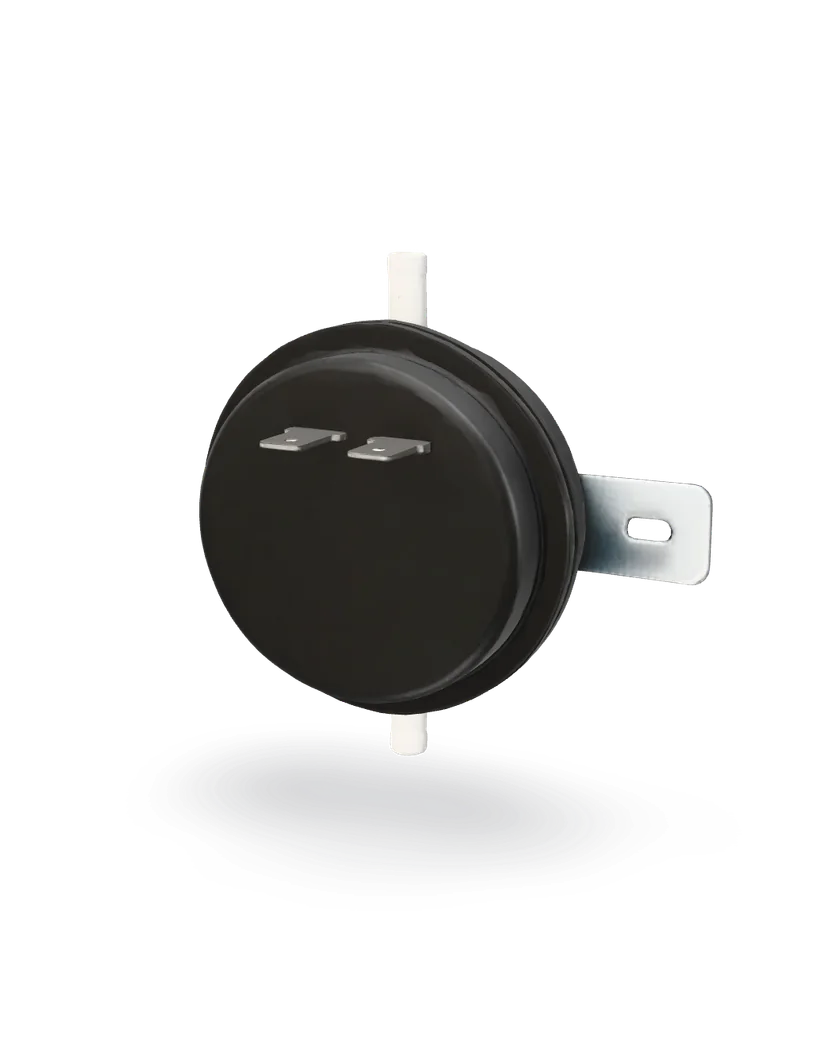
The pressure switch is a small round switch with a rubber hose on it, mounted near the inducer fan. Inside is a thin diaphragm and a set of contacts.
When the furnace starts, the inducer fan spins up and pulls air through the furnace and out the vent. That creates a slight suction, which travels up the hose to the switch. The diaphragm pulls in and the contacts close.
Closed contacts tell the control board the vent is clear and the exhaust has somewhere to go. Only then does the board let the igniter heat up. If the switch never closes, the board waits, and the furnace never tries to light.
Why it fails
Most of the time the switch is not the problem. It is reporting a real one. A cracked, loose or kinked hose, a clogged tap on the inducer, water in the hose, a blocked vent, or a weak inducer all keep it from seeing enough suction.
On a high-efficiency furnace with plastic vent pipes, water is the usual troublemaker. If the condensate trap or drain line clogs, water backs up into the inducer area and the hose, and the switch drops out.
Snow, ice, leaves or a nest in the outside vent pipes can do the same thing in winter.
Switches do wear out too. The diaphragm can tear or stiffen, the contacts can stick, or the plastic hose fitting on the switch can crack.
Symptoms
Signs of a bad pressure switch
Inducer runs, nothing lights
You hear the small inducer fan hum, but the igniter never glows and you never hear a click. After a while the inducer shuts off and the furnace waits.
Full diagnosisA pressure switch error code
The board flashes a code for a pressure switch that stayed open, or one that was closed when it should not be. Check the chart on the inside of the door.
Full diagnosisGurgling or sloshing water
On a high-efficiency furnace, a gurgle or slosh from the inducer area at start-up means water is backing up. Check the drain and trap before you blame the switch.
Full diagnosisStops on windy or snowy days
Wind across the vent or snow over the outside pipes can weaken the suction just enough to drop the switch out. The furnace then works again when the weather changes.
Full diagnosis
How to test it
Test the pressure switch before you buy
- Power off at the service switch or breaker, then take off the upper door.
- Find the switch near the inducer. Follow its rubber hose to where it connects. That spot is a small plastic or metal tube called the pressure tap, on the inducer housing or a nearby collector box.
- Look along the whole hose for cracks, splits, soft spots, kinks or a loose end. Squeeze it gently. It should feel firm, not brittle or gummy.
- Note which port the hose came from, then pull it off the tap. If water drips out, the problem is drainage, not the switch.
- Look into the tap with a light. Clear any dust, rust flakes or water with a pipe cleaner. Do the same through the hose.
Put every hose back on the same port it came off. Some switches have two ports, and they are not interchangeable.
- Good
- The hose is soft, whole and clear, and the tap is open. Push the hose back on firmly. The switch is next.
- Bad
- A cracked or hard hose: replace the hose. A clogged tap: clear it. Water in the hose: clear the drain and trap, or call a pro if you are not sure where they are.
- Power off at the service switch or breaker.
- Take a photo of the wires, then pull both wires off the switch terminals.
- Pull the hose off the switch. Touch one probe to each switch terminal. With no suction, the switch should be open.
- Apply gentle suction to the switch's port with a small hand vacuum pump. Watch the meter. You should hear a faint click and see the switch close. No pump? Skip this test and let a pro check the switch.
- Let go of the suction. It should click open again.
A good switch typically reads
OL at rest, about 0 Ω pulled in
Typical range. Check your part label or manual for the exact spec. This only shows the switch moves. It cannot tell you whether it closes at exactly the pressure printed on its label. If it passes this test but still drops out, a pro can measure the inducer's suction with a manometer.
- Good
- Open (OL) at rest, and close to 0 Ω with a click when you apply suction, then open again when you let go. The switch works. Go back to the hose, the tap, the vent and the drain.
- Bad
- Closed (near 0 Ω) with no suction, or never closes at all, or the port on the switch is cracked. Replace the switch.
Safety first
Before you touch anything
- 1
Kill the power
Flip the furnace service switch off, or turn off its breaker. Before you touch any wires, turn the thermostat up and make sure nothing starts. The control board light should stay dark.
- 2
Close the gas shutoff
Turn the handle on the gas line a quarter turn so it sits crosswise to the pipe. You will not open any gas fittings in this job. This is just a second layer of safety.
- 3
Let it cool
The inducer housing and vent connections get hot. If the furnace just ran, give them a few minutes.
Wait about 10 min
Tools you'll need
Grab these first
Tool and part links are affiliate links. We may earn a commission at no extra cost to you, and it never changes what we tell you to check first. How this works
- Nut driver1/4 in. hexPressure switch mounting screws and furnace door screws are often 1/4 in. hex heads.Typically $6–$15Shop this tool
- Digital multimeterΩ, V, µF, µAA continuity test tells you whether the switch opens and closes the way it should.Typically $25–$60Shop this tool
- Pipe cleanersClear dust, rust or water out of the hose and the small tap on the inducer housing.Typically $3–$8Shop this tool
- Needle-nose pliersPulls the push-on wire connectors straight off the switch terminals.Typically $8–$20Shop this tool
- Painter's tape and markerOptionalLabel the wires and the hose before anything comes off.Typically $5–$12Shop this tool
- HeadlampThe switch and its hose sit up near the inducer, often in shadow.Typically $12–$30Shop this tool
- Hand vacuum pumpOptionalApplies gentle, controlled suction to the switch for the continuity test.Typically $20–$45Shop this tool
Step by step
How to replace the pressure switch
- 1
Shut off the power and the gas
Flip the service switch on or near the furnace to off. It looks like a light switch. If you cannot find one, turn off the furnace breaker.
Then turn the gas shutoff handle a quarter turn so it sits crosswise to the pipe.
Tip. Not sure the power is off? Turn the thermostat up. Nothing should start, and the status light on the control board should stay dark.
- 2
Take off the upper door
The upper door covers the burner compartment and the inducer. Most lift up and pull away. Some have two screws along the top edge.
- 3
Check the outside vent first
If your furnace vents through plastic pipes on an outside wall or the roof, go and look at them. Snow, ice, leaves or a nest in either pipe is enough to stop the furnace.
Brush away loose snow and debris by hand. Do not chip at ice or force anything into the pipes. If a pipe is packed with ice or the vent looks damaged, call a pro.
- 4
Find the switch and its hose
The pressure switch is a small round or square switch, usually mounted on a bracket near the inducer fan. A rubber hose runs from it to a small tap on the inducer housing or the collector box. Two wires plug onto it.
Some furnaces have two pressure switches. Work on the one the error code points to, and do one at a time.
Tip. Take a photo of the wires, the hose and the way the switch is turned. It saves guessing later.
- 5
Clear the hose and the tap
Pull the hose off the tap and look for water, cracks or a clog. Clear the tap and the hose with a pipe cleaner. Replace the hose if it is cracked, hard or split, with tubing of the same size and type.
Water in the hose means the condensate drain or trap is backing up. That needs clearing before a new switch will help.
Push the hose back on firmly. To see if that fixed it, put the upper door back on first. Then turn the gas shutoff handle back in line with the pipe, restore power and try the furnace. If it now lights and runs, you are done. If it still will not light, turn the power off and close the gas shutoff again before the door comes back off.
- 6
Label and pull off the wires
Put a strip of tape on each wire and mark it to match the terminal it came from. Then pull each connector straight off with needle-nose pliers. Grip the connector, not the wire.
- 7
Remove the old switch
Most switches are held by two small screws, usually 1/4 in. hex heads. Back them out and lift the switch off its bracket.
- 8
Match the new switch
Hold the old and new switches side by side. The label on the old one shows a part number and a pressure rating. The new one needs the same rating, the same number of ports and the same mounting.
A switch with a different rating may close too early or too late. That is a safety problem, not a small mismatch.
Buy the part
Pressure switch
Opens AppliancePartsPros in a new tab. Where’s my model number?
What to look for
- The part number on the old switch's label. Search that, or your furnace model number.
- The same pressure rating printed on the label, usually given in inches of water column (in. w.c.).
- The same number of hose ports and the same mounting bracket.
- A new length of hose if the old one is hard, cracked or soft.
Universal switches exist, but only use one whose pressure rating, port layout and contacts match your original exactly. If any of that is unclear, get the exact part.
- 9
Mount the new switch
Set the new switch on the bracket the same way the old one sat. Check it against your photo, then snug the screws.
- 10
Reconnect the hose, then the wires
Push the hose onto the switch's port first, all the way on, with no kinks. Then push each wire onto the terminal its label matches.
- 11
Put the door back on
Refit the upper door. Many furnaces will not run unless the doors are seated, because a door switch cuts power when one is off.
- 12
Turn it back on and watch the start-up
Turn the gas shutoff handle back in line with the pipe, then flip the power on. Set the thermostat a few degrees above room temperature.
The inducer should start, and shortly after that the igniter should glow and the burners light. If the same code comes back with a new switch, the switch was not the cause. Look again at the vent, the drain and the inducer, or call a pro.
Buy the part
Get the right replacement
Buy the part
Pressure switch
Opens AppliancePartsPros in a new tab. Where’s my model number?
What to look for
- The part number on the old switch's label. Search that, or your furnace model number.
- The same pressure rating printed on the label, usually given in inches of water column (in. w.c.).
- The same number of hose ports and the same mounting bracket.
- A new length of hose if the old one is hard, cracked or soft.
Universal switches exist, but only use one whose pressure rating, port layout and contacts match your original exactly. If any of that is unclear, get the exact part.
Know your limits
When to call a pro
Stop and call a pro if
- You smell gas at any point. Do not touch any switches. Leave the house and call your gas utility from outside.
- Your carbon monoxide alarm goes off. Get everyone outside to fresh air, then call 911 or the fire department from outside.
- You suspect the vent is blocked, cracked or disconnected inside the house. Turn the furnace off and leave it off until it is checked.
- The vent pipes are packed with ice, damaged, or you cannot see why the suction is weak.
- A new switch shows the same code. The inducer, the vent or the drain system needs a proper check, often with a manometer.
- The inducer sounds rough, slow or noisy. See the inducer motor guide.
- Water keeps showing up in the hose after you clear the drain.
FAQ
Pressure switch questions
Can I jump the pressure switch to get heat?
No. Never jumper or bypass a pressure switch, even for a minute. It is what keeps the furnace from lighting when the exhaust has nowhere to go. Bypassing it can fill your home with carbon monoxide.
How do I know if it is the switch or something else?
Do the hose and tap check first, then the continuity test. If the switch opens and closes cleanly but the furnace still will not light, the switch is fine. The suction is weak, which points to the vent, the drain or the inducer.
Why does my high-efficiency furnace have water in the pressure switch hose?
These furnaces make water as they run, and it drains out through a trap and a small hose. If the trap or drain clogs, water backs up into the inducer area and the hose. Clearing the drain is the fix. The switch is just telling you about it.
Why does the furnace work again after I reset it?
A borderline problem, like a partly clogged hose, a little water, or a gusty wind across the vent, can let the switch close on one try and not on the next. That is a sign to check the hose, tap and vent now, before it gets worse.
Related
Keep going
- SymptomInducer runs but the furnace never tries to lightThe draft inducer starts and keeps running, but the igniter never glows. The board is waiting for the pressure switch to say the vent is clear. Check the vent pipes and the switch hose first.Open guide
- SymptomFurnace control board blinking an error codeThe light on the control board flashes a code when something fails. Count the flashes, match them to the chart inside the blower door, and write the code down before you reset anything.Open guide
- SymptomFurnace short cyclingThe furnace starts, runs briefly, shuts off, and starts again before the house warms up. A clogged filter is the most common cause. A dirty flame sensor is next.Open guide
- Furnace partInducer motorThe inducer motor is the small fan that pulls exhaust through the furnace and out the vent before the burners light. When it wears out it gets loud, slows or stalls, and the furnace will not start.Open guide
- Furnace partHot surface igniterThe igniter glows bright orange to light the burners. It is one of the most common reasons a furnace clicks but never lights, and it is usually a one-screw swap.Open guide
- Furnace partControl boardThe control board runs the furnace's start-up sequence and flashes a code when something fails. Read the blink code first, because most codes point at a part the board is reporting on.Open guide