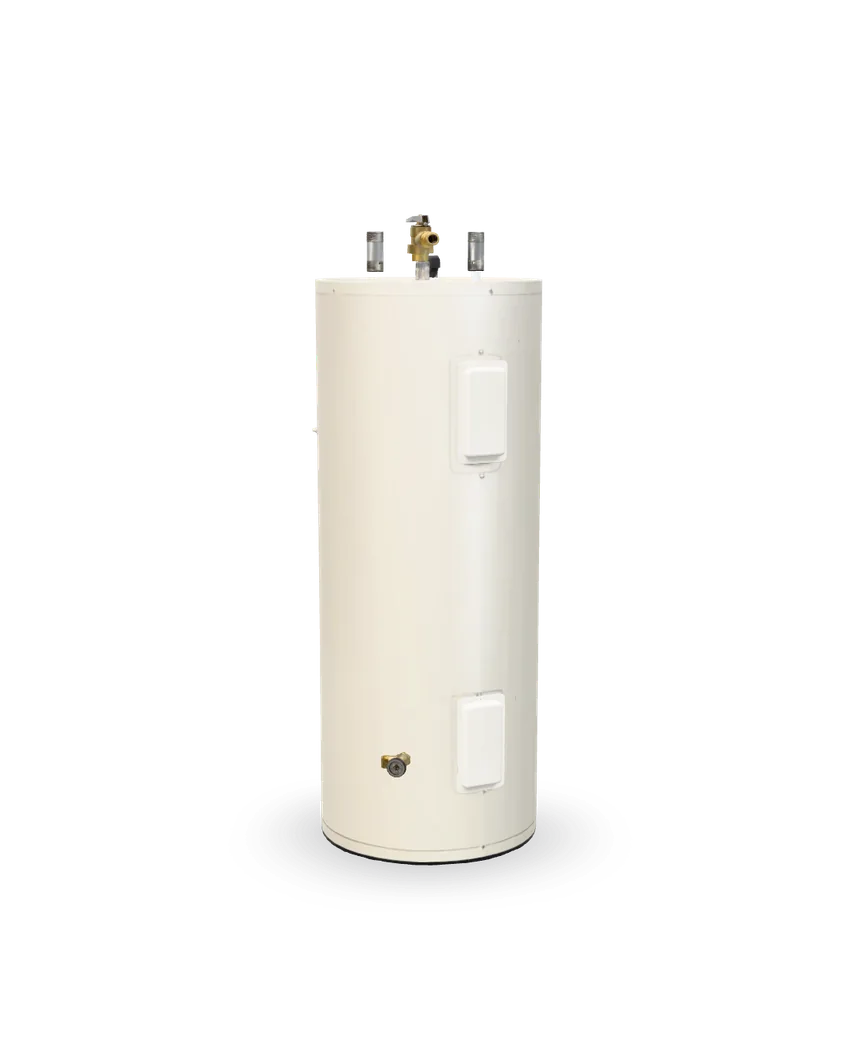
Tank water heater (gas or electric)
Water heater repair, from the inside out
A tank water heater is a simpler machine than most. An insulated steel tank holds the water. Electric models heat it with two elements and two thermostats. Gas models use a burner under the tank, a small pilot flame, and a gas control valve.
When the hot water runs out fast, never shows up, or starts to rumble or smell, one of a few parts is usually behind it. Spin the tank, pull it apart in 3D, and tap any part to see what it does and how it fails.
Plenty of electric repairs, like a heating element or thermostat, are careful homeowner jobs. On a gas heater, anything past the lighting instructions on the label, from the thermocouple to the burner and vent, is work for a pro. We will say so plainly.
Parts
Water heater parts that fail most
- Heating elementElectric water heaters only. Two heating elements, one upper and one lower, heat the water. A burned-out element is the most common reason an electric water heater stops making hot water, and both test and replace the same way.Most common1 hr–3 hr$10–$60Fix it
- Water heater thermostatElectric water heaters only. Two thermostats decide which element heats and when. The upper one also carries the red reset button, a safety cutoff that shuts everything off if the water gets too hot.30 min–1 hr$15–$60Fix it
- Anode rodThe anode rod wears away on purpose so the steel tank does not rust. Gas and electric tank heaters both have one. Check it every few years and replace it before it is down to the wire.45 min–2 hr$20–$75Fix it
- ThermocoupleGas water heaters only. The thermocouple sits in the pilot flame and tells the gas control the pilot is burning. When it fails, the pilot will not stay lit. On sealed-chamber heaters, replacing it is pro work.Call a proPro: $100–$325Learn more
- Drain valve and tank flushThe drain valve near the bottom of the tank lets you empty it and flush out sediment. Manufacturers suggest flushing gas and electric tanks about once a year, more often with hard water.45 min–2 hr$0Fix it
- Temperature and pressure relief valveThe T&P relief valve opens to let water out if the tank gets too hot or the pressure gets too high. Gas and electric heaters both have one. Test it once a year by lifting its lever.5–15 min$0Fix it
- Dip tubeThe dip tube carries cold water to the bottom of the tank. When it cracks or breaks, cold water mixes with the hot at the top and you run out fast. Gas and electric tanks both have one.1 hr–2 hr$10–$60Fix it
- Pilot assemblyGas water heaters only. The pilot assembly makes the small, steady flame that lights the main burner. A dirty or worn pilot will not stay lit. Cleaning or replacing it is pro work on sealed-chamber heaters.Call a proPro: $100–$400Learn more
- Gas control valveGas water heaters only. The gas control valve is the heater's thermostat and gas valve in one. It decides when gas reaches the burner and shuts it off if something is wrong. Testing or replacing it is pro work.Call a proPro: $150–$550Learn more
- Burner assemblyGas water heaters only. The burner sits under the tank and heats the water with a blue flame. Dust and lint upset the flame, which makes soot and carbon monoxide. Burner work is for a pro.Call a proPro: $250–$750Learn more
- Draft hood and ventGas water heaters only. The draft hood on top of the tank joins the flue to the vent pipe that carries exhaust outside. If exhaust spills back into the room, called backdrafting, it brings carbon monoxide with it. Vent work is for a pro.Call a proPro: $100–$500Learn more
Symptoms
What is it doing?
- Water heater not heating: no hot waterEvery hot tap runs cold. On an electric heater it is usually power, a tripped high-limit reset, an element or a thermostat. On a gas heater, start with the gas supply and the pilot.
- Water heater not making enough hot waterThe shower starts hot and goes cold too soon, or the water is never more than warm. Check the temperature setting first, then the lower element and thermostat on electric units, the dip tube and sediment.
- Water heater making water too hotHot water comes out hotter than it should. Check the setting and measure at a tap. If it stays too hot after you turn it down, a thermostat or gas control has likely failed.
- Water heater leakingWater on the floor or dripping down the tank. Shut off the power or gas and the cold supply, dry everything, then trace the water to its source: a valve, a fitting, an element gasket, or the tank itself.
- Water heater rumbling or poppingA rumbling, popping or crackling tank usually means sediment has built up on the bottom. On electric heaters, scale on the lower element can do it too. Flushing the tank is the usual fix.
- Water heater pilot won't stay litThe pilot lights but goes out, or will not stay on after you follow the lighting instructions. The usual cause is the thermocouple. A dirty pilot, a clogged air intake or the gas control can do it too. Repairs are pro work.
- Electric water heater keeps tripping the breakerElectric water heaters only. The water heater's breaker at the panel shuts off, by itself, again and again. A heating element shorted to the tank is one of the most common causes. Wiring, water on the wiring, or the breaker itself are the others.
- Water heater smells like rotten eggsA rotten egg smell in the air near a gas appliance can mean a gas leak: leave now and call the gas utility from outside. Sulfur-smelling hot water is a different, harmless problem, usually bacteria reacting with the anode rod.
How it works
How a water heater works
Cold water goes in, gets heated in the tank by electric elements or a gas burner, and leaves hot from the top. A few safety parts watch the whole time.
- 1
Cold water goes to the bottom
In most tanks, incoming cold water runs down a long plastic dip tube to the bottom. That keeps it from mixing with the hot water waiting at the top, near the outlet.
- 2
Electric: the upper element heats first
On an electric heater, the upper thermostat has priority. When the tank is cold, it runs the upper element until the top of the tank is hot, so you get some hot water quickly.
- 3
Electric: then the lower element takes over
Once the top is hot, the upper thermostat hands power down to the lower thermostat and element, which heat the rest of the tank. Only one element runs at a time, and the lower one does most of the everyday reheating.
- 4
Gas: the control valve opens the burner
On a gas heater, the gas control valve near the bottom of the tank is also the thermostat. When the water cools below the dial setting, it sends gas to the burner under the tank, and the pilot flame lights it.
- 5
Gas: the pilot and thermocouple stand guard
The pilot is a small flame that stays lit. A thermocouple sits in it and makes a tiny current that holds the gas valve open. If the pilot goes out, the current stops and the valve shuts off the gas.
- 6
Gas: exhaust rises up the flue
Burner exhaust rises through a flue pipe up the middle of the tank, where a twisted baffle slows it so it gives up more heat to the water. At the top, the draft hood mixes in room air and sends it all up the vent. If the vent is blocked or backdrafting, exhaust and carbon monoxide can spill into the house.
- 7
Hot water leaves from the top
Open a tap and house water pressure pushes hot water out of the top of the tank while cold water refills the bottom.
- 8
The anode rod takes the damage
Gas or electric, a rod of magnesium or aluminum hangs inside the tank and corrodes on purpose. While there is rod left, the steel tank is protected. When it is used up, the tank starts to rust.
- 9
The relief valve is the last line of defense
The temperature and pressure relief valve near the top opens and dumps water down its pipe if the tank ever gets too hot or too pressurized. It must never be capped or plugged.
Model number
Where to find your model number
The rating plate is a label on the side of the tank, usually on the upper part. On many gas heaters it sits next to the gas control. Gas heaters also carry a label with the lighting instructions.
- Copy the model and serial numbers exactly, including dashes and letters.
- Note the tank size in gallons. On electric heaters, note the element wattage and voltage. On gas heaters, note whether it burns natural gas or propane.
- Take a photo of the plate and, on gas heaters, the lighting label. You will want both later.
Safety first
Before you open a water heater
- Electric: turn off the water heater's breaker and confirm the power is off with a voltage tester before you open an access panel.
- If you smell gas, do not touch switches. Leave the house and call your gas utility from outside.
- Gas: set the gas control to OFF and close the gas shutoff before working anywhere near the tank. Relight only by following the lighting instructions on the label.
- Never power an electric element that is not fully under water. It burns out in seconds.
- Water in the tank can scald. Let it cool before you drain it or open anything.
- Never cap, plug or remove the temperature and pressure relief valve. If it is discharging, call a pro.
- Keep gasoline, paint and other flammables away from a gas water heater.
- Gas control valve, pilot, thermocouple, burner and venting work is for a qualified pro.