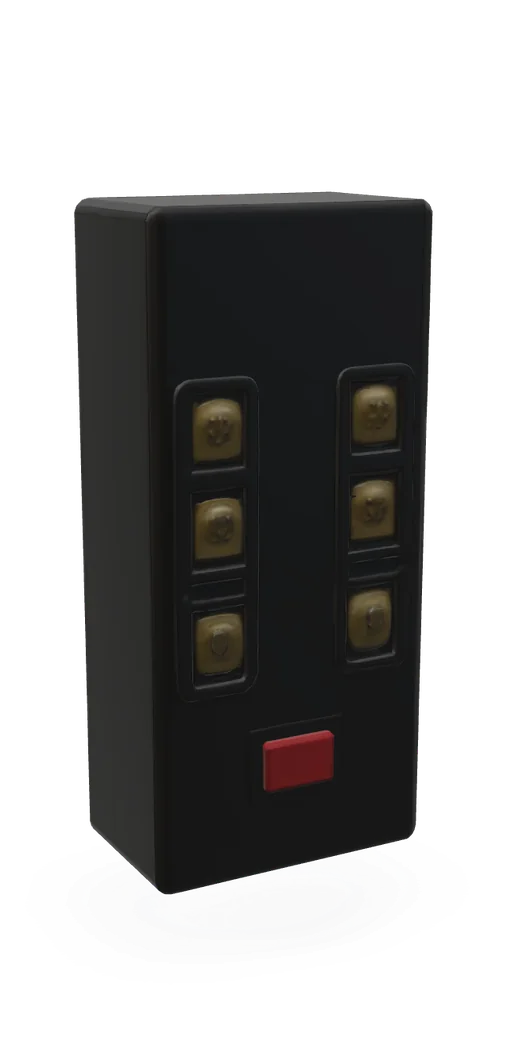
Water heater thermostat: reset, test and replace
The red reset button is the first thing to try when an electric water heater goes cold. If it will not stay in, or the thermostat tests bad, the part clips onto the outside of the tank and you do not even have to drain it.
- Difficulty
- Easy
- Time
- 30 min–1 hr
- Typical part cost
- $15–$60Pro: $100–$350
- Tools
- 3See the list
A few wires and two clips, with no draining. The care goes into confirming the 240 V wiring is dead and putting every wire back where it came from.
What it does
What the thermostat does
A two-element electric water heater has two thermostats, each behind its own access panel, pressed against the outside of the tank. Each one senses the tank temperature through the steel.
The upper thermostat is in charge. When the top of the tank is cold, it powers the upper element. Once the top is hot, it switches power down to the lower thermostat, which runs the lower element until the rest of the tank is hot. On most heaters only one element heats at a time.
The upper thermostat has a high-limit switch built in, sometimes called the ECO or energy cutoff. If the water ever gets too hot, it cuts power to both elements and stays off until you press its red reset button.
The two are not the same part. The upper one has more terminals and the reset button. The lower one is a simpler two-terminal switch.
Why it fails
Contacts inside the thermostat wear out. One that sticks closed keeps heating past its setting, and the high limit trips to stop it. One that sticks open never calls for heat.
A thermostat only reads the tank right if it sits tight against the steel. If it works loose or the insulation gets jammed behind it, it reads wrong and can overheat the water.
The reset button is a symptom, not always the culprit. A grounded heating element is one of the usual reasons it trips, so a tripping reset does not always mean a bad thermostat.
Symptoms
Signs of a bad thermostat
No hot water, reset button tripped
The red button above the upper thermostat has popped. The high limit cut power to both elements because the water got too hot.
Full diagnosisWater much too hot
A thermostat stuck closed keeps the element running past the setting. Scalding water at the tap, sometimes followed by the reset tripping.
Full diagnosisHot water runs out fast
If the upper thermostat never hands power down, or the lower one never calls for heat, only the top of the tank gets hot.
Full diagnosis
How to test it
Test the thermostat before you buy
- Turn off the water heater's breaker at the panel.
- Take off the upper access panel cover, fold back the insulation and unclip the plastic safety cover. Hold a voltage tester to the upper thermostat terminals. It should stay quiet.
- Find the red button on the high limit switch above the upper thermostat.
- Press the button firmly. A click means it had tripped and is now reset.
- Put the covers back, turn the power on and give the tank time to heat.
The reset button is a safety device. Pressing it over and over hides the fault instead of fixing it.
- Good
- No click and the heater works: the high limit was not the problem. A click once, and hot water returns and stays: you may be fine. Keep an eye on it.
- Bad
- It trips again. Something is overheating the water or shorting. Leave the power off and test both elements for a short to the tank and both thermostats before you reset it again.
- With the power off and confirmed dead, take a photo of the wiring, then take the wires off the thermostat you are testing.
- Lower thermostat: turn its dial all the way up, so it is set hotter than the water. Probe its two terminals.
- Upper thermostat: press the reset button first. Probe the pair of high limit terminals, then, with the dial turned all the way up, the terminals that feed the upper element. The wiring diagram on the heater's label or panel shows which terminals are which.
- Then turn the dial all the way down and probe the same thermostat terminals again.
A good thermostat typically reads
Near 0 Ω when calling for heat, OL when turned down
Typical range. Check your part label or manual for the exact spec. These are general patterns. Terminal layouts differ, and the upper thermostat switches between its element and the lower thermostat, so follow the wiring diagram on your heater. If the water is cold, a turned-down thermostat may still read closed.
- Good
- Closed (near 0 Ω or a beep) with the dial turned up, and open (OL) with it turned down once the water is warmer than the lowest setting. The reset terminals read closed after a reset.
- Bad
- Open with the dial turned up, closed with it turned down while the tank is warm, or open across the high limit terminals right after a reset. Replace the thermostat.
Safety first
Before you touch anything
- 1
Breaker off, then verify
Turn off the water heater's double breaker at the panel. Then hold a voltage tester to the thermostat terminals before you touch them. Try the tester on a working outlet first. On a 240 V heater, part of the circuit can be live even when the thermostat is not heating, so a cold tank or a tripped reset does not mean the wires are dead.
Tools you'll need
Grab these first
Tool and part links are affiliate links. We may earn a commission at no extra cost to you, and it never changes what we tell you to check first. How this works
- Non-contact voltage testerPen styleConfirms there is no power at the thermostat terminals before you touch them. These run on 240 V.Typically $15–$30Shop this tool
- Digital multimeterΩ, V, µF, µAChecks whether the thermostat and its high limit switch close and open like they should.Typically $25–$60Shop this tool
- Multi-bit screwdriverPhillips, flat, squareOpens the access panels, loosens the terminal screws and turns the temperature dial.Typically $10–$25Shop this tool
- Needle-nose pliersOptionalHelps work stiff wires off and back onto the terminals.Typically $8–$20Shop this tool
Step by step
How to replace the thermostat
- 1
Turn off the power
Turn off the water heater's breaker at the main panel. It is usually a double breaker labeled water heater or WH. If there is a disconnect switch near the heater, turn that off too.
- 2
Open the panel and check for power
Remove the access panel cover for the thermostat you are replacing. Fold the insulation back and unclip the plastic safety cover.
Hold the voltage tester to every terminal screw on the thermostat. It should stay quiet. If it beeps or lights, stop and find the right breaker.
- 3
Photograph and label the wires
Take a clear photo of the thermostat with all its wires in place. Mark each wire with tape and a number matching its terminal.
Tip. The upper thermostat has several wires. A clear photo is what lets you put each one back on the right terminal.
- 4
Take the wires off
Loosen each terminal screw and pull the wires off. Move them aside so nothing touches.
- 5
Slide the old thermostat out
The thermostat is held against the tank by a metal bracket or clips, not screwed into the water. Ease it out of the bracket.
Note which way it sat and how the bracket held it.
- 6
Match the new thermostat
Upper and lower thermostats are different parts. An upper one comes with the high limit and reset button built in. Buy the same type you took out.
Compare it to the old one: the same number of terminals in the same places, the same voltage rating and the same size, so it fits the bracket.
Buy the part
Water heater thermostat
Opens AppliancePartsPros in a new tab. Where’s my model number?
What to look for
- The right position: an upper thermostat with the built-in high limit and reset button, or a two-terminal lower thermostat.
- The same terminal layout and voltage rating as the old one.
- The same body size, so it fits the mounting bracket and sits flush on the tank.
Generic replacement thermostats are common for standard two-element heaters. Choose one whose type, terminal layout and voltage match the old one.
- 7
Fit it flush against the tank
Slide the new thermostat into the bracket the way the old one sat. Its back must press flat and tight against the bare steel of the tank, with no insulation or debris behind it.
Careful. A thermostat that is not flush reads the tank wrong and can let the water overheat.
- 8
Reconnect the wires and press reset
Put each wire back on its terminal as in your photo and tighten every screw firmly. Loose connections get hot.
On an upper thermostat, press the red reset button once so the high limit starts out closed.
- 9
Set the temperature
Turn the dial with a flat screwdriver. A setting around 120 °F lowers the risk of scalds and is enough for most homes. Set the other thermostat to match.
- 10
Close it up
Clip the plastic safety cover back on, fold the insulation back into place so it does not push the thermostat away from the tank, and screw the access panel cover on.
- 11
Turn the power back on
Turn the breaker back on, and the disconnect switch if there is one. Give the tank time to heat, then check the water at a tap.
Buy the part
Get the right replacement
Buy the part
Water heater thermostat
Opens AppliancePartsPros in a new tab. Where’s my model number?
What to look for
- The right position: an upper thermostat with the built-in high limit and reset button, or a two-terminal lower thermostat.
- The same terminal layout and voltage rating as the old one.
- The same body size, so it fits the mounting bracket and sits flush on the tank.
Generic replacement thermostats are common for standard two-element heaters. Choose one whose type, terminal layout and voltage match the old one.
Know your limits
When to call a pro
Stop and call a pro if
- The reset button keeps tripping after you have tested both elements and both thermostats. Something is overheating that you have not found.
- The water is scalding hot and stays that way even with the dials turned down. Turn the breaker off and get it checked.
- You find scorched or melted wires or a burned terminal on the thermostat.
- The heater has an electronic control board instead of separate mechanical thermostats.
- You are not comfortable confirming that 240 V wiring is dead before you touch it.
FAQ
Water heater thermostat questions
Where is the reset button on an electric water heater?
Behind the upper access panel, on the high limit switch just above the upper thermostat. It is red. Turn the power off, take off the cover and fold back the insulation to reach it.
My reset button keeps tripping. Is the thermostat bad?
Maybe, but not always. A thermostat stuck closed is one cause. A heating element shorted to the tank is the other usual one. Test both elements for a short before you buy a thermostat.
Do I need to drain the tank to replace a thermostat?
No. The thermostat sits against the outside of the tank under the insulation. Nothing opens to the water.
What temperature should I set it to?
Around 120 °F is the usual safety advice. Higher settings make scalds much more likely, especially for children and older adults. Check the water at a tap after the tank has heated.
Related
Keep going
- SymptomWater heater not heating: no hot waterEvery hot tap runs cold. On an electric heater it is usually power, a tripped high-limit reset, an element or a thermostat. On a gas heater, start with the gas supply and the pilot.Open guide
- SymptomWater heater making water too hotHot water comes out hotter than it should. Check the setting and measure at a tap. If it stays too hot after you turn it down, a thermostat or gas control has likely failed.Open guide
- SymptomWater heater not making enough hot waterThe shower starts hot and goes cold too soon, or the water is never more than warm. Check the temperature setting first, then the lower element and thermostat on electric units, the dip tube and sediment.Open guide
- SymptomElectric water heater keeps tripping the breakerElectric water heaters only. The water heater's breaker at the panel shuts off, by itself, again and again. A heating element shorted to the tank is one of the most common causes. Wiring, water on the wiring, or the breaker itself are the others.Open guide
- Water heater partHeating elementElectric water heaters only. Two heating elements, one upper and one lower, heat the water. A burned-out element is the most common reason an electric water heater stops making hot water, and both test and replace the same way.Open guide
- Water heater partTemperature and pressure relief valveThe T&P relief valve opens to let water out if the tank gets too hot or the pressure gets too high. Gas and electric heaters both have one. Test it once a year by lifting its lever.Open guide