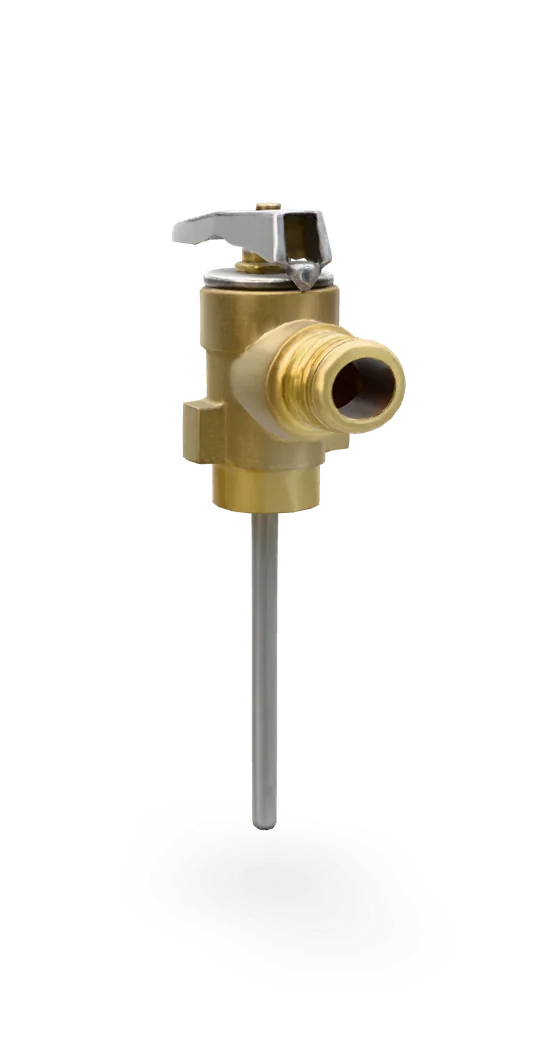
How to test a water heater T&P relief valve
This is the most important safety part on your water heater, and testing it takes about five minutes once a year. Replacing it is a job for a pro.
- Difficulty
- Anyone can do it
- Time
- 5–15 min
- Typical part cost
- $0Pro: $100–$300
- Tools
- 4See the list
Testing is lifting a lever. The care goes into keeping clear of the hot water that comes out. Replacing the valve is pro work.
What it does
What the t&p relief valve does
The temperature and pressure relief valve sits near the top of the tank, on gas and electric heaters alike. A pipe called the discharge pipe runs from it down toward the floor or a drain.
If the water in the tank ever gets too hot or the pressure climbs too high, the valve opens and dumps water out through that pipe. It is what keeps a tank from building up dangerous pressure.
Why it fails
A valve that sits closed for years can stick shut, or fail to close all the way after it opens. That is why manufacturers say to work it by hand on a schedule.
A valve that drips or lets out water now and then is not always bad. In a closed water system, water expands as it heats and can push the valve open. A plumber or your water supplier can tell you how to fix that.
Symptoms
Signs of a bad t&p relief valve
A year since the last test
Manufacturers say to operate the valve by hand at least once a year. Some say twice a year. Your heater's manual and the tag on the valve have the schedule.
Water at the end of the discharge pipe
Drips or a puddle under the pipe mean the valve has been letting water out. Never cap the pipe. Find out why it is opening.
Full diagnosisNo water when you lift the lever
If little or no water comes out during the test, the valve or the pipe may be blocked. Turn the heater off and call a pro.
Safety first
Before you touch anything
- 1
Turn off the power or the gas
Electric heater: turn off its breaker, then hold a voltage tester to the power cable where it enters the heater. Gas heater: turn the gas control to OFF or PILOT as the label on the heater says.
- 2
Close the gas shutoff (gas heaters)
Turn the handle on the gas line to the heater so it sits crosswise to the pipe. You will not open any gas fittings.
- 3
Stay clear of the discharge
The water that comes out can be hot enough to cause severe burns instantly. Make sure nobody is in front of or near the end of the discharge pipe, and wear gloves and eye protection.
Tools you'll need
Grab these first
Tool and part links are affiliate links. We may earn a commission at no extra cost to you, and it never changes what we tell you to check first. How this works
- Bucket5 galCatches the hot water if the discharge pipe does not end over a floor drain.Typically $4–$10Shop this tool
- Work glovesThe valve and the water that comes out can be hot enough to burn.Typically $8–$20Shop this tool
- Safety glassesProtects your eyes from a splash of hot water.Typically $5–$15Shop this tool
- Non-contact voltage testerPen styleConfirms an electric heater has no power before you start.Typically $15–$30Shop this tool
Step by step
How to test the T&P relief valve
- 1
Turn off the power, or the gas
Electric heater: turn off the water heater's breaker. Confirm with a voltage tester at the power cable where it enters the heater.
Gas heater: turn the gas control to OFF or PILOT, as the label on the heater says. Then turn the gas shutoff handle on the line so it sits crosswise to the pipe.
- 2
Check the discharge pipe
Find the valve near the top of the tank and follow its discharge pipe to the end.
The pipe should run downhill all the way, end open and unthreaded over a floor drain or a safe spot, and have no valve, cap or plug anywhere along it.
Careful. If the pipe is missing, capped, plugged or ends somewhere unsafe, do not test the valve. Call a pro.
- 3
Clear the area
Make sure nobody is standing in front of or near the end of the pipe. Pets and kids too.
If the pipe does not end over a floor drain, set a bucket under it. Put on gloves and eye protection.
- 4
Lift the lever and let it snap back
Lift the valve's test lever. Hot water should rush out of the end of the discharge pipe.
Let a good amount flow through the pipe, as your manual says, then let the lever snap back down.
Careful. Keep your hand on the lever and the rest of you away from the pipe end. The water can be scalding.
- 5
Check that it shuts off
When the lever is back down, the flow should stop. Watch the pipe end for a few minutes.
If little or no water came out, or it keeps running or dripping, the valve needs a pro. Leave the heater off and call a plumber.
Tip. Some plumbers warn that an old valve may not seal again after its first test in years. Better to find that out now than when it matters.
- 6
Turn the heat back on
If the valve passed, turn the breaker back on for an electric heater.
Gas heater: open the gas shutoff so the handle lines up with the pipe, then follow the lighting instructions on the heater's label.
Buy the part
Get the right replacement
Buy the part
Temperature and pressure relief valve
Opens AppliancePartsPros in a new tab. Where’s my model number?
What to look for
- A pro fits the replacement. It has to match the pressure and temperature ratings for your heater, which are on the heater's rating plate and the old valve's tag.
- The same thread size and connection as the old valve.
Relief valves are not one size fits all. The ratings must match your heater and local code.
Know your limits
When to call a pro
Stop and call a pro if
- You smell gas near a gas water heater. Do not touch any switches. Leave the house and call your gas utility from outside.
- Little or no water comes out when you lift the lever. Turn the heater off first.
- The valve keeps dripping or running after the test. It needs replacing.
- The valve drips or lets out water on its own now and then. Never cap or plug it. A plumber can find out why.
- The discharge pipe is missing, capped, too small, runs uphill or ends somewhere unsafe.
FAQ
Temperature and pressure relief valve questions
How often should I test the T&P valve?
At least once a year, the manufacturers say. Some manuals say twice a year. The tag on the valve often has its own inspection schedule too.
My T&P valve is dripping. Can I cap it or plug the pipe?
Never. Capping or plugging the valve or its pipe takes away the one thing that protects the tank from too much heat or pressure. Manufacturers warn it can lead to an explosion.
A dripping valve is either worn out or doing its job because something else is wrong. Call a plumber to find out which. If the water also seems too hot, see water too hot.
Can I replace the T&P valve myself?
We recommend a pro. The new valve has to match your heater's pressure and temperature ratings and meet local code, and the job means draining the tank and working on a fitting that protects the whole tank.
Do gas and electric water heaters both have a T&P valve?
Yes. Every tank water heater needs a working relief valve, whether it heats with gas or electricity. The test is the same on both.
Related
Keep going
- SymptomWater heater leakingWater on the floor or dripping down the tank. Shut off the power or gas and the cold supply, dry everything, then trace the water to its source: a valve, a fitting, an element gasket, or the tank itself.Open guide
- SymptomWater heater making water too hotHot water comes out hotter than it should. Check the setting and measure at a tap. If it stays too hot after you turn it down, a thermostat or gas control has likely failed.Open guide
- Water heater partDrain valve and tank flushThe drain valve near the bottom of the tank lets you empty it and flush out sediment. Manufacturers suggest flushing gas and electric tanks about once a year, more often with hard water.Open guide
- Water heater partAnode rodThe anode rod wears away on purpose so the steel tank does not rust. Gas and electric tank heaters both have one. Check it every few years and replace it before it is down to the wire.Open guide
- Water heater partWater heater thermostatElectric water heaters only. Two thermostats decide which element heats and when. The upper one also carries the red reset button, a safety cutoff that shuts everything off if the water gets too hot.Open guide