Water heater thermocouple: signs it's failing and when to call a pro
Pilot lights fine, then goes out the moment you let go of the knob? The thermocouple is the usual suspect. On most modern gas water heaters, replacing it is a job for a pro.
- Who fixes it
- A licensed pro
- Typical pro cost
- $100–$325
- Typical installed cost. The part is cheap, most of this is labor. Varies by region
Gas and combustion work. Most modern gas water heaters are flammable vapor ignition resistant, with a sealed burner chamber. Getting at the thermocouple means opening that chamber, disconnecting gas tubes from the control and usually pulling the burner assembly. Leave it to a pro.
What it does
What the thermocouple does
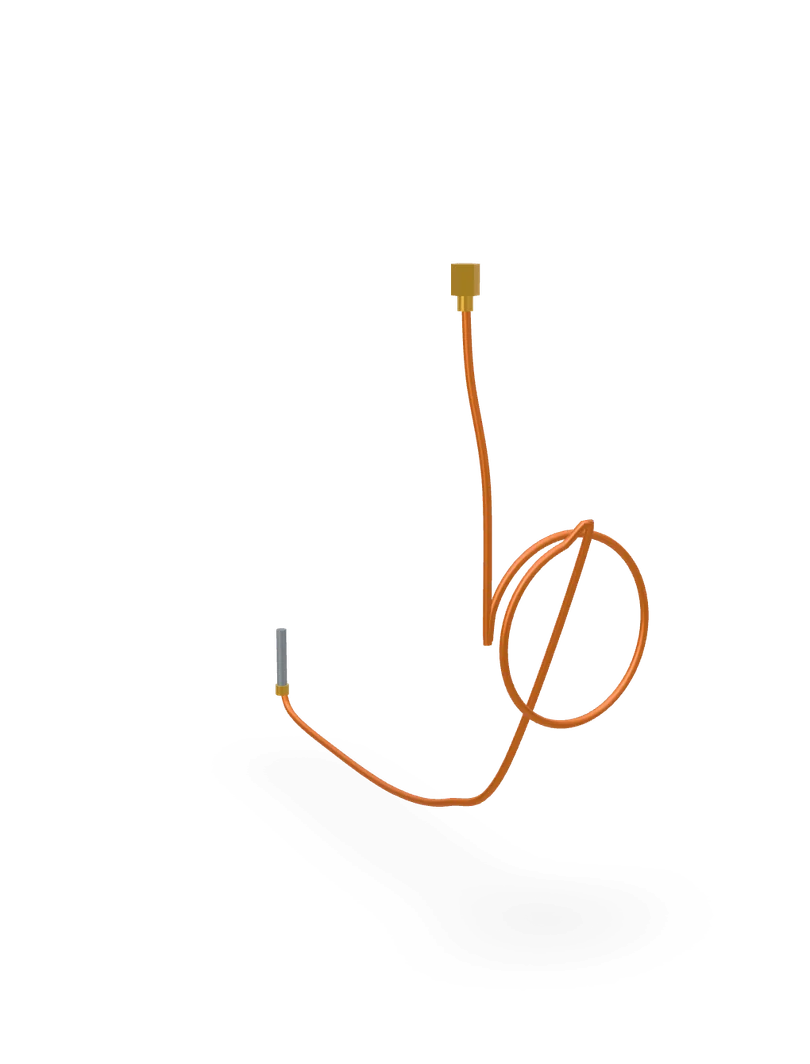
Gas water heaters only. The thermocouple is a thin metal rod with its tip in the pilot flame and a copper lead running to the gas control valve. When the pilot heats the tip, it makes a tiny electric current.
That current holds a safety magnet open inside the gas control. As long as the pilot burns, gas can flow. If the pilot goes out, the tip cools, the current stops and the gas control shuts the gas off. It is the part that keeps unburned gas from pouring out.
Some heaters use a thermopile instead. It is a stack of thermocouples that makes more power, enough to run the gas valve itself. The two are not interchangeable, so a pro checks which one your heater has.
Why it fails
The tip lives in a flame every day, so it wears out over time. A worn, dirty or bent thermocouple that no longer sits squarely in the pilot flame stops making enough current, and the gas control closes.
Good news: a bad thermocouple is the most common reason a pilot will not stay lit, and the part itself is cheap. But the same symptom can come from a weak or dirty pilot, a gas supply problem or a worn safety magnet in the gas control valve.
On newer heaters, the thermocouple circuit also runs through a one-time safety switch that shuts the pilot off when the heater is not getting enough combustion air. Then the thermocouple is fine and something else needs fixing first.
Symptoms
Signs the thermocouple is failing
Pilot lights, then goes out when you let go
You follow the lighting instructions on the label, the pilot lights while you hold the knob down, and it goes out once you release it. That is the classic sign the thermocouple is not holding the gas control open.
Full diagnosisPilot keeps going out
The heater relights but goes cold again within hours or days. A failing thermocouple is one cause. A lack of combustion air tripping the heater's safety switch is another, which is why a pro checks both.
Full diagnosisNo hot water and no pilot flame
With no pilot, the main burner cannot light, so the tank slowly goes cold. If the pilot is out and will not stay lit, the thermocouple is a prime suspect.
Full diagnosis
Safety first
Stay safe until it is fixed
- 1
Smell gas? Leave first
Do not try to light the pilot, touch electrical switches or use a phone inside. Leave the house right away and call your gas utility from outside or a neighbor's phone.
- 2
CO alarm going off? Get out
Get everyone, pets included, outside into fresh air and call 911. Do not go back in until emergency responders say it is safe.
- 3
Turn the control to OFF and leave it
If the pilot will not stay lit after a few tries per the label, turn the gas control knob to OFF as the label shows and call for service. Use only your hand on the knob, never tools.
What a pro does
What to expect from the service call
- Confirm the basics: gas is reaching the heater, the pilot flame is the right size and color, and the safety switch for combustion air has not tripped.
- Measure the thermocouple's output with the pilot lit, to tell a bad thermocouple from a weak safety magnet in the gas control.
- If the thermocouple is bad, shut off the gas and replace it, or the whole pilot assembly where the two come as one part, following the heater maker's service instructions.
- Check every gas connection they touched for leaks, relight per the label and watch the burner run a full cycle.
Know your limits
When to call a pro
Stop and call a pro if
- You smell gas at any point. Leave the house and call your gas utility from outside.
- The pilot lights but goes out when you release the knob, even after following the label instructions a few times.
- The pilot keeps going out every few hours or days.
- Your heater has a sealed burner chamber. Opening it means replacing the door gasket and disconnecting gas tubes, which is pro work.
- You see dust or lint built up around the base of the heater, where it takes in air for the burner.
FAQ
Thermocouple questions
Can I replace a water heater thermocouple myself?
We treat it as pro work. On most modern gas water heaters, the burner chamber is sealed. The job means disconnecting gas tubes from the control, pulling the burner and fitting a new door gasket. Manufacturers write those instructions for qualified technicians.
Why does the pilot go out when I let go of the knob?
While you hold the knob down, you are holding the gas open by hand. Once you let go, the thermocouple has to take over. If it is worn or not sitting in the flame, it cannot, and the gas shuts off. Some labels tell you to keep holding the knob for about a minute after the pilot lights, so follow your label exactly first.
What is the difference between a thermocouple and a thermopile?
Both sit in the pilot flame and make electricity from heat. A thermocouple makes just enough to hold the safety magnet open. A thermopile is a stack of them that makes more, enough to power the gas valve. They are not interchangeable.
How much does it cost to replace a thermocouple?
Typically about $100 to $325 with a pro, part included. The part is cheap, so most of the bill is labor. Prices vary by region and by how hard the burner is to reach.
Related
Keep going
- SymptomWater heater pilot won't stay litThe pilot lights but goes out, or will not stay on after you follow the lighting instructions. The usual cause is the thermocouple. A dirty pilot, a clogged air intake or the gas control can do it too. Repairs are pro work.Open guide
- SymptomWater heater not heating: no hot waterEvery hot tap runs cold. On an electric heater it is usually power, a tripped high-limit reset, an element or a thermostat. On a gas heater, start with the gas supply and the pilot.Open guide
- Water heater partPilot assemblyGas water heaters only. The pilot assembly makes the small, steady flame that lights the main burner. A dirty or worn pilot will not stay lit. Cleaning or replacing it is pro work on sealed-chamber heaters.Open guide
- Water heater partGas control valveGas water heaters only. The gas control valve is the heater's thermostat and gas valve in one. It decides when gas reaches the burner and shuts it off if something is wrong. Testing or replacing it is pro work.Open guide
- Water heater partBurner assemblyGas water heaters only. The burner sits under the tank and heats the water with a blue flame. Dust and lint upset the flame, which makes soot and carbon monoxide. Burner work is for a pro.Open guide