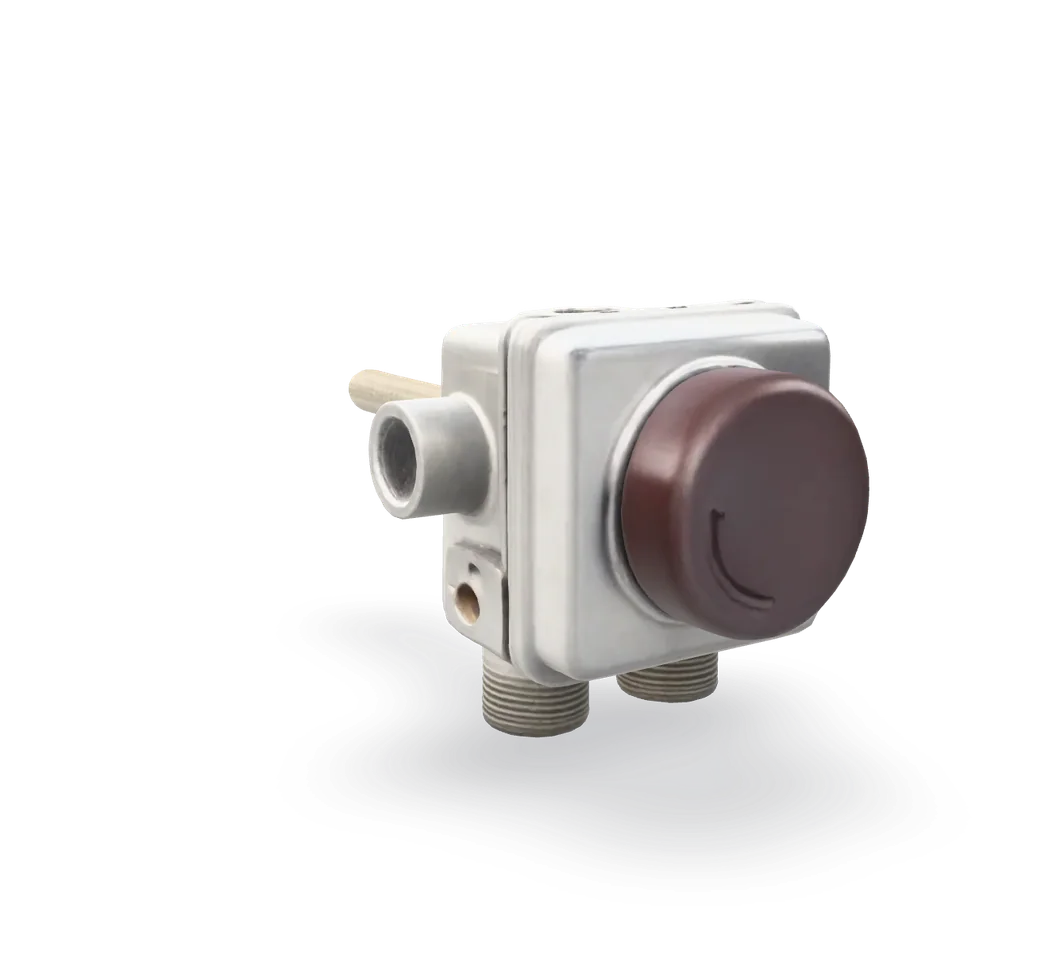
Water heater gas control valve: what it does and when to call a pro
The gas control valve is the box on the front of the tank with the knob and the temperature dial. You can set the dial and light the pilot per the label. Anything beyond that is a pro's job.
- Who fixes it
- A licensed pro
- Typical pro cost
- $150–$550
- Typical installed cost, part included. Varies by region
Gas work. Replacing the control means shutting off the gas, draining the tank, opening gas fittings and checking for leaks afterward. That is for a licensed pro only.
What it does
What the gas control does
Gas water heaters only. The gas control valve is mounted on the front of the tank, where the gas line comes in. It has the gas knob with OFF, PILOT and ON settings, and the temperature dial you use to set how hot the water gets.
It is also the thermostat. When the water in the tank cools below the dial setting, the control opens gas to the main burner. When the water is hot again, it closes.
It holds two safeties. The pilot safety keeps gas off unless the thermocouple proves the pilot is lit. The energy cut off shuts off all gas to the heater if the water ever gets too hot.
Some newer heaters use an electronic gas control with a status light that flashes codes. The same rule applies: you read the light and the label, a pro does the repair.
Why it fails
The control is rarely the first suspect. When the pilot will not stay lit, a worn thermocouple or dirty pilot is far more common. Sometimes the safety magnet inside the control weakens, though, and then a good thermocouple cannot hold it open.
If the water ever overheats, the energy cut off shuts off the gas and the heater goes cold. That is the safety doing its job. A pro needs to find out why the water got too hot before the heater runs again.
Water damage ruins it. If the control or any part of the heater has been under water, manufacturers say not to use the heater until a qualified technician has inspected it. Any gas control that was under water must be replaced, and some manufacturers say the whole heater must go.
Symptoms
Signs the gas control is failing
Pilot will not stay lit, even with a new thermocouple
A pro has already replaced the thermocouple and the pilot still drops out when you release the knob. That points toward a weak safety magnet inside the control.
Full diagnosisPilot is lit, but no hot water
The pilot burns, the dial is turned up, and the main burner never comes on. The control may not be opening gas to the burner, or its energy cut off may have tripped. Call a pro.
Full diagnosisWater far hotter than the dial setting
Water that is scalding at the tap, even with the dial turned down, means the thermostat is not controlling the burner. Turn the knob to OFF as the label shows and call a pro.
Full diagnosisThe heater has been under water
After a flood, do not light or use the heater, even if it seems fine. Damage may not show right away. Have a qualified technician inspect it and replace the control, or the heater.
Gas smell near the control
A rotten-egg smell near the heater can mean a leak. Do not look for it. Leave the house and call your gas utility from outside or a neighbor's phone.
Full diagnosis
Safety first
Stay safe until it is fixed
- 1
Smell gas? Leave first
Do not light anything, touch electrical switches or use a phone inside. Leave the house right away and call your gas utility from outside or a neighbor's phone.
- 2
CO alarm going off? Get out
Get everyone, pets included, outside into fresh air and call 911. Do not go back in until emergency responders say it is safe.
- 3
Turn it to OFF and leave the rest alone
If you suspect the control, turn the knob to OFF as the label shows and call for service. Use only your hand on the knob, never tools. Do not open, adjust or bypass anything on the control.
What a pro does
What to expect from the service call
- Rule out the cheaper parts first: the thermocouple, the pilot and the gas supply to the heater.
- Check whether the control holds the pilot with a good thermocouple, and whether it opens gas to the burner when the water calls for heat.
- If the energy cut off has tripped, find out why the water overheated, and replace the control if needed.
- To replace it, shut off the gas, drain the tank, swap the control for one matched to the heater and its gas type, and reconnect the gas line and burner tubes.
- Check every connection for leaks, refill the tank, relight per the label, and watch the burner turn on and off at the set temperature.
Know your limits
When to call a pro
Stop and call a pro if
- You smell gas at any point. Leave the house and call your gas utility from outside.
- The pilot will not stay lit and the thermocouple has already been ruled out.
- The pilot is lit but the burner never comes on, and the dial is turned up.
- The water is scalding hot even with the dial turned down.
- Any part of the heater has been under water.
- Anyone suggests adjusting, repairing or bypassing the gas control. That is licensed work.
FAQ
Gas control valve questions
Can I adjust the temperature on a gas water heater?
Yes. Turning the temperature dial is normal owner operation. A setting around 120 °F lowers the risk of scalds. The marks on the dial are often not exact, so check your manual and measure the water at a tap after an adjustment.
Setting the dial and lighting the pilot per the label are the only things to do yourself. Everything else on the control is pro work.
Can I replace a water heater gas control valve myself?
No. It means shutting off and opening gas fittings, draining the tank, reconnecting the burner and pilot tubes, and checking everything for leaks. Manufacturers leave it to qualified technicians. A mistake can cause a gas leak, a fire or carbon monoxide.
My heater was in a flood. Can I just relight it?
No. Manufacturers say not to use a gas water heater if any part has been under water. Have a qualified technician inspect it. Any gas control that was under water has to be replaced, and many manufacturers say to replace the whole heater.
How much does a gas control valve replacement cost?
Typically about $150 to $550 installed, part included, with many jobs near $350. Prices vary by region and heater. On an older heater, ask whether a new heater makes more sense.
Related
Keep going
- SymptomWater heater not heating: no hot waterEvery hot tap runs cold. On an electric heater it is usually power, a tripped high-limit reset, an element or a thermostat. On a gas heater, start with the gas supply and the pilot.Open guide
- SymptomWater heater pilot won't stay litThe pilot lights but goes out, or will not stay on after you follow the lighting instructions. The usual cause is the thermocouple. A dirty pilot, a clogged air intake or the gas control can do it too. Repairs are pro work.Open guide
- SymptomWater heater making water too hotHot water comes out hotter than it should. Check the setting and measure at a tap. If it stays too hot after you turn it down, a thermostat or gas control has likely failed.Open guide
- Water heater partThermocoupleGas water heaters only. The thermocouple sits in the pilot flame and tells the gas control the pilot is burning. When it fails, the pilot will not stay lit. On sealed-chamber heaters, replacing it is pro work.Open guide
- Water heater partPilot assemblyGas water heaters only. The pilot assembly makes the small, steady flame that lights the main burner. A dirty or worn pilot will not stay lit. Cleaning or replacing it is pro work on sealed-chamber heaters.Open guide
- Water heater partBurner assemblyGas water heaters only. The burner sits under the tank and heats the water with a blue flame. Dust and lint upset the flame, which makes soot and carbon monoxide. Burner work is for a pro.Open guide