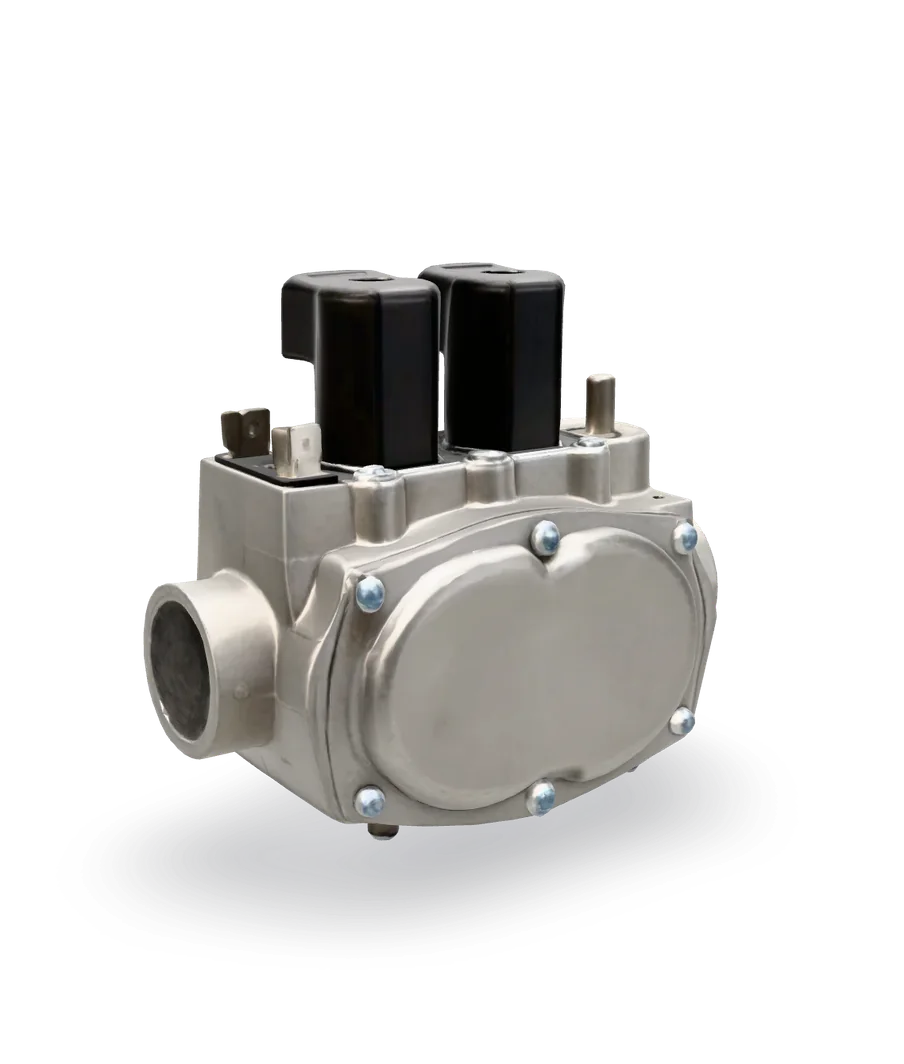
Furnace gas valve: what it does and when to call a pro
The gas valve is the part that decides whether gas reaches the burners. When it acts up, the fix belongs to a licensed pro. Here is how to tell if it might be the problem.
- Who fixes it
- A licensed pro
- Typical pro cost
- $200–$600
- Typical installed cost, part included. Varies by region
Gas work. Testing, adjusting or replacing a gas valve means opening gas fittings, checking for leaks and setting gas pressure with a gauge. That is for a licensed pro only.
What it does
What the gas valve does
The gas valve sits where the gas line enters the furnace. Gas comes in one side and goes out the other to the burners. A few low-voltage wires connect it to the control board.
When the igniter is hot, the control board powers the valve and it opens. When the heating call ends, the board drops that signal and the valve closes.
The valve also has a pressure regulator. It brings the gas pressure from your supply line down to the steady pressure the burners are built for. Setting that pressure takes a gauge and training, which is one reason this part is pro territory.
Why it fails
A gas valve can fail in two ways. It can fail to open, for example because the coil that opens it has burned out. Or, less often, it can fail to close all the way, which is the dangerous kind of failure.
Burners that keep running after the thermostat is satisfied are more often caused by a stuck relay on the control board or a wiring problem than by the valve itself. Either way, it needs a pro right away.
Good news: when a furnace will not light, the valve is rarely the first suspect. A cracked igniter, a dirty flame sensor or a pressure switch fault cause the same symptoms and cost far less. Rule those out first.
Symptoms
Signs the gas valve is failing
Igniter glows, burners never light
You see the igniter glow bright orange, but no flame ever appears. If the gas shutoff is open and your other gas appliances work, the valve may not be opening. Call a pro.
Full diagnosisFlame stays on after the call ends
The thermostat is satisfied, or you switched it off, and the burners keep burning. Treat it as urgent. Turn off the gas at the shutoff handle on the line and switch off the furnace, then call a pro. If you smell gas, leave the house first.
Error code for flame with no call
Many control boards flash a code that means flame was sensed when the board was not calling for heat. That can point to a valve that is not closing fully. Check the chart on your blower door and call a pro.
Full diagnosisGas smell near the furnace
A rotten-egg smell near the furnace can mean a leak. Do not look for it. Leave the house and call your gas supplier from outside or a neighbor's phone.
Weak or uneven flames
Healthy burner flames are bright blue and steady. Flames that look weak, uneven or erratic can point to a gas pressure or burner problem. A pro checks pressure with a gauge.
Safety first
Stay safe until it is fixed
- 1
Smell gas? Leave first
Do not light anything, touch electrical switches or use a phone inside. Leave right away and call your gas supplier from a neighbor's phone or outside. If you cannot reach them, call the fire department.
- 2
CO alarm going off? Get out
Get everyone, pets included, into fresh air and call 911 from outside. Do not go back in until emergency responders say it is safe.
- 3
Turn the furnace off and leave it
If you suspect the gas valve, switch the furnace off at its service switch and leave it off until a pro has looked. Do not open, adjust or tap on the valve.
What a pro does
What to expect from the service call
- Confirm the basics first: the gas shutoff is open, gas reaches the furnace, and the igniter, flame sensor and safety switches all check out.
- Check whether the control board is actually sending the valve its signal during a start-up, and whether the valve responds.
- Measure the gas pressure going into the valve and out to the burners, and compare it with the furnace's rating plate and manual.
- If the valve is bad, shut off the gas, replace it, check every connection they touched for leaks, and set the outlet pressure.
- Watch several full heating cycles to make sure the burners light, burn cleanly and shut off when they should.
Know your limits
When to call a pro
Stop and call a pro if
- You smell gas at any point. Leave the house and call your gas supplier from outside.
- The burners keep burning after the thermostat is satisfied or the furnace is switched off.
- The igniter glows bright orange but the burners never light, the gas shutoff is open and your other gas appliances work.
- The control board flashes a code for flame sensed with no call for heat.
- Anyone suggests adjusting, tapping or replacing the gas valve yourself. That is licensed work.
FAQ
Gas valve questions
Can I replace a furnace gas valve myself?
No. Replacing a gas valve means opening gas fittings, checking for leaks and setting the gas pressure with a gauge. A mistake can cause a gas leak, a fire or carbon monoxide. Furnace manuals leave this work to qualified technicians.
The good news is that the parts most often blamed on the valve are DIY friendly. Check the igniter, the flame sensor and the pressure switch first.
How do I know it is the gas valve and not the igniter?
Watch a start-up through the sight glass. No orange glow points to the igniter. A bright glow with no flame, while the gas shutoff is open and your stove lights, points toward the gas supply or the valve. That is the moment to call a pro.
What should I do if the burners will not shut off?
Turn the gas off at the shutoff handle on the gas line to the furnace, so it sits crosswise to the pipe. Switch the furnace off at its service switch. Then call a pro. If you smell gas, skip all of that and leave the house first.
How much does a gas valve replacement cost?
Typically a few hundred dollars installed, part included. Prices vary a lot by region and furnace. Get a quote, and make sure the cheaper parts have been ruled out first.
Related
Keep going
- SymptomFurnace clicks but won't igniteThe inducer runs and the gas valve clicks, but the burners never light. After a few tries the furnace locks out. The usual culprit is a cracked igniter.Open guide
- SymptomInducer runs but the furnace never tries to lightThe draft inducer starts and keeps running, but the igniter never glows. The board is waiting for the pressure switch to say the vent is clear. Check the vent pipes and the switch hose first.Open guide
- SymptomFurnace control board blinking an error codeThe light on the control board flashes a code when something fails. Count the flashes, match them to the chart inside the blower door, and write the code down before you reset anything.Open guide
- Furnace partHot surface igniterThe igniter glows bright orange to light the burners. It is one of the most common reasons a furnace clicks but never lights, and it is usually a one-screw swap.Open guide
- Furnace partFlame sensorThe flame sensor is a thin metal rod that proves the burners are really lit. A dirty one is a classic reason a furnace lights and then shuts off seconds later. Cleaning it, or swapping it, is a one-screw job.Open guide
- Furnace partBurner assemblyThe burners mix gas with air and fire a row of flames into the heat exchanger. Dirty or rusty burners cause late, loud ignition and poor flames. Burner work is for a licensed pro.Open guide