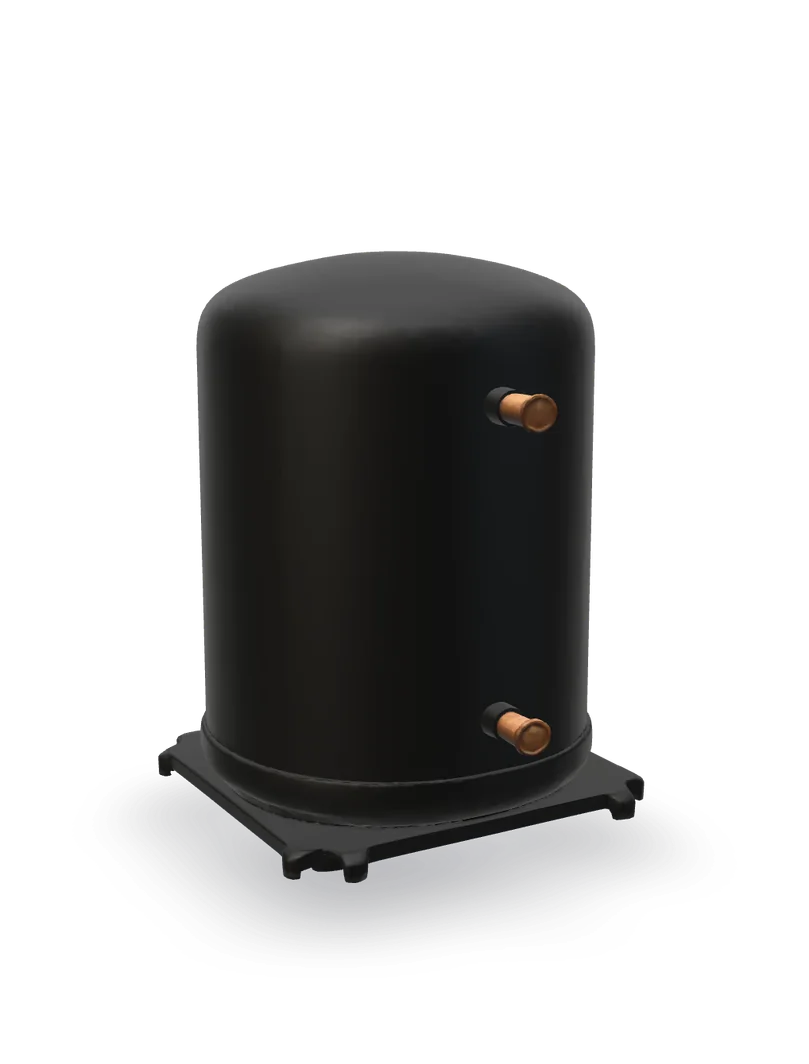
AC compressor: failure signs and when to call a pro
A humming outdoor unit does not mean a dead compressor. The capacitor and contactor cause the same hum for far less money. Here is what to rule out, and what a pro does if it really is the compressor.
- Who fixes it
- A licensed pro
- Typical pro cost
- $2,500–$5,000
- Typical installed cost of a replacement outdoor unit. Compressor-only repairs vary widely
Sealed-system work. Replacing a compressor means recovering the refrigerant, brazing, pulling a vacuum and recharging. Federal rules require EPA Section 608 certification.
What it does
What the compressor does
The compressor squeezes refrigerant gas coming back from the indoor coil and pushes it, hot, into the condenser coil, where the fan carries the heat away. It is sealed into the refrigerant loop.
It gets its starting and running boost from the HERM side of the dual run capacitor.
Why it fails
Compressors can wear out or fail electrically after many years.
No single symptom proves the compressor is bad. A weak capacitor, a failed contactor, low voltage or loose wiring all make the same hum, so a technician tests those first.
Symptoms
Signs the compressor is failing
Hums, then trips the breaker
The outdoor unit hums for a few seconds and then trips the breaker or shuts off on its overload. Reset the breaker once at most, then leave it off.
Full diagnosisHums with a good capacitor and contactor
The unit still hums without starting after the capacitor tests good or has been replaced and the contactor pulls in.
Full diagnosisFan runs, no cooling
The fan on top turns and the coil is clean, but the compressor never starts and the air indoors stays warm.
Full diagnosis
Safety first
Stay safe until it is fixed
- 1
Turn it off and leave it off
If the unit hums without starting or trips the breaker, turn the thermostat off and pull the outdoor disconnect. Do not keep resetting the breaker.
- 2
Do not open the refrigerant system
Never loosen a fitting, cut a line or add refrigerant yourself. Federal rules prohibit knowingly releasing refrigerant and require a certified technician for this work.
What a pro does
What to expect from the service call
- Rule out the cheap parts first: the dual run capacitor, the contactor, the wiring and the supply voltage.
- Measure the compressor's windings and the current it draws as it tries to start.
- Try a hard-start kit if the compressor is weak but sound. It can help it start but does not fix worn parts.
- If the compressor has failed, recover the refrigerant, replace the compressor, braze the connections, pull a vacuum and recharge.
- Give you a written quote for the repair and for a new outdoor unit, since the two are often close in price on an older system.
Know your limits
When to call a pro
Stop and call a pro if
- The unit hums and will not start after the capacitor tests good or has been replaced.
- The breaker trips again right after a reset.
- You see oily residue on the lines or the coil, or hear a hiss.
FAQ
Compressor questions
My AC hums but will not start. Is the compressor dead?
Not necessarily. A weak capacitor causes the same hum and is a cheap fix. Turn the system off, then test the capacitor or have a pro do it, before you assume the compressor has failed.
Can I replace an AC compressor myself?
No. It means opening the refrigerant system, and federal rules require Section 608 certification. It also takes recovery equipment, brazing and a vacuum pump.
Should I replace the compressor or the whole unit?
It depends on the system's age. Central air conditioners commonly last about 12 to 20 years. On an older unit a compressor repair often costs a large share of a new outdoor unit, so get quotes for both and use the repair or replace calculator.
Related
Keep going
- SymptomAC humming but not startingWhen the outdoor unit hums but the fan and compressor do not start, the dual run capacitor is the most likely part. A contactor that buzzes or chatters can cause it too. If both test good, a seized compressor is the pro-only possibility.Open guide
- SymptomAC running but not coolingIf the indoor fan blows but the air is warm, look at the outdoor unit. A fan that will not spin, a hum with nothing turning, or a coil packed with debris all stop the cooling. Ice on the lines points to a dirty filter first, and to low refrigerant if the filter is clean.Open guide
- AC condenser partDual run capacitorThe dual run capacitor helps the compressor and the outdoor fan start and run. When it weakens, the unit hums without starting, the fan will not spin, or cooling fades. It is a few wires and one strap, but it must be discharged before you touch it.Open guide
- AC condenser partContactorThe contactor is the heavy switch that turns the outdoor unit on when the thermostat calls for cooling. Burned contacts or a dead coil leave the unit silent. Welded contacts keep it running nonstop. It swaps out with a few wires and two screws.Open guide
- AC condenser partRefrigerant lines and chargeTwo copper lines connect the outdoor unit to the indoor coil, and the refrigerant inside them carries the heat out of your house. A leak in the lines or either coil leaves the system low on charge. Checking, adding or recovering refrigerant takes an EPA-certified technician.Open guide
Get the next fix before it breaks
A short email when the seasons turn: filters to change, detector batteries to check, and new repair guides. No spam, unsubscribe any time.
We send it with Kit. Privacy