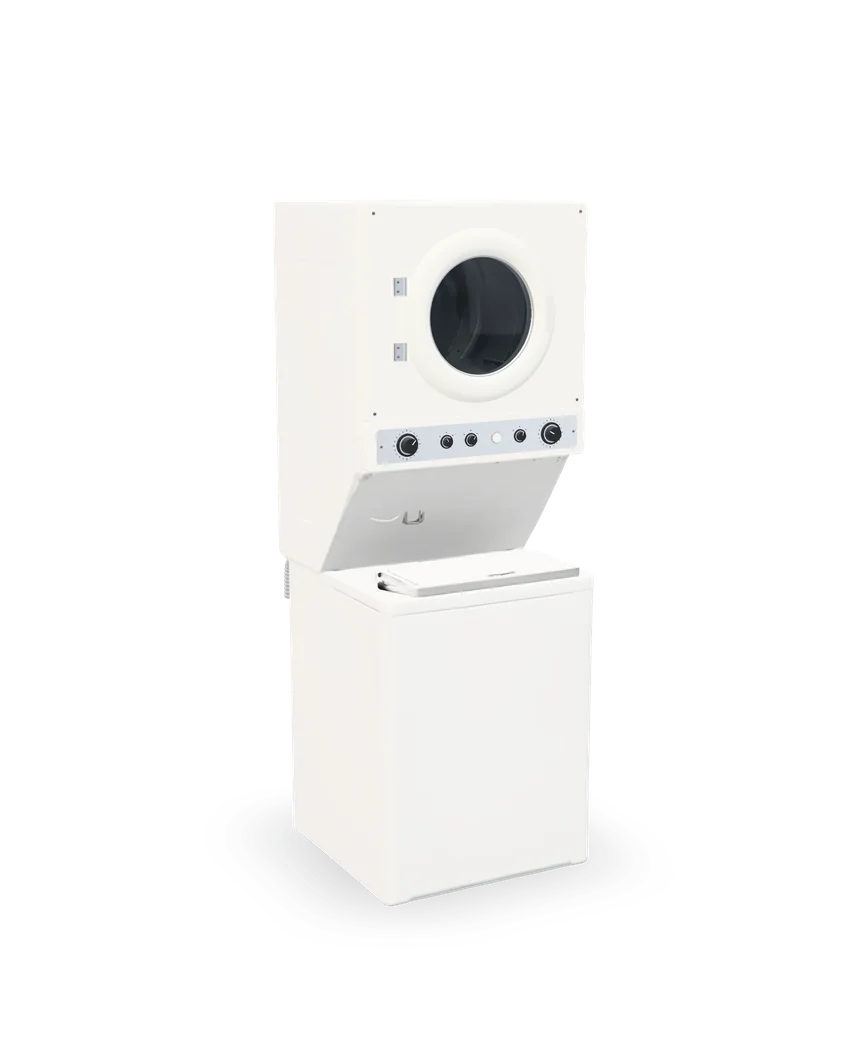
Electric laundry center (dryer over a top-load washer)
Laundry center repair, from the inside out
A laundry center is an electric dryer built on top of a top-load washer, in one tall cabinet with the controls between them. Inside, each half uses the same parts as the full-size machine: a belt, rollers, a heating element, thermostats and a thermal fuse in the dryer, and a drain pump, a lid switch, a motor and a coupler or belt in the washer.
So the full-size guides do the work. A dryer that will not heat comes down to the thermal fuse, the heating element or a thermostat. A drum that will not turn is usually the drum belt. A washer that will not drain or spin points to the drain pump or the lid switch. What differs is the way in: follow your laundry center's service manual or tech sheet for which panel to remove.
The dryer half needs a 240 V outlet, and many laundry centers also have a separate 120 V cord for the washer. Spin this generic laundry center, open it up, and tap a part to see what it does and which guide covers it.
Parts
What is inside a laundry center
Tap a part to find it in the model.
Symptoms
What is it doing?
- Laundry center dryer runs but won't heatElectric laundry centers only. The dryer on top tumbles but the air stays cold. Start with the breaker and the lint path, then test the thermal fuse, the heating element and the thermostats.
- Laundry center dryer runs but won't tumbleThe dryer on top starts and its motor runs, but the drum stays still. The usual cause is a broken drum belt, then the idler pulley that keeps it tight, then worn drum rollers or a weak motor.
- Laundry center dryer takes too long to dryLoads need two cycles, or come out damp. On a laundry center, as on any vented dryer, the usual cause is restricted airflow: a clogged lint screen, a blocked vent or a crushed duct. Load size matters too.
- Laundry center washer won't drainThe washer below stops with water in the tub, or the clothes come out soaking. A kinked drain hose, a sock in the pump or hose, a blocked house drain or a failed pump causes most of it.
- Laundry center washer won't spinThe clothes come out of the washer below soaking, or it agitates but never spins. Check the spin setting, the drain, the lid switch and the load first, then the motor coupler or belt.
How it works
How a laundry center works
Two machines in one cabinet. The washer fills, washes, drains and spins below. The dryer tumbles and heats above, and vents outside.
- 1
Power: a 240 V dryer, and often a 120 V washer
The electric dryer half runs on its own 240 V, 30 A circuit. On many laundry centers the washer has a separate 120 V cord and outlet. Others use one cord for both. Unplug every cord before you open a panel.
- 2
The washer fills
The water inlet valve opens and hot and cold water run into the tub. The washer stops filling when it senses it has enough.
- 3
The lid says it is shut, and the agitator works
Like any top loader, the washer reads a lid switch, and some lock the lid before they spin. The motor turns the agitator through a motor coupler on direct-drive models, or a belt on belt-drive ones.
- 4
It drains and spins
The drain pump pushes the water up the drain hose into the house drain. Then the basket spins fast inside the outer tub and flings the water out. The washer will not spin until the tub is empty and the lid is confirmed shut.
- 5
The dryer tumbles
Above the washer, one motor turns the drum with a long, thin belt kept tight by a spring-loaded idler pulley. The drum rides on support rollers. The other end of the motor spins the blower wheel.
- 6
It heats the air and vents it outside
The blower pulls air across the heating element, which needs the full 240 V. The cycling thermostat switches the heat on and off to hold the temperature. The hot air passes through the clothes, past the lint screen and out the exhaust duct.
- 7
Safeties watch for overheating
If air cannot get out, heat builds up. The high-limit thermostat shuts the heat off and resets as it cools. If it gets hotter still, the thermal fuse blows for good. A blown fuse usually means a clogged vent, so clean the vent before you replace it.
Model number
Where to find your model number
On a laundry center the label is usually on the dryer side. Open the dryer door and look on the trim around the door opening, the inside edge of the door, or the inside front of the dryer compartment.
- Copy the full model number exactly, including any letters and dashes.
- Order parts by the laundry center's own model number, not a full-size washer's or dryer's. The parts work the same way, but the right part depends on the model.
- Cannot find the label? The owner's manual for your laundry center shows where it is.
Safety first
Before you open a laundry center
- Unplug the laundry center before you remove any panel. The dryer runs on 240 V. If yours has two cords, one for the dryer and one for the washer, unplug both.
- Turn off both water taps before you work on the washer's hoses, inlet valve or anything wet. Expect water left in the pump and hoses.
- Access panels differ from full-size machines. Follow your laundry center's service manual or tech sheet for which panel to remove.
- Clean the lint screen every load and the vent duct regularly. Not cleaning out lint is the leading factor in dryer fires.
- Never bypass a thermal fuse, a thermostat or the lid switch to get it running.
- If yours is gas: work on the gas valve, burner or gas line is for a licensed pro. If you smell gas, do not touch any switches. Leave the house and call your gas supplier from outside.