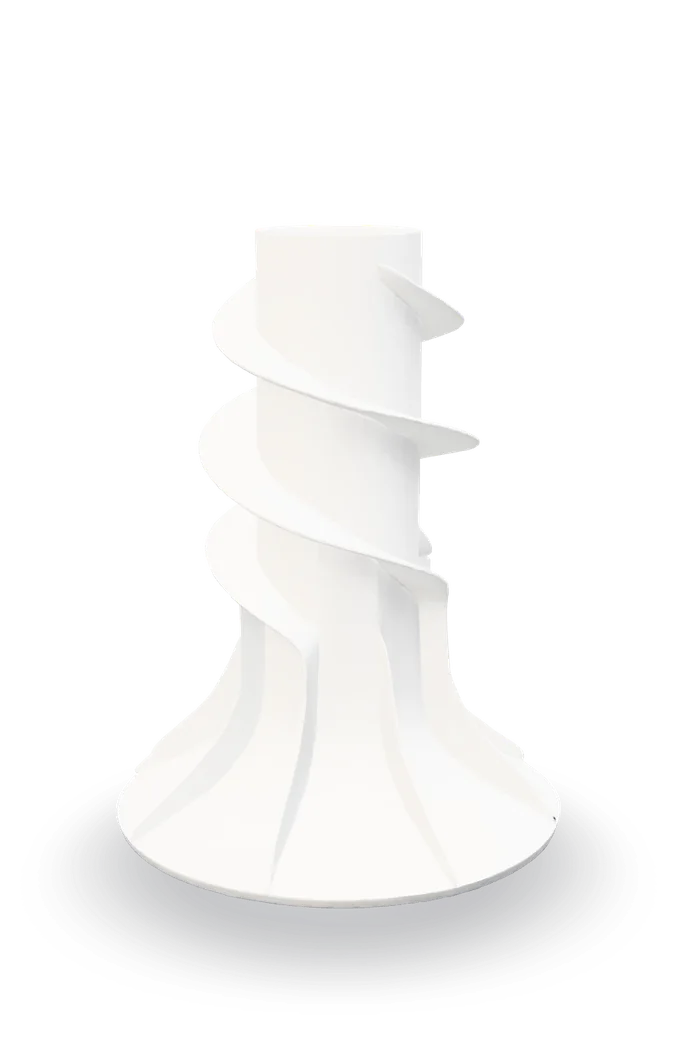
Washer agitator and agitator dogs replacement
If the top of your agitator spins freely in your hand or no longer pushes clothes down, a few plastic cogs are worn. It is a quick fix with basic tools.
- Difficulty
- Anyone can do it
- Time
- 15–30 min
- Typical part cost
- $5–$30Pro: $75–$200
- Tools
- 3See the list
Pop a cap, undo one bolt, and lift. Most of the job is cleaning out old detergent gunk.
What it does
What the agitator does
The agitator is the post in the middle of a top-load tub. It twists back and forth to move clothes through the water.
Many agitators come in two pieces. The bottom twists with the drive, and a ratchet of small plastic cogs, called agitator dogs, turns the top part in one direction to pull clothes down.
Some agitators sit on a splined coupler that connects them to the drive shaft.
Why it fails
The plastic dogs wear down until they slip. The top half then spins freely and clothes stop turning over.
A stripped coupler lets the whole agitator turn freely, often with a grinding sound while washing.
Symptoms
Signs of a bad agitator
Top half spins freely
Turn the top of the agitator by hand. It should turn one way and lock the other. If it spins freely both ways, the dogs are worn.
Clothes float on top
Clothes do not turn over and get pulled down during the wash.
Grinding during agitation
A grinding noise and an agitator that turns freely by hand can mean a stripped coupler.
Full diagnosis
How to test it
Test the agitator before you buy
- Unplug the washer.
- Grab the top part of the agitator and turn it each way.
- Then hold the bottom part and try to turn the whole agitator.
- Good
- The top turns one way and locks the other, and the whole agitator does not spin loosely on its shaft. The agitator is fine.
- Bad
- The top spins freely both ways: worn dogs. The whole agitator spins freely: a stripped coupler.
Safety first
Before you touch anything
- 1
Unplug the washer
Pull the plug before you reach into the tub. A cycle starting while your hands are in it can injure you.
Tools you'll need
Grab these first
Tool and part links are affiliate links. We may earn a commission at no extra cost to you, and it never changes what we tell you to check first. How this works
- Socket set1/4 in. drive, with extensionRemoves the bolt under the agitator cap on many models.Typically $20–$45Shop this tool
- Multi-bit screwdriverPhillips, flat, squarePries off the agitator cap.Typically $10–$25Shop this tool
- Nitrile glovesThe inside of an agitator collects slimy detergent buildup.Typically $8–$15Shop this tool
Step by step
How to replace the agitator
- 1
Unplug and open the lid
Pull the plug. Take out any clothes and make sure the tub is empty.
- 2
Remove the cap and the top
Pop off the cap on top of the agitator, or the fabric softener cup if yours has one.
Pull the top half straight up. On some models it lifts off; on others it is held by a bolt or a cap inside.
- 3
Swap the dogs
The dogs sit around the cam at the bottom of the top half. Pull out the old ones and the cam, and clean out the buildup.
Snap all the new dogs from the kit into place, not just the worn ones. Make sure they all face the same way as the old ones.
Tip. Take a photo before you pull the old dogs out. The direction they face matters.
Buy the part
Agitator and agitator dogs
Opens Amazon in a new tab. Where’s my model number?
What to look for
- The kit listed for your washer's model number. Dogs differ between agitator designs.
- If the coupler is stripped, the matching agitator coupler or drive block.
- 4
Check the coupler if the whole agitator slipped
If the whole agitator turned freely, remove the center bolt and lift the agitator off. Look at the splined coupler at the bottom. Worn or rounded splines mean replace it.
- 5
Reassemble and test
Put the agitator back together, refit the bolt and the cap.
Turn the top by hand: it should ratchet one way and lock the other. Plug in and run a short wash.
Buy the part
Get the right replacement
Buy the part
Agitator and agitator dogs
Opens Amazon in a new tab. Where’s my model number?
What to look for
- The kit listed for your washer's model number. Dogs differ between agitator designs.
- If the coupler is stripped, the matching agitator coupler or drive block.
Know your limits
When to call a pro
Stop and call a pro if
- The agitator does not move at all while the motor runs. The motor coupler or the transmission is the more likely cause.
- The center bolt will not come out, or the agitator is seized on the shaft.
FAQ
Agitator and agitator dogs questions
Does every washer have agitator dogs?
No. Only two-piece agitators use them. Washers with a low-profile impeller plate or a one-piece agitator do not.
Is this why my washer will not spin?
Usually not. Worn dogs only affect the top half of the agitator. If nothing moves, look at the motor coupler and the lid switch.
How long does this take?
About 15 minutes for the dogs. Add a little time if you clean out the inside of the agitator while it is apart.
Related
Keep going
- SymptomWasher won't spinThe clothes come out soaking, or the washer agitates but never spins. Check drainage, the lid switch or door lock, and the load first, then the belt or motor coupler.Open guide
- Washer partMotor couplerOn direct-drive top loaders, the motor coupler links the motor to the transmission and breaks on purpose to protect the motor. When it fails, the washer fills and drains but will not agitate or spin.Open guide
- Washer partLid switch or lid lockThe lid switch tells a top loader its lid is shut, and on many newer washers it also locks the lid. When it fails the washer will not spin or start. Test it and swap it in under an hour.Open guide
Get the next fix before it breaks
A short email when the seasons turn: filters to change, detector batteries to check, and new repair guides. No spam, unsubscribe any time.
We send it with Kit. Privacy