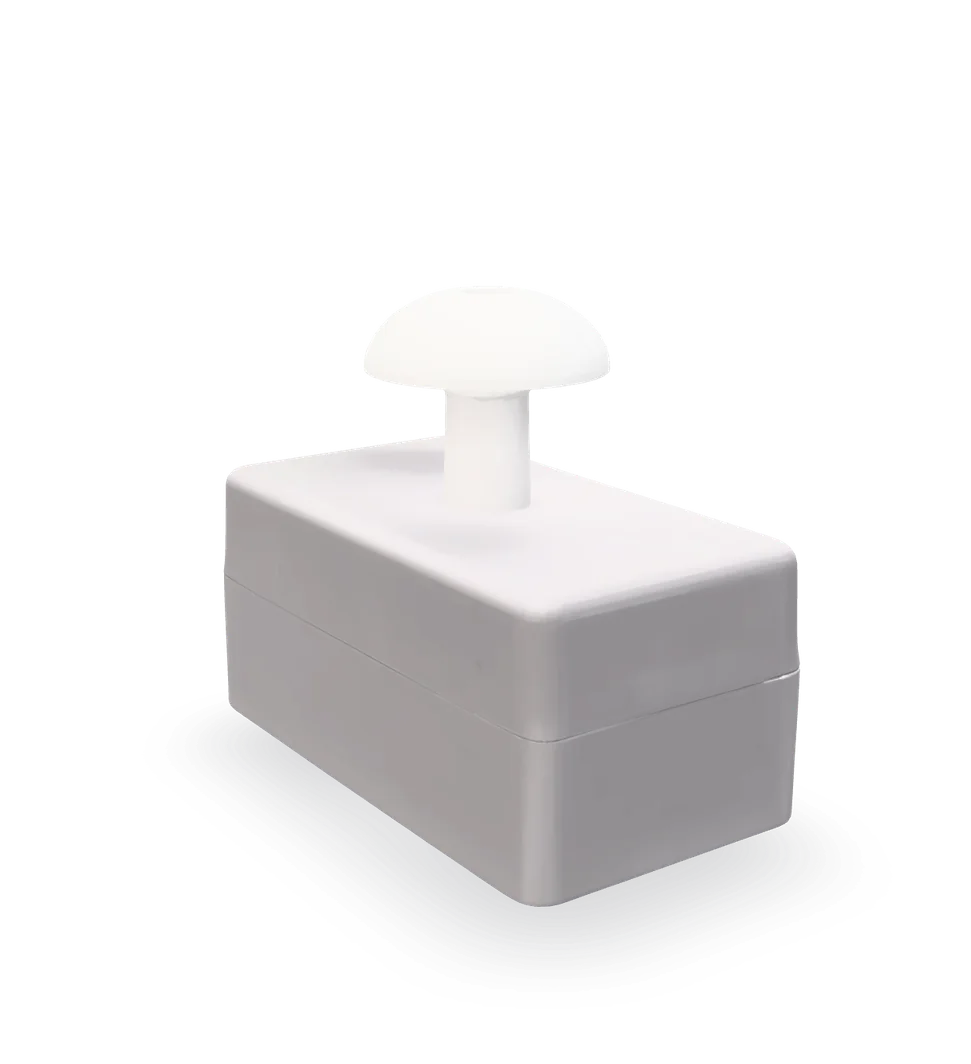
Dishwasher float switch: clean, test and replace
A stuck float can stop a dishwasher filling at all. Often it just needs a wipe so it slides freely.
- Difficulty
- Easy
- Time
- 10–45 min
- Typical part cost
- $10–$45Pro: $90–$150
- Tools
- 4See the list
Cleaning the float is easy. Replacing the switch means the kick plate and a couple of screws.
What it does
What the float switch does
The float is a small dome or cylinder in the floor of the tub, usually at a front corner. As water fills the tub it rises.
Below the tub, the float presses a switch. If the water gets too high, the switch cuts the fill so the dishwasher cannot overflow.
Why it fails
Food and grease make the float stick in the up position. The control thinks the tub is full and never fills.
The switch underneath wears out, or its lever no longer lines up with the float.
Symptoms
Signs of a bad float switch
No fill at all
The dishwasher runs but no water comes in, and the float sits high or will not move.
Full diagnosisFloat stuck
Lift the float by hand. It should slide up and drop back freely.
Overfilling
Water comes up near the door during a fill. Switch it off and check the float right away.
Full diagnosis
How to test it
Test the float switch before you buy
- Switch off the breaker, or unplug the dishwasher. Pull the lower rack out and find the float in the tub floor.
- Lift it and let it drop a few times. Clean around it and inside its cover if it pops off.
- Good
- It moves freely. Run a cycle. If it now fills, you are done.
- Bad
- It sticks even when clean, or it moves but the fill still does not start. Test the switch.
- Switch off the breaker and remove the kick plate.
- Find the switch under the float. Pull its wires off, noting where each goes.
- Test across the terminals with the float down, then lift the float and test again.
A good float switch typically
Changes between near 0 Ω and OL as the float moves
Typical range. Check your part label or manual for the exact spec. Whether it is closed with the float up or down depends on the design. What matters is that it changes.
- Good
- The reading changes cleanly when you lift and drop the float. The switch works.
- Bad
- No change when the float moves. Replace the switch.
Safety first
Before you touch anything
- 1
Breaker off
Switch off the breaker, or unplug the dishwasher under the sink, before you remove the kick plate. If it is hardwired, check with a voltage tester that the power is off before you touch any wires.
Tools you'll need
Grab these first
Tool and part links are affiliate links. We may earn a commission at no extra cost to you, and it never changes what we tell you to check first. How this works
- Non-contact voltage testerPen styleOn a hardwired dishwasher, confirms the power is really off before you touch any wires.Typically $15–$30Shop this tool
- Multi-bit screwdriverPhillips, flat, squareRemoves the kick plate and the switch screws.Typically $10–$25Shop this tool
- Digital multimeterΩ, V, µF, µATests the switch for continuity.Typically $25–$60Shop this tool
- Stiff nylon brushCleans grease from around the float.Typically $5–$12Shop this tool
Step by step
How to replace the float switch
- 1
Switch off the power
Turn off the breaker, or unplug the dishwasher under the sink.
- 2
Remove the kick plate
Take out the screws along the bottom of the door frame and pull the kick plate off.
- 3
Remove the old switch
Find the switch directly below the float, usually on the left or right. Photograph and pull off the wires.
Remove its screw or squeeze its clips and take it out.
- 4
Fit the new switch
Mount the new switch so its lever sits under the float stem. Reconnect the wires as in your photo.
Buy the part
Float and float switch
Opens Amazon in a new tab. Where’s my model number?
What to look for
- The switch listed for your dishwasher's model number.
- If the float itself is cracked, the float as well.
- 5
Check and close up
Lift the float from inside the tub and listen for the switch to click.
Refit the kick plate, switch the power on, and run a cycle.
Buy the part
Get the right replacement
Buy the part
Float and float switch
Opens Amazon in a new tab. Where’s my model number?
What to look for
- The switch listed for your dishwasher's model number.
- If the float itself is cracked, the float as well.
Know your limits
When to call a pro
Stop and call a pro if
- The dishwasher overfills even with a working float and switch. The inlet valve may be leaking through, or the control may be faulty.
- Water is on the floor under the dishwasher.
FAQ
Float and float switch questions
Where is the float on my dishwasher?
Usually a small round dome or cylinder in the tub floor near the front, on the left or right.
Can a stuck float stop the dishwasher filling?
Yes. If it is stuck up, the dishwasher thinks it is already full and will not fill.
My dishwasher overfilled. What should I do?
Switch it off at the breaker and close the water shutoff. Check the float moves freely, then look at the inlet valve.
Related
Keep going
- SymptomDishwasher won't fill with waterYou hear the cycle start but no water comes in. A closed shutoff, a stuck float, or a failed inlet valve causes most of it. The latch and the control come next.Open guide
- SymptomDishwasher leaking waterWater on the floor in front of or under the dishwasher. The wrong soap, a dirty or worn door gasket, or a loose hose or valve connection causes most leaks.Open guide
- Dishwasher partWater inlet valveThe inlet valve lets hot water into the dishwasher for each fill. A clogged screen or a dead coil means no fill. A leaking seal means water when it is off. Test it and swap it from the front.Open guide
- Dishwasher partDishwasher filterMost dishwashers have a filter in the tub floor that catches food before the water goes around again. A clogged one leaves dishes dirty and the tub smelling. Twist it out, rinse it, twist it back.Open guide
Get the next fix before it breaks
A short email when the seasons turn: filters to change, detector batteries to check, and new repair guides. No spam, unsubscribe any time.
We send it with Kit. Privacy