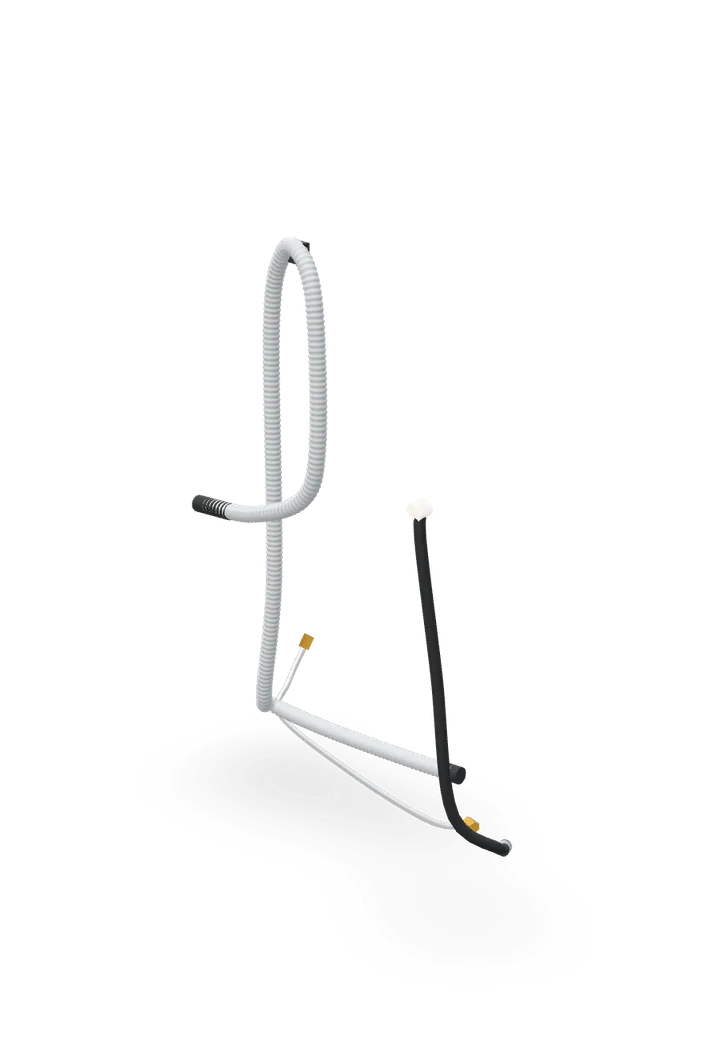
Dishwasher drain hose: check, clear and fix the loop
Standing water after a new install, or a sink that backs up into the dishwasher? The fix is often under the sink, not inside the dishwasher.
- Difficulty
- Easy
- Time
- 15–45 min
- Typical part cost
- $10–$50Pro: $50–$100
- Tools
- 4See the list
Under-sink work with a screwdriver and a bucket. Getting at the far end behind the dishwasher is the hard part.
What it does
What the drain hose does
A dishwasher does not drain by gravity. Its drain pump pushes water up the drain hose and into the garbage disposal or a fitting on the sink drain.
Before it drops to the drain, the hose has to rise in a high loop under the counter, or run through an air gap, which is the small cap beside the faucet. Either one keeps dirty sink water from flowing back into the dishwasher. Local codes decide which one you need.
Why it fails
The hose gets kinked or crushed behind the dishwasher or under the sink.
The high loop sags to the cabinet floor, so sink water flows back into the tub.
Food and grease clog the hose, the air gap, or the disposal inlet.
After a new disposal is installed, the plastic knockout plug in its dishwasher inlet was never removed.
Symptoms
Signs of a bad drain hose
Water in the bottom after a cycle
A puddle left on the tub floor.
Full diagnosisNew install will not drain
A brand-new dishwasher, or a new disposal, and it has never drained right. Check the knockout plug first.
Full diagnosisSink water backs into the tub
Dirty water appears in the dishwasher after you use the sink or the disposal. The hose has no high loop or air gap.
Water at the air gap
Water spills out of the little cap beside the faucet while the dishwasher drains. The air gap or the hose below it is clogged.
How to test it
Test the drain hose before you buy
- Open the sink cabinet. Find where the dishwasher hose connects: the side of the disposal, a fitting on the sink drain, or an air gap.
- Check that the hose loops up high under the counter, or goes to the air gap, before it drops to the drain.
- Look for kinks and crushed spots, and check the clamp is tight.
- Good
- A high loop or an air gap, no kinks, a tight clamp. Check the disposal is clear and the filter is clean.
- Bad
- No loop, a kink or a loose clamp. Fix the routing (steps below).
Safety first
Before you touch anything
- 1
Power off
Switch off the dishwasher at its breaker, or unplug it under the sink, before you take the hose off. Switch off the disposal too.
- 2
Expect water
The hose holds dirty water. Have a bucket and towels under the connection.
Tools you'll need
Grab these first
Tool and part links are affiliate links. We may earn a commission at no extra cost to you, and it never changes what we tell you to check first. How this works
- Multi-bit screwdriverPhillips, flat, squareLoosens the hose clamp at the disposal or drain fitting.Typically $10–$25Shop this tool
- Hose clamp pliersReleases a spring clamp if yours has one.Typically $10–$25Shop this tool
- Bucket5 galCatches the water in the hose.Typically $4–$10Shop this tool
- HeadlampUnder the sink is dark.Typically $12–$30Shop this tool
Step by step
How to replace the drain hose
- 1
Switch off the power
Turn off the dishwasher's breaker, or unplug it under the sink. Make sure the disposal switch is off.
- 2
Take the hose off the drain
Put the bucket under the connection. Loosen the clamp and twist the hose off the disposal inlet or drain fitting. Let it empty into the bucket.
- 3
Check the knockout plug
If the hose goes to a disposal, push a pencil or screwdriver into the disposal's dishwasher inlet. It should go straight through into the disposal.
If it hits plastic, the knockout plug is still there. See the disposal inlet guide to knock it out.
- 4
Clear the hose and the air gap
Flush the hose end with water from the sink sprayer, or blow through it, to check it is clear.
If you have an air gap, pull off its cap and cover, and clear any food from inside with a brush.
- 5
Make a high loop and reconnect
If there is no air gap, lift the hose as high as it goes under the counter and fasten it there with a strap or clamp, then let it drop to the drain. Check your manual for the height it calls for.
Push the hose back on the inlet and tighten the clamp.
Buy the part
Drain hose, high loop and air gap
Opens Amazon in a new tab. Where’s my model number?
What to look for
- A hose matched to your dishwasher's model, or a universal hose with the right end sizes.
- Long enough to make a high loop without stretching.
Universal drain hose kits fit many dishwashers. Check the end sizes at the pump and at your drain fitting.
- 6
Power on and test
Switch the power back on. Run a short rinse and check the floor of the tub is dry afterward, and that nothing leaks under the sink.
Buy the part
Get the right replacement
Buy the part
Drain hose, high loop and air gap
Opens Amazon in a new tab. Where’s my model number?
What to look for
- A hose matched to your dishwasher's model, or a universal hose with the right end sizes.
- Long enough to make a high loop without stretching.
Universal drain hose kits fit many dishwashers. Check the end sizes at the pump and at your drain fitting.
Know your limits
When to call a pro
Stop and call a pro if
- The sink itself drains slowly or backs up. The house drain is clogged. Call a plumber.
- Local code requires an air gap and you do not have one. A plumber can add one.
- The hose is clear, the loop is right, and the dishwasher still will not drain. Check the drain pump.
FAQ
Drain hose, high loop and air gap questions
Do I need an air gap or a high loop?
Your local plumbing code decides. Many places accept a high loop, and some require an air gap. Dishwasher installation instructions call for one or the other.
Why does my new dishwasher not drain?
Most often a kinked hose, a missing high loop, or a knockout plug left in a new disposal.
Can the garbage disposal stop the dishwasher draining?
Yes. A clogged disposal, or one with its knockout plug still in place, blocks the dishwasher drain. Run the disposal to clear it.
Related
Keep going
- SymptomDishwasher won't drainWater sits in the tub after a cycle. A packed filter, a clogged disposal or drain hose, or a disposal knockout plug causes most of it. A jammed or failed drain pump is next.Open guide
- SymptomDishwasher leaking waterWater on the floor in front of or under the dishwasher. The wrong soap, a dirty or worn door gasket, or a loose hose or valve connection causes most leaks.Open guide
- Dishwasher partDrain pumpThe drain pump pushes dirty water out the drain hose at the end of each wash. When it jams or burns out, water stays in the tub. Test it, then swap it from the front or from underneath.Open guide
- Dishwasher partDishwasher filterMost dishwashers have a filter in the tub floor that catches food before the water goes around again. A clogged one leaves dishes dirty and the tub smelling. Twist it out, rinse it, twist it back.Open guide
Get the next fix before it breaks
A short email when the seasons turn: filters to change, detector batteries to check, and new repair guides. No spam, unsubscribe any time.
We send it with Kit. Privacy