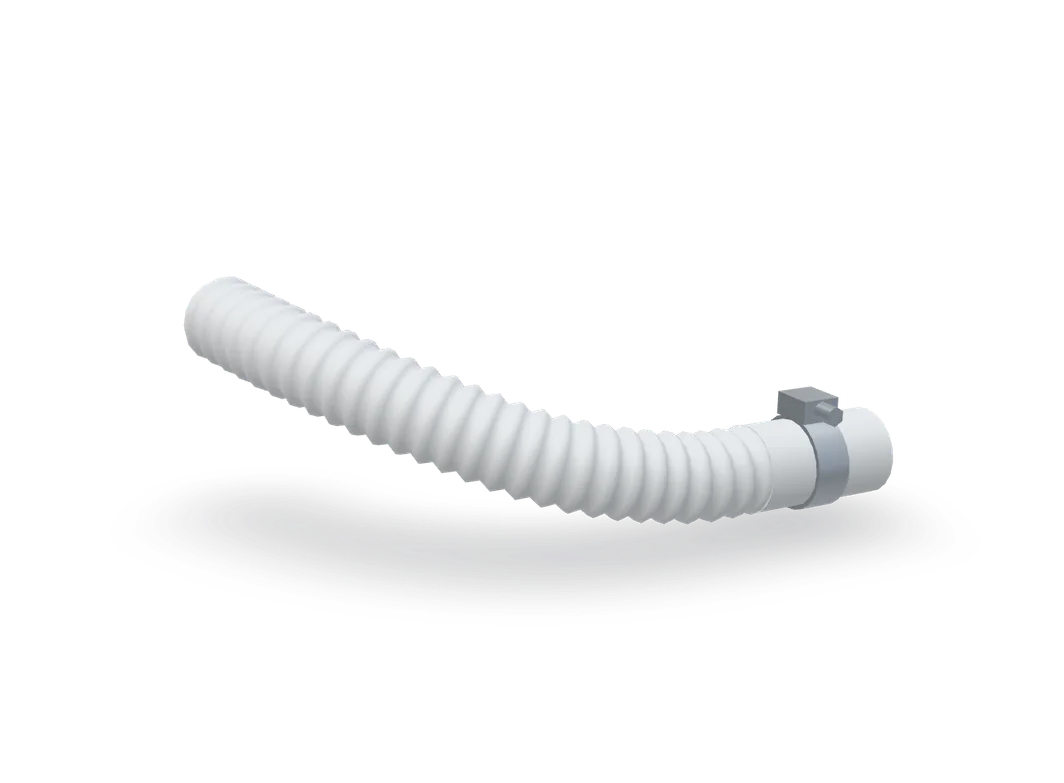
Disposal dishwasher inlet: knockout plug and hose connection
New disposal and now the dishwasher will not drain? The plastic knockout plug may still be in the inlet. It is a quick job with a screwdriver and a hammer.
- Difficulty
- Anyone can do it
- Time
- 10–25 min
- Typical part cost
- $5–$10Pro: $100–$250
- Tools
- 3See the list
A screwdriver, a hammer and a hose clamp. The awkward part is the angle under the sink.
What it does
What the dishwasher inlet does
The dishwasher inlet is the short nipple on the side of the disposal, near the top. The dishwasher's drain hose clamps onto it, so the dishwasher pumps its water into the disposal.
New disposals come with a plastic knockout plug sealed inside that inlet. It stays in if no dishwasher is connected, and must come out if one is.
Why it fails
The plug was never knocked out when the disposal was installed, so the dishwasher cannot drain at all.
The plug was knocked out but left inside the disposal, where it rattles.
The hose clamp loosens and the joint drips, or the hose is kinked or clogged.
Symptoms
Signs of a bad dishwasher inlet
New disposal, dishwasher will not drain
The dishwasher drained fine before the disposal was installed.
Full diagnosisRattle after install
A loose rattle inside a new disposal can be the knockout plug that fell in.
Full diagnosisDrip at the hose joint
Water at the side inlet during the dishwasher's drain.
Full diagnosis
How to test it
Test the dishwasher inlet before you buy
- Switch off and unplug the disposal. Put a bucket under the inlet.
- Loosen the clamp and pull the dishwasher hose off the inlet.
- Push a pencil or screwdriver straight into the inlet.
- Good
- It goes straight in about 3 inches with nothing in the way. The plug is out. Check the hose and the dishwasher instead.
- Bad
- It stops short against hard plastic. The knockout plug is still there. It sits a little way inside, so you will not see it from the side.
Safety first
Before you touch anything
- 1
Switch off and unplug
Turn off the wall switch and unplug the disposal, or switch off its breaker. Switch off the dishwasher too.
Tools you'll need
Grab these first
Tool and part links are affiliate links. We may earn a commission at no extra cost to you, and it never changes what we tell you to check first. How this works
- Multi-bit screwdriverPhillips, flat, squareA flat blade knocks out the plug and tightens the hose clamp.Typically $10–$25Shop this tool
- Needle-nose pliersFishes the knocked-out plug out of the disposal.Typically $8–$20Shop this tool
- Bucket5 galCatches water from the dishwasher hose.Typically $4–$10Shop this tool
Step by step
How to replace the dishwasher inlet
- 1
Power off
Turn off the wall switch and unplug the disposal, or switch off its breaker. Make sure the dishwasher is off.
- 2
Take off the dishwasher hose
Put the bucket under the inlet, loosen the clamp, and twist the hose off. Let it drain into the bucket.
- 3
Knock out the plug
Set the tip of a flat screwdriver against the plug inside the inlet and tap the handle with a hammer until the plug breaks free into the disposal.
Some newer models use a plug that twists out with the jam wrench instead. Check your manual first.
Careful. Tap gently. You only need to pop the plug, not crack the inlet.
- 4
Fish the plug out
Reach in from the sink with needle-nose pliers or tongs and pull the plug out of the chamber. Do not leave it in there, and never use your hand.
- 5
Reconnect the hose
Push the dishwasher hose fully onto the inlet and tighten the clamp. Check the hose is not kinked, and that it loops up high under the counter or goes to an air gap first.
Buy the part
Dishwasher inlet and knockout plug
Opens Amazon in a new tab. Where’s my model number?
What to look for
- A hose clamp or connector kit that fits your disposal's inlet and your dishwasher hose.
- 6
Test with the dishwasher
Power both back on. Run a short dishwasher rinse and check the hose joint for drips.
Buy the part
Get the right replacement
Buy the part
Dishwasher inlet and knockout plug
Opens Amazon in a new tab. Where’s my model number?
What to look for
- A hose clamp or connector kit that fits your disposal's inlet and your dishwasher hose.
Know your limits
When to call a pro
Stop and call a pro if
- The plug is out, the hose is clear and the dishwasher still will not drain.
- The inlet is cracked.
FAQ
Dishwasher inlet and knockout plug questions
Why did my dishwasher stop draining after I installed a new disposal?
The knockout plug in the disposal's dishwasher inlet may still be in place. It is the first thing to check. Remove it and take it out of the chamber.
What if I do not have a dishwasher?
Leave the plug in. It seals the inlet.
Do I need a high loop with a disposal?
Yes, or an air gap, depending on your local code and your dishwasher. See the dishwasher drain hose guide.
Related
Keep going
- SymptomGarbage disposal draining slowlyWater sits in the sink, or the dishwasher backs up into it. A clog in the disposal outlet or the trap, grinding with too little water, or a dishwasher knockout plug are common causes.Open guide
- SymptomGarbage disposal leakingWater under the sink, traced to the disposal. Top leaks are the sink flange. Side leaks are the discharge elbow or the dishwasher hose. Bottom leaks mean the unit has failed inside.Open guide
- Garbage disposal partWhole disposal unitWhen the body cracks, it leaks from the bottom or the reset button, or the motor is dead, the disposal gets replaced as a unit. Unhook it, move the cord, hang the new one and reconnect the drains.Open guide
- Garbage disposal partDischarge elbow and gasketThe discharge elbow carries ground food out of the disposal into the drain trap. A flattened gasket or loose fastener at the disposal, or a loose slip nut at the trap, leaks. Tighten it or swap the gasket.Open guide
Get the next fix before it breaks
A short email when the seasons turn: filters to change, detector batteries to check, and new repair guides. No spam, unsubscribe any time.
We send it with Kit. Privacy