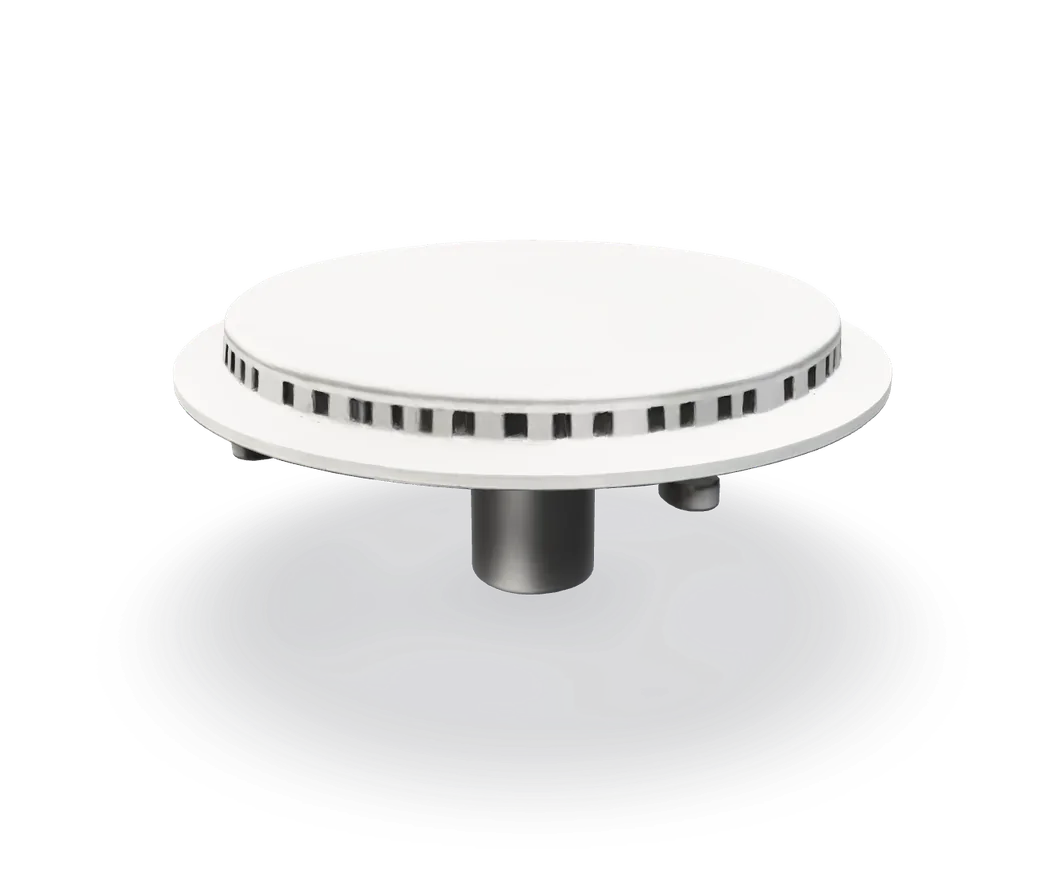
How to clean gas range burner caps and heads
Gas ranges only. A burner that clicks and will not light is usually wet, dirty or wearing its cap crooked. This is the cleaning the owner's manual tells you to do, and it needs no tools.
- Difficulty
- Anyone can do it
- Time
- 10–30 min
- Typical part cost
- $0Pro: $70–$130
- Tools
- 2See the list
Lift off, wash, dry, put back. The only rules: use a pin, not a toothpick, and never enlarge a port.
What it does
What the burner caps does
Gas comes up from the burner valve into the burner head and flows out through a ring of small ports under the cap. The spark electrode beside the burner lights it.
The cap spreads the flame evenly and has to sit flat and centered on the head. Caps and heads are made to lift off for cleaning.
Why it fails
Food and grease from boil-overs bake into the ports and block the gas.
Water left in the ports after a spill or a wash stops the burner from lighting and makes the igniter click nonstop until it dries.
A cap that is off-center, upside down or on the wrong burner will not light properly.
Symptoms
Signs of a bad burner caps
Clicks, but no flame
The igniter clicks when you turn the knob to Lite, but the burner does not catch or catches only on one side.
Full diagnosisKeeps clicking after it lights
Especially after cleaning or a spill. Moisture or a crooked cap is the usual cause.
Full diagnosisUneven or gappy flame
Flames are missing from part of the ring, or the flame is lopsided. Some ports are blocked or the cap is off-center.
Full diagnosis
How to test it
Test the burner caps before you buy
- With the burner off and cool, lift the grate. Look at the cap: it should sit flat and centered with almost no side-to-side movement.
- Lift the cap off and look at the burner head's ports and at the small igniter beside it.
- Good
- Clean, dry ports and a cap that sits flush. Look at the spark next: see [burner won't light](/range-oven/symptoms/burner-wont-light).
- Bad
- Ports crusted with food or wet, or a cap that rocks or sits crooked. Clean and dry them (steps below).
Safety first
Before you touch anything
- 1
Knobs off, and know your shutoff
Make sure every knob is off before you lift a cap. If you smell gas, do not light anything or touch any switch; leave the house and call your gas supplier from outside.
- 2
Unplug for a deep clean
You do not need to unplug the range to lift off caps. If you will be cleaning close to the igniters, unplug it first so nothing sparks.
- 3
Let the burners cool
Caps and grates stay hot well after the flame is out.
Wait about 15 min
Tools you'll need
Grab these first
Tool and part links are affiliate links. We may earn a commission at no extra cost to you, and it never changes what we tell you to check first. How this works
- Stiff nylon brushA soft brush or old toothbrush cleans the burner head and cap.Typically $5–$12Shop this tool
- Pipe cleanersA straight pin, needle or thin wire clears clogged ports. Pipe cleaners help dry them.Typically $3–$8Shop this tool
Step by step
How to clean the burner caps and heads
- 1
Knobs off, range unplugged
Turn every burner knob to off and let the cooktop cool. Unplug the range so the igniters cannot spark while you work near them.
- 2
Lift off the grate, cap and head
Lift off the grate, then the burner cap. On most ranges the burner head lifts off too. Note which cap and head go on which burner: they are often different sizes.
- 3
Wash them
Wash the caps and heads in warm, soapy water with a soft brush. Do not put them in the dishwasher.
- 4
Clear the ports
Push a straight pin, a needle or a thin wire through any clogged port. Do not use a wooden toothpick, which can snap off inside, and do not widen or bend the ports.
Wipe the area around the igniter with a damp cloth, being gentle with its porcelain.
- 5
Dry them completely
Shake out the water and let the parts air-dry fully, or speed it up with a hair dryer on a cool setting. Wet ports are a common reason a freshly cleaned burner will not light.
- 6
Reseat the head and cap
Set the head back on its base so it sits level, then the cap. Line up any alignment pins or notches. The cap should sit flush and centered with very little side-to-side play.
- 7
Plug in and light it
Plug the range back in, replace the grate and turn the knob to Lite. The burner should catch all the way around within a few clicks, and the clicking should stop once it lights.
Buy the part
Get the right replacement
Buy the part
Burner caps and heads
Opens Amazon in a new tab. Where’s my model number?
What to look for
- Only if a cap is cracked, warped or lost. Caps and heads are sized to each burner position.
- Your range's model number and the burner position: small, medium, large or center.
Know your limits
When to call a pro
Stop and call a pro if
- You smell gas with every knob off. Leave the house and call your gas supplier from outside.
- The flame is large, yellow and lazy, or lifts off the burner.
- A clean, dry, well-seated burner still will not light and the igniter does not spark. See the spark module.
- Gas reaches the burner but the burner base, valve or gas tube needs work. That is a pro job.
FAQ
Burner caps and heads questions
I just cleaned my stove and now a burner won't light. Why?
Usually water in the ports or a cap that went back crooked. Take the cap and head off, dry them fully, and reseat them flat and centered.
Can I put burner caps in the dishwasher?
Manufacturers say not to. Wash them by hand in warm, soapy water and dry them completely.
Can I use a toothpick to clean the ports?
No. A wooden toothpick can break off inside a port and block it. Use a straight pin, a needle or a thin wire, and do not widen the port.
Related
Keep going
- SymptomGas stove burner won't lightA gas cooktop burner clicks but will not catch, catches slowly, or does not click at all. Wet or dirty ports and a misaligned cap cause most of these. If no burner sparks, look at power and the spark module.Open guide
- SymptomGas stove keeps clickingThe igniters keep clicking after the burner lights, or click with every knob off. Moisture and a misaligned cap cause most of it. If it continues with everything dry and seated, a knob switch or the spark module has failed.Open guide
- Range partSpark moduleGas ranges only. The spark module makes the high-voltage pulses that spark at every burner when you turn a knob to Lite. A failing module gives weak, slow or no sparks at several burners, or clicks constantly. It is usually a few screws and a few plugs.Open guide
- Range partGas oven igniterGas ranges only. The oven igniter glows to light the bake burner and, at the same time, opens the oven safety valve. A weak igniter still glows but cannot draw enough current to open the valve, so the oven heats slowly or not at all.Open guide
Get the next fix before it breaks
A short email when the seasons turn: filters to change, detector batteries to check, and new repair guides. No spam, unsubscribe any time.
We send it with Kit. Privacy