Refrigerator compressor: what it does and when to call a pro
The compressor gets blamed for a lot it did not do. Here is how to rule out the cheap parts first, and what a pro does if it really is the compressor.
- Who fixes it
- A licensed pro
- Typical pro cost
- $700–$1,250
- Typical installed cost, part included. Varies by region
Sealed-system work. Replacing a compressor means recovering the refrigerant, brazing tubing, pulling a vacuum and recharging. That is licensed work requiring EPA certification.
What it does
What the compressor does
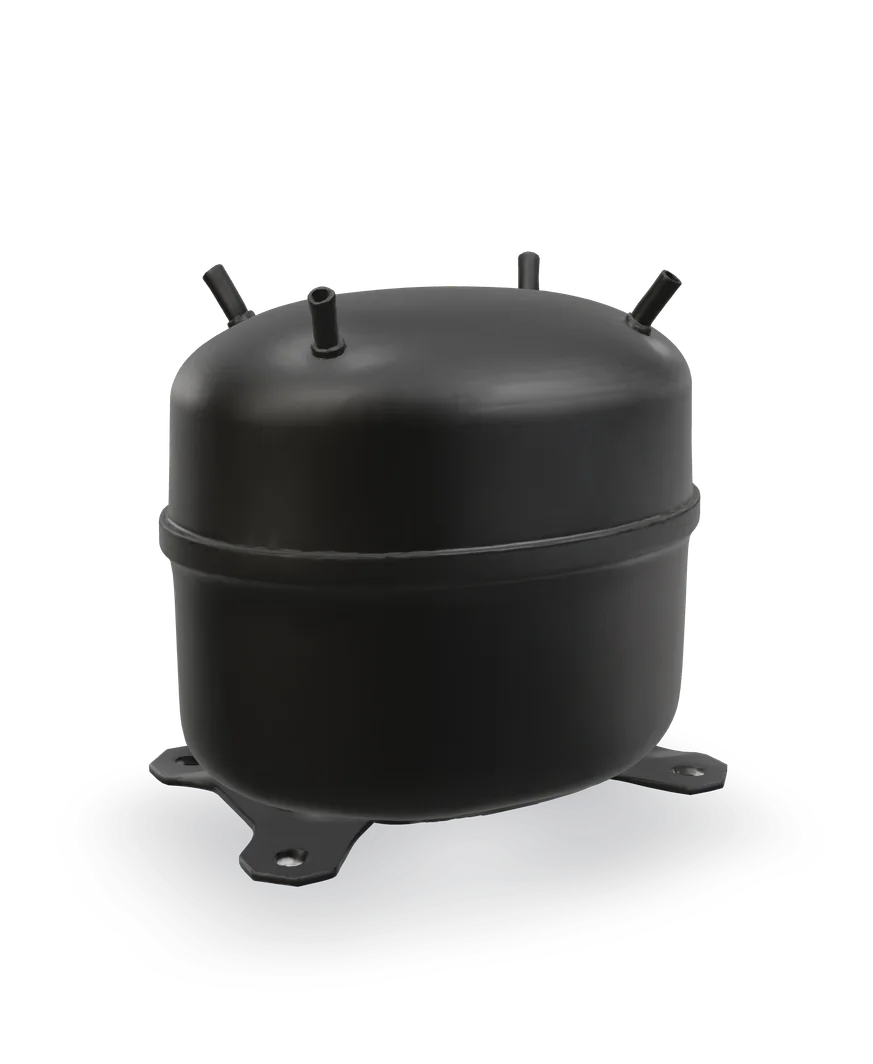
The compressor is the black dome in the machine compartment at the bottom back. It squeezes refrigerant gas and pushes it through the condenser coil, where it gives off heat, and on to the evaporator coil in the freezer.
A start relay and an overload plug onto pins on its side. They help it start and protect it from overheating.
Why it fails
Compressors can wear out after many years, or fail electrically.
Good news: when a refrigerator stops cooling, the compressor is rarely the first suspect. A failed start relay, for example, causes the same clicking with no cooling and costs far less.
Symptoms
Signs the compressor is failing
Clicks but never runs, with a new relay
The compressor clicks every few minutes without starting even after the start relay has been replaced. Time for a pro.
Full diagnosisRuns constantly, no cooling
The compressor hums nonstop, both fans run, the coils are clean, and the refrigerator still does not get cold.
Full diagnosisTrips the breaker
The breaker or a fuse trips when the compressor tries to start. Leave it off and call a pro.
Loud knocking or grinding from the back
Loud knocking, banging or grinding from the compressor itself, beyond the normal hum and the occasional click on restart.
Full diagnosis
Safety first
Stay safe until it is fixed
- 1
Unplug it if the breaker trips
If the breaker or fuse trips when the compressor starts, unplug the refrigerator and do not keep resetting it. Move food to coolers and call a pro.
- 2
Do not open the sealed system
Never cut, drill or open the refrigerant tubing. Federal rules prohibit knowingly releasing refrigerant, and only an EPA-certified technician may service the sealed system.
What a pro does
What to expect from the service call
- Rule out the cheap parts first: the start relay and overload, the condenser fan, the condenser coil and the evaporator fan.
- Test the compressor's windings and check whether it draws normal current when it starts and runs.
- Check the sealed system for leaks and for a correct charge with gauges.
- If the compressor has failed, recover the refrigerant, replace the compressor and usually the filter drier, braze the connections, pull a vacuum and recharge to the amount on the rating label.
- Watch it run through cooling cycles to confirm both sections reach temperature.
Know your limits
When to call a pro
Stop and call a pro if
- The compressor still will not start after you have replaced the start relay.
- The refrigerator runs nonstop with clean coils and both fans working, and it still does not cool.
- The breaker trips when the compressor tries to start.
- You see oily residue around the compressor or tubing, or hear a hiss.
FAQ
Compressor questions
Is my compressor dead if the refrigerator clicks?
Not usually. A click every few minutes with no cooling most often means a failed start relay, which is cheap. Some clicking is normal too: the compressor can click or chirp as it restarts.
Can I replace a refrigerator compressor myself?
No. It means opening the refrigerant system, and federal rules require EPA certification for that. It also needs recovery equipment, brazing and a vacuum pump.
Is it worth replacing the compressor?
It depends on the refrigerator's age and price. A compressor replacement typically costs a large share of a new refrigerator. On an older model, many owners put that money toward a new one instead. Get a written diagnosis and quote, and use the repair or replace calculator.
Related
Keep going
- SymptomRefrigerator not coolingThe freezer and the fresh-food section are both too warm. The usual causes are a dirty condenser coil, a stopped condenser fan, a failed start relay or an iced-over evaporator coil. The sealed system is the last thing to suspect, not the first.Open guide
- SymptomRefrigerator making noiseClicks, pops, gurgles, hums and sizzles are usually normal. A squeal or chirp from the freezer points to the evaporator fan. A rattle or squeal from the bottom back points to the condenser fan. Repeated clicking with no cooling points to the start relay.Open guide
- Refrigerator partCompressor start relay and overloadThe start relay plugs onto the side of the compressor and helps it start. When it fails, the compressor never starts and you hear a click every few minutes as it tries. It pulls straight off and pushes straight on.Open guide
- Refrigerator partCondenser fan motorThe condenser fan sits in the machine compartment at the bottom back. It pulls air through the condenser coil and over the compressor. When it stops, heat cannot leave and the whole refrigerator warms up.Open guide
- Refrigerator partSealed system and refrigerantThe sealed system is the closed loop of refrigerant: the compressor, the condenser coil, the evaporator coil and the tubing between them. A leak or a blockage stops the refrigerator from cooling even when every fan runs. Any repair means opening the loop, which is certified work.Open guide
Get the next fix before it breaks
A short email when the seasons turn: filters to change, detector batteries to check, and new repair guides. No spam, unsubscribe any time.
We send it with Kit. Privacy