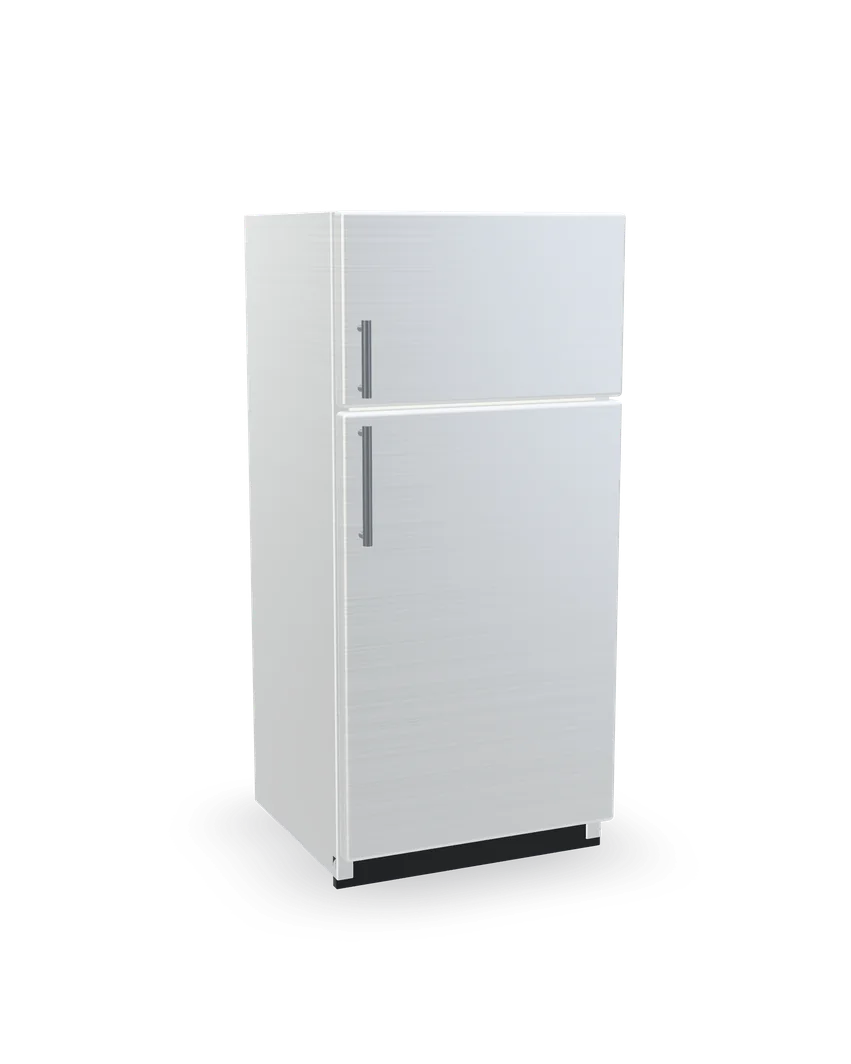
Refrigerator not cooling? Start here
Both sections warm is a different problem from just the fridge side warm. Here is how to narrow it down before you buy a single part.
Check these first
Five-minute checks, no tools
Controls set right
Set the fresh-food section to about 37°F and the freezer to 0°F, or the middle setting on a dial. Give it up to 24 hours after a change.
Vents not blocked
Move food away from the vents inside both sections, and make sure nothing blocks the base grille at the bottom front.
Doors seal
Close each door on a sheet of paper. It should drag as you pull it out, all the way around.
Condenser coil clean
Unplug the refrigerator and look at the coil behind the base grille or the rear panel. Vacuum off any dust.
Not in defrost
If nothing is running but the light works, it may be defrosting. Wait about 30 minutes before you worry.
Likely causes
Ranked by how often they are the problem
- 1DIY fix
Dirty condenser coil
Dust on the coil holds heat in, so the refrigerator runs longer and cools less. It is free to fix.
Fix the condenser coils15–30 min$0–$15 - 2DIY fix
Condenser fan motor
The compressor hums but the fan at the back does not spin, so heat cannot leave the coil.
Fix the condenser fan30 min–1 hr$50–$140 - 3DIY fix
Start relay
A click every few minutes and no steady hum: the compressor is not starting.
Fix the start relay20–45 min$8–$80 - 4DIY fix
Iced-over evaporator coil
The defrost system failed and ice blocks the air path. Usually the fresh-food section warms first, then the freezer.
Fix the defrost heater45 min–1.5 hr$20–$60 - 5DIY fix
Evaporator fan motor
No air moves from the freezer coil. On some models the freezer warms too.
Fix the evaporator fan30 min–1 hr$25–$150 - 6Call a pro
Sealed system or compressor
Everything above checks out, the compressor runs and it still will not cool. That needs an EPA-certified technician.
What's happening
What your refrigerator is doing
Start with the simple things. A control bumped to a warmer setting, food blocking the vents, a door that does not seal or a refrigerator pushed tight against the wall can all leave both sections warm.
Then listen at the back near the floor. If the compressor hums but the condenser fan is still, the heat cannot get out. If you hear a click every few minutes and no steady hum, the compressor is not starting, and the start relay is the first suspect.
If the compressor runs and the back fan spins, look inside the freezer. Ice packed on the evaporator coil, or an evaporator fan that does not spin, keeps cold air from moving even though the system is working.
Only when all of that checks out does the sealed system come into question. That is a job for an EPA-certified technician.
Know your limits
When to call a pro
Stop and call a pro if
- The compressor still clicks without starting after a new start relay.
- The compressor runs nonstop, both fans work, the coil is clean, and it still does not cool.
- The breaker trips when the compressor starts.
- You see oily residue on the tubing or heard a hiss after damaging the coil.
FAQ
Common questions
Why is my freezer fine but my fridge warm?
That is a different, usually easier problem: the cold air is not getting from the freezer to the fresh-food section. See freezer cold, fridge warm.
How long should a refrigerator take to cool down?
After a setting change, give it up to 24 hours. A new or just-restarted refrigerator can take a day or two to reach full temperature.
Is a clicking refrigerator about to die?
Not necessarily. A click or chirp as the compressor restarts is normal. Clicking every few minutes while it gets warmer usually means a failed start relay, which is a cheap part.
Can I keep the food safe while I fix it?
Keep a thermometer in each section. Food safety guidance is 40°F or below in the fridge and 0°F in the freezer. If it climbs above that, move food to coolers with ice.
Related
Keep going
- SymptomFreezer cold but fridge warmThe freezer still freezes but the fresh-food section warms up. All the cold comes from one coil in the freezer, so this usually means air is not moving: a stopped evaporator fan, an iced-over coil, or a blocked vent.Open guide
- SymptomRefrigerator freezer frosting upA frost-free freezer should never need defrosting by hand. Frost near the door usually means a leaking gasket. Thick ice behind the rear panel, on the coil, means the defrost heater, the defrost thermostat or the defrost timer has failed.Open guide
- SymptomRefrigerator making noiseClicks, pops, gurgles, hums and sizzles are usually normal. A squeal or chirp from the freezer points to the evaporator fan. A rattle or squeal from the bottom back points to the condenser fan. Repeated clicking with no cooling points to the start relay.Open guide
- Refrigerator partCondenser coilsThe condenser coil gives off the heat the refrigerator removes from your food. Dust, lint and pet hair on it hold that heat in, so the refrigerator runs longer and cools less. Cleaning it takes a vacuum and a soft brush.Open guide
- Refrigerator partCondenser fan motorThe condenser fan sits in the machine compartment at the bottom back. It pulls air through the condenser coil and over the compressor. When it stops, heat cannot leave and the whole refrigerator warms up.Open guide
- Refrigerator partCompressor start relay and overloadThe start relay plugs onto the side of the compressor and helps it start. When it fails, the compressor never starts and you hear a click every few minutes as it tries. It pulls straight off and pushes straight on.Open guide
Get the next fix before it breaks
A short email when the seasons turn: filters to change, detector batteries to check, and new repair guides. No spam, unsubscribe any time.
We send it with Kit. Privacy