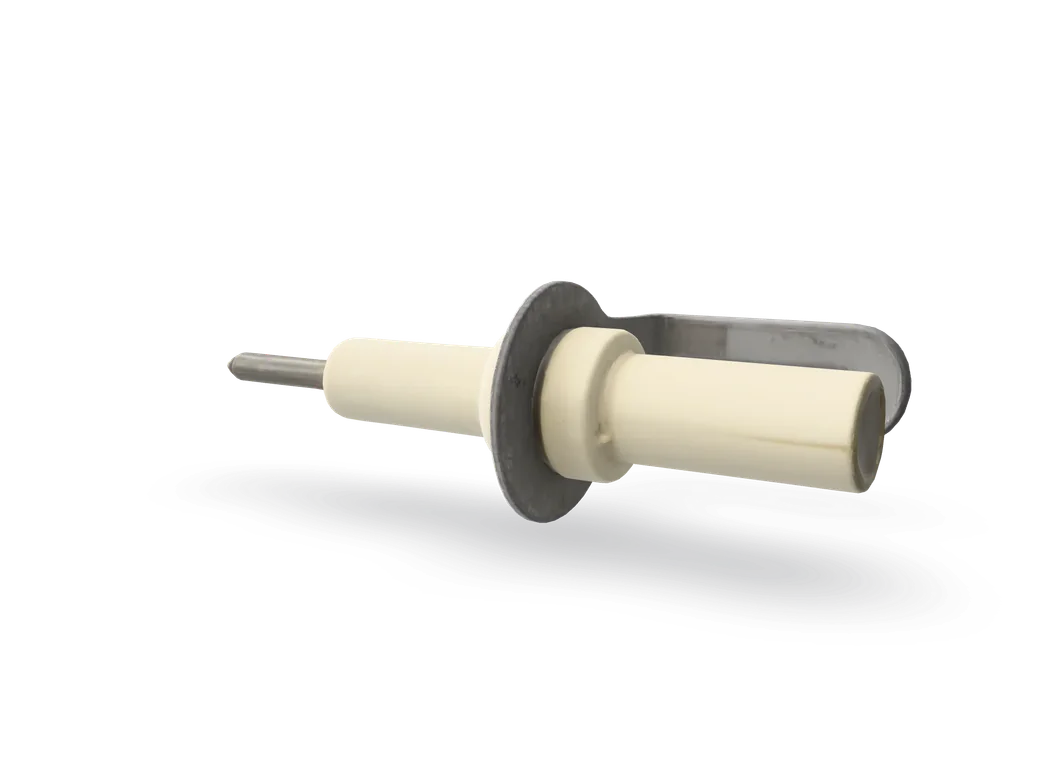
Tankless igniter and flame rod: ignition codes and when to call a pro
Ignition and flame failure codes are some of the most common tankless faults. A dirty flame rod is often behind them. Both parts sit inside the sealed burner, so the fix is a pro's job.
- Who fixes it
- A licensed pro
- Typical pro cost
- $75–$650
- Typical. Based on general igniter and tankless repair ranges. No published price for this job alone
Gas and combustion work. The parts sit in the sealed burner area, and getting to them means breaking gasketed seals that keep exhaust and carbon monoxide inside. Pros only.
What it does
What the igniter and flame rod does
Tankless gas water heaters only. When you open a hot tap, the unit calls for heat and the igniter, sometimes called the ignition plug, makes a spark to light the burner.
The flame rod sits in the burner flame. It lets the control board confirm there really is a flame. If the board cannot sense one, it stops the unit and shows an error code.
Both parts are mounted through the burner housing behind gaskets that keep the combustion area sealed. Getting to them means opening that seal.
Why it fails
A dirty flame rod is a common cause of flame failure codes. The burner lights, but the board loses track of the flame and shuts it down.
Debris on the igniter, or no spark at all, stops the burner from lighting in the first place.
The same codes also come from causes that have nothing to do with these parts: no gas or too little gas, air supply problems, and venting that lets the unit pull its own exhaust back in. That is why a pro checks the whole system, not just the rod.
A flame rod can often be cleaned. If cleaning does not fix it, the rod may be damaged and gets replaced.
Symptoms
Signs the igniter and flame rod is failing
An ignition failure code
The unit calls for heat but never lights. On many units this shows as code 11, but codes differ between makers. Look yours up in the manual.
Full diagnosisA flame failure code
The burner lights but does not stay lit, and the unit stops. On many units this is code 12. A dirty flame rod is a common reason.
Full diagnosisA flame flickers, then an error
You see flame for a moment through the sight glass, then the unit shows an ignition code. That usually means it lit but could not sense the flame.
Water never gets hot enough
A burner that lights but keeps losing its flame cannot make enough heat to bring the water up to the set temperature.
Safety first
Stay safe until it is fixed
- 1
Smell gas? Leave first
Do not light anything, touch electrical switches or use a phone inside. Leave the house right away and call your gas utility from outside or a neighbor's phone.
- 2
CO alarm going off? Get out
Get everyone, pets included, outside into fresh air and call 911. Do not go back in until emergency responders say it is safe.
- 3
Reset once, then leave it
Write down the code. Check that the gas supply is on and, on propane, that the tank is not empty. Then unplug the unit or turn off its power for about 30 seconds and try again. If the code comes back, call a pro. Do not open the cover.
What a pro does
What to expect from the service call
- Read the code history and confirm the gas supply and pressure are right for the unit.
- Check the air intake and the vent, including whether exhaust can be drawn back into the intake.
- Inspect the igniter and flame rod, clean the flame rod, and replace either part if it is worn or damaged.
- Fit new gaskets wherever a seal was opened, so the combustion area is sealed again.
- Test fire the unit, watch the flame through the sight glass and check that the code is gone.
Know your limits
When to call a pro
Stop and call a pro if
- You smell gas at any point. Leave the house and call your gas utility from outside.
- An ignition or flame failure code keeps coming back after one reset.
- The gas is on and the unit still will not light.
- Your carbon monoxide alarm goes off, or you see soot around the unit or the vent.
- Anyone suggests opening the burner area without new gaskets. The seals are what keep exhaust inside.
FAQ
Tankless igniter and flame rod questions
Can I clean the flame rod on my tankless water heater myself?
We say no. On a tankless unit the flame rod sits inside the sealed burner area. Taking it out breaks gasketed seals that keep exhaust and carbon monoxide in the unit, and the makers write this service for qualified technicians.
What does error code 11 or 12 mean?
On many units, 11 means the burner did not light and 12 means it lit but lost its flame. Makers use different codes, so check the table in your manual. Our error code guide walks through the common ones.
Is it always the igniter or flame rod?
No. Running out of propane, a gas supply problem, poor airflow or venting that recirculates exhaust can all cause the same codes. A pro checks those too.
How much does a tankless igniter or flame rod repair cost?
Typically somewhere between about $75 and $650 with a pro, part included. A flame rod cleaning on a service visit sits at the low end, a new part with diagnosis higher up. We found no published price for this job alone, so get a quote.
Related
Keep going
- SymptomTankless water heater showing an error codeTankless gas and electric water heaters only. The display shows a code and the hot water stops or comes and goes. Note the code, look it up in your manual, then check gas, water valves, the inlet filter and scale.Open guide
- SymptomWater heater not heating: no hot waterEvery hot tap runs cold. On an electric heater it is usually power, a tripped high-limit reset, an element or a thermostat. On a gas heater, start with the gas supply and the pilot.Open guide
- Water heater partTankless burner and gas valveTankless gas water heaters only. The gas valve meters gas to the burner, and the burner heats the water as it flows through the heat exchanger. Any work on either is pro work.Open guide
- Water heater partTankless control boardTankless gas and electric water heaters only. The control board runs the unit and shows error codes. On electric tankless units a board swap is DIY with every breaker off. On gas units, a pro sets up the new board.Open guide
Get the next fix before it breaks
A short email when the seasons turn: filters to change, detector batteries to check, and new repair guides. No spam, unsubscribe any time.
We send it with Kit. Privacy