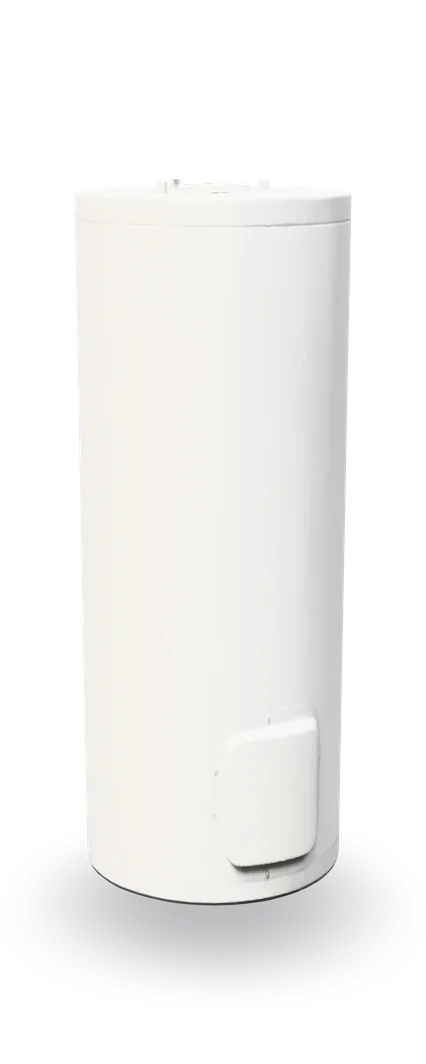
Water heater tank leaking or rusted? What it means and who to call
Most water heater leaks are not the tank. Rule out the fittings and valves first. If the steel tank itself is leaking, though, there is no repair, and the heater needs replacing.
- Who fixes it
- A licensed pro
- Typical pro cost
- $900–$2,000
- Typical 40 to 50 gallon replacement. Gas venting or code upgrades cost more
There is no repair for a leaking tank. The job is replacing the whole heater, which on a gas unit means gas line and venting work. That is for a qualified pro.
What it does
What the tank does
Gas and electric tank water heaters. Inside the painted outer jacket is a steel tank that holds the water under pressure. Insulation sits between the two to keep the heat in.
The tank is protected from the inside by the anode rod, which corrodes so the steel does not.
The temperature and pressure relief valve near the top protects the tank by letting water out if the temperature or pressure gets too high.
Why it fails
Once the anode is used up, the steel tank starts to rust from the inside.
Sediment and rust at the bottom of the tank can eventually eat through the steel. A leak from the bottom of the tank often means the tank has failed.
Age is the big one. A typical tank water heater lasts about 8 to 12 years.
Symptoms
Signs the tank is failing
Water under the tank with every fitting dry
The pipe connections, the relief valve, the drain valve and any element covers are all dry, but water still pools under the heater. That points at the tank.
Full diagnosisRust on the bottom or around the base
Rust stains or flakes at the bottom of the heater, together with water, usually mean the steel tank has corroded through.
Full diagnosisA drip that is not condensation
A gas heater full of cold water can drip and sizzle while it heats, then stop once it is hot. Water that keeps coming on a hot tank is a real leak.
Full diagnosisAn old heater
A heater past about 8 to 12 years old with any sign of rust or seepage is near the end of its life.
Safety first
Stay safe until it is fixed
- 1
Power or gas off
Electric heater: turn off its breaker. Gas heater: turn the control knob to OFF as the label shows. If you smell gas, leave the house and call your gas utility from outside.
- 2
Close the cold supply
Close the cold water shutoff on the pipe going into the top of the tank to stop more water reaching the leak.
- 3
Mind the hot water
Water from a leaking tank can be hot enough to scald. Keep people and pets away from the puddle.
What a pro does
What to expect from the service call
- Dry everything and trace the water, checking the pipe connections on top, the relief valve and its discharge pipe, the drain valve and, on electric heaters, the element gaskets.
- On a gas heater, rule out condensation from a cold tank before blaming the tank.
- If the water really is coming from the tank, confirm the heater cannot be repaired and quote a replacement.
- Drain and remove the old heater, set a new one sized for the home, reconnect the water, power or gas and venting, and check everything for leaks.
Know your limits
When to call a pro
Stop and call a pro if
- Water is coming from the tank itself, or from under the jacket with every fitting dry.
- You see rust at the bottom of the heater along with water.
- A gas heater keeps dripping long after the tank is hot.
- A gas heater is leaking near the burner or the gas line.
- The leak is bigger than a drip. Shut off the cold supply and the power or gas first.
FAQ
Tank and outer jacket questions
Can a leaking water heater tank be repaired?
No. Once the steel tank has rusted through, it cannot be patched or repaired. The heater has to be replaced.
Many leaks are not the tank, though. Check our leaking water heater guide first.
How do I know it is the tank and not a valve?
Shut off the power or gas and the cold supply, dry everything, then check each fitting with a dry paper towel. Water at the relief valve or the drain valve is a valve problem you can often fix. Water with every fitting dry points at the tank.
My new gas water heater drips when it starts. Is the tank leaking?
Probably not. A gas heater full of cold water makes condensation that can drip and sizzle on the burner while it heats. It should stop once the tank is hot. If it keeps going, have a pro look.
How much does it cost to replace a leaking water heater?
Typically about $900 to $2,000 installed for a 40 to 50 gallon tank heater. Gas units, venting changes and code upgrades can cost more.
Related
Keep going
- SymptomWater heater leakingWater on the floor or dripping down the tank. Shut off the power or gas and the cold supply, dry everything, then trace the water to its source: a valve, a fitting, an element gasket, or the tank itself.Open guide
- SymptomWater heater rumbling or poppingA rumbling, popping or crackling tank usually means sediment has built up on the bottom. On electric heaters, scale on the lower element can do it too. Flushing the tank is the usual fix.Open guide
- Water heater partTemperature and pressure relief valveThe T&P relief valve opens to let water out if the tank gets too hot or the pressure gets too high. Gas and electric heaters both have one. Test it once a year by lifting its lever.Open guide
- Water heater partDrain valve and tank flushThe drain valve near the bottom of the tank lets you empty it and flush out sediment. Manufacturers suggest flushing gas and electric tanks about once a year, more often with hard water.Open guide
- Water heater partAnode rodThe anode rod wears away on purpose so the steel tank does not rust. Gas and electric tank heaters both have one. Check it every few years and replace it before it is down to the wire.Open guide
Get the next fix before it breaks
A short email when the seasons turn: filters to change, detector batteries to check, and new repair guides. No spam, unsubscribe any time.
We send it with Kit. Privacy