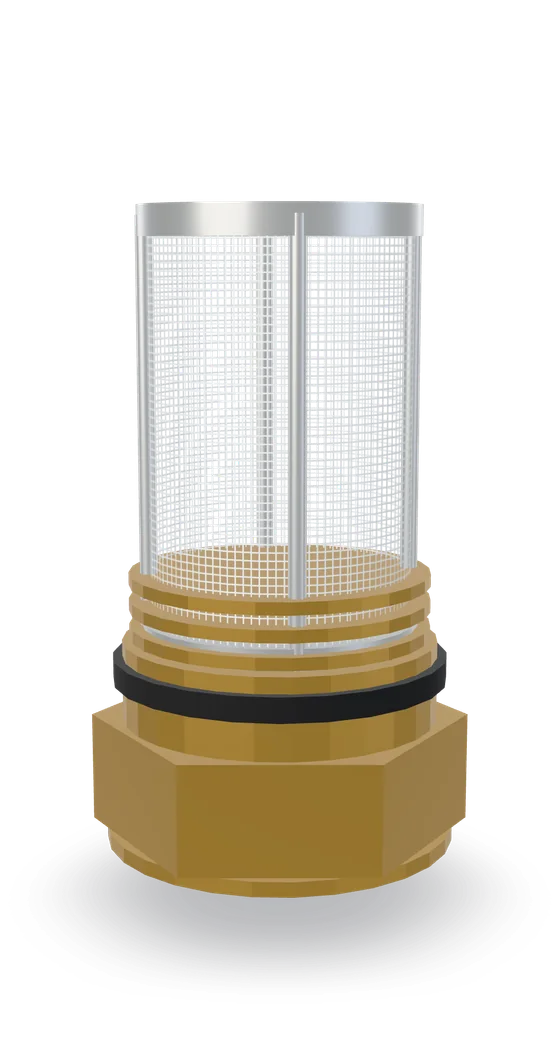
How to clean a tankless water heater inlet filter
Good news: this is a 15-minute job with no tools on most heaters. A clogged screen is one of the most common reasons a tankless heater loses flow or will not fire, and it costs nothing to check.
- Difficulty
- Anyone can do it
- Time
- 15–30 min
- Typical part cost
- $5–$30Pro: $45–$150
- Tools
- 2See the list
Two valves and a screen you unscrew by hand on most heaters. Expect a little water to come out, and that is about the only mess.
What it does
What the inlet filter does
Every drop of water that goes into a tankless heater passes through a small mesh screen at the cold water inlet, usually at the bottom of the unit where the cold line connects.
It catches sand, pipe scale and other grit so they do not jam the flow sensor or settle in the heat exchanger or heating chambers.
Why it fails
A screen does not wear out. It fills up. Grit from the water main, flakes of scale and debris after plumbing work collect on the mesh until water has trouble getting through.
A tankless heater only fires when enough water flows through it. A packed screen can cut the flow below that minimum, so the heater stays off at a faucet that used to work fine.
Now and then a screen corrodes, tears or goes missing. That one needs replacing, not cleaning.
Symptoms
Signs of a bad inlet filter
Weak hot and cold flow
If both hot and cold are weak at taps near the heater, look upstream: the inlet screen, a whole-house filter or the supply valve.
Full diagnosisNo hot water at low flow
The heater fires with a faucet wide open but cuts out, or never starts, at a gentle flow. A restriction is holding the flow under the heater's minimum.
Full diagnosisA flow error code
A code that points to water flow is often a dirty inlet screen, not a failed sensor. Clean the screen before you buy anything.
Full diagnosisTemperature swings
Clogged filters are one of the reasons the water keeps going hot, then cooler, then hot again.
Full diagnosis
How to test it
Test the inlet filter before you buy
- Turn the power off and close the isolation valves, as in the steps below.
- Unscrew the screen from the cold water inlet and hold it up to the light.
- Good
- The mesh is clear and you can see through it. The screen is not your problem. Rinse it anyway and put it back.
- Bad
- Grit, sand or white scale is packed into the mesh. Clean it. If the mesh is torn, crushed or corroded, replace the screen.
Safety first
Before you touch anything
- 1
Power off
Gas units: unplug the heater or turn off its breaker. Electric units: turn off every breaker that feeds the heater. Large electric tankless units often have two or more.
- 2
Gas units: close the gas shutoff
Turn the quarter-turn shutoff on the gas line so the handle sits across the pipe. You do not touch any other gas part. Electric units skip this.
- 3
Close the isolation valves
Close the cold isolation valve under the heater, and the hot one too, before you loosen the screen. Otherwise water under full house pressure comes out of the opening.
Tools you'll need
Grab these first
Tool and part links are affiliate links. We may earn a commission at no extra cost to you, and it never changes what we tell you to check first. How this works
- Stiff nylon brushScrubs grit and scale out of the fine mesh without tearing it. An old toothbrush works well.Typically $5–$12Shop this tool
- Bucket5 galCatches the water left in the heater when the screen comes out.Typically $4–$10Shop this tool
- Tongue-and-groove pliers10 in.OptionalOnly if the screen's cap will not turn by hand. Grip gently and do not crush it.Typically $12–$28Shop this tool
- HeadlampOptionalThe screen sits under the heater, often in a dim closet or garage.Typically $12–$30Shop this tool
Step by step
How to clean the inlet filter screen
- 1
Turn off the power
Gas unit: unplug its power cord, or turn off its breaker if it is wired in. Electric unit: turn off every breaker that feeds it.
- 2
Gas units: close the gas shutoff
Turn the quarter-turn handle on the gas line under the heater so it sits across the pipe. Electric unit? Skip this step.
Careful. That handle is the only gas part you touch. Never loosen a gas fitting.
- 3
Close the isolation valves and relieve the pressure
Close the cold isolation valve on the line into the heater, and the hot one on the line out.
Relieve the pressure trapped inside: open a hot faucet in the house, or on models that have them, open the drain plugs or the service ports over a bucket.
- 4
Unscrew the inlet screen
Find the screen at the cold water inlet, where the cold line connects to the bottom of the heater. It has a small cap or plug you can grip.
Hold the bucket under it and unscrew it counterclockwise. A little water will run out.
- 5
Rinse and brush the screen
Rinse the screen under running water. Scrub the mesh gently with a soft brush or an old toothbrush until you can see through it everywhere.
If the mesh is torn, crushed or badly corroded, or the screen was missing, get a new one made for your model.
Tip. Lots of white scale on the screen? The heat exchanger or heating chambers likely have it too. A descaling flush is worth doing.
Buy the part
Inlet filter screen
Opens Amazon in a new tab. Where’s my model number?
What to look for
- A screen made for your heater's model. They differ in size and thread from one heater to the next, so use the model number.
- Only buy one if yours is torn, crushed, corroded or missing. A dirty screen just needs a rinse.
Inlet screens are model-specific and inexpensive, so match yours by model number rather than buying a generic one.
- 6
Screw the screen back in, hand tight
Thread the screen back into the inlet and turn it clockwise by hand until it is snug. Do not overtighten it.
- 7
Open the water and check for drips
Close any drain plugs or service ports you opened. Slowly open the cold and hot isolation valves all the way.
Look at the screen's cap for drips. If it weeps, turn it a little more by hand.
Let a hot faucet run until the flow is steady and the air is out.
Careful. Electric unit: the breakers stay off until the water runs steady with no sputtering, usually 3 to 5 minutes. Powering an element with air in its chamber can burn it out.
- 8
Gas and power back on
Gas unit: turn the gas shutoff handle back in line with the pipe. Then plug the heater in or turn its breakers back on.
Open a hot tap and check that the heater fires and the flow is back to normal.
Buy the part
Get the right replacement
Buy the part
Inlet filter screen
Opens Amazon in a new tab. Where’s my model number?
What to look for
- A screen made for your heater's model. They differ in size and thread from one heater to the next, so use the model number.
- Only buy one if yours is torn, crushed, corroded or missing. A dirty screen just needs a rinse.
Inlet screens are model-specific and inexpensive, so match yours by model number rather than buying a generic one.
Know your limits
When to call a pro
Stop and call a pro if
- The screen is clean and the flow is still weak, or the heater still will not fire. The flow sensor or scale inside the heater may be the cause.
- The screen's cap is stuck, cross-threaded or cracked, or it leaks after you put it back.
- An isolation valve will not close fully, so water keeps running from the inlet.
- The screen keeps clogging within weeks. Grit or scale in your water supply may need a whole-house filter or treatment.
FAQ
Inlet filter screen questions
How often should I clean the inlet filter?
Makers differ. One folds it into yearly maintenance and says to do it more often with hard water, another counts hours of use. Your manual has the schedule. As a rule, clean it at least once a year, every time you flush the heater, and any time the hot water flow drops.
Can a dirty filter stop the heater from working?
Yes. A tankless heater needs a minimum flow before it fires. A clogged screen can keep the flow under that minimum, so the heater stays off, especially at a gentle faucet.
My heater shows a flow error. Is the flow sensor bad?
Maybe not. Flow codes are often caused by a dirty inlet screen. Clean it, make sure the cold isolation valve is fully open, and see if the code comes back before you replace the flow sensor.
Do I need to drain the heater first?
No. Close the isolation valves and relieve the pressure. Only the little water in the heater comes out, which a bucket catches. Some models have drain plugs you open first to let it out.
Related
Keep going
- SymptomTankless water heater: no hot water at low flowTankless gas and electric water heaters only. Hot water works at full flow but not at a trickle or at one low-flow fixture. The flow is below the heater's minimum activation flow, or something is cutting flow.Open guide
- SymptomTankless water heater showing an error codeTankless gas and electric water heaters only. The display shows a code and the hot water stops or comes and goes. Note the code, look it up in your manual, then check gas, water valves, the inlet filter and scale.Open guide
- SymptomTankless water heater goes hot, cold, then hot againTankless gas and electric water heaters only. The shower runs hot, turns cold for a few seconds, then hot again, often after you shut the water off and turn it back on. Check flow, the fixture and the filter.Open guide
- Water heater partDescaling flushTankless gas and electric water heaters only. Hard water leaves scale inside the heat exchanger or heating chambers. A yearly flush with a pump and descaling solution through the isolation valves' service ports dissolves it.Open guide
- Water heater partFlow sensorTankless gas and electric water heaters only. The flow sensor is a little turbine on the cold inlet that tells the control board water is moving. When it sticks or fails, the heater never fires, or cuts out mid-shower.Open guide
Get the next fix before it breaks
A short email when the seasons turn: filters to change, detector batteries to check, and new repair guides. No spam, unsubscribe any time.
We send it with Kit. Privacy