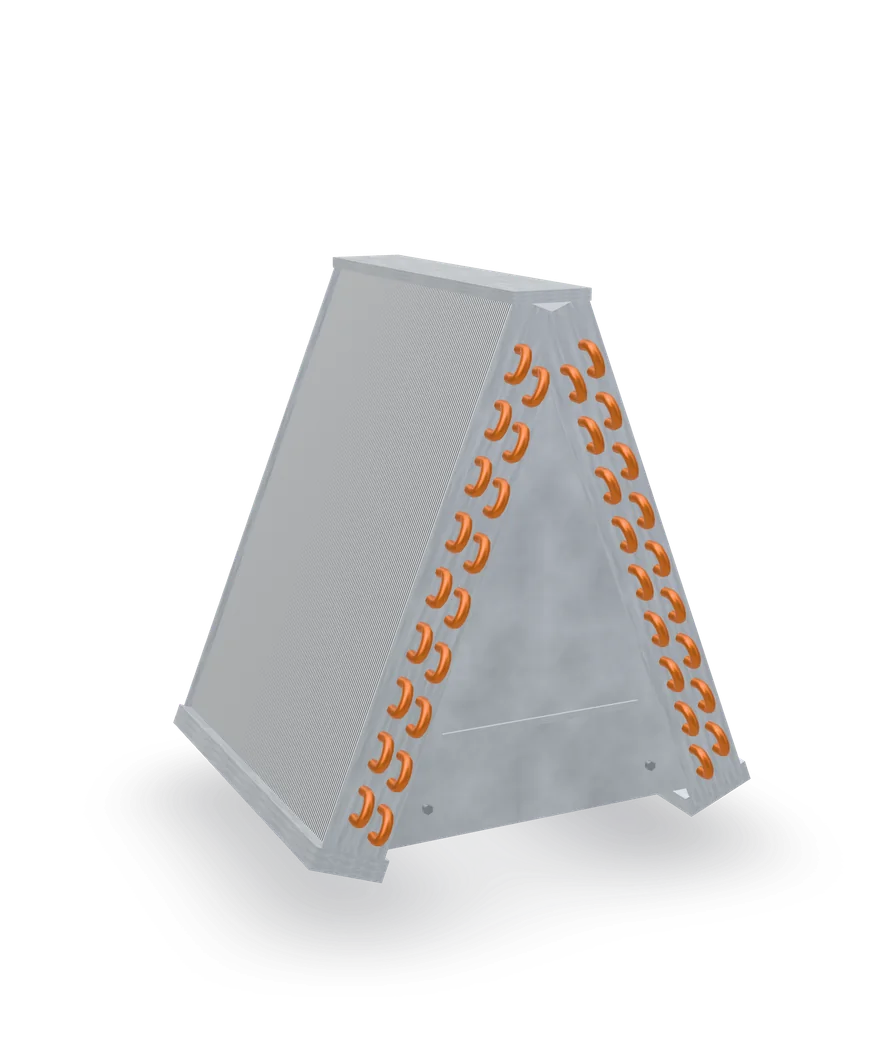
Air handler evaporator coil: frozen, dirty or leaking, and when to call a pro
The coil is the cold heart of the air handler. You can keep it clean with a fresh filter and thaw it safely when it ices up. Cleaning it, finding a leak and anything with refrigerant is a pro's job.
- Who fixes it
- A licensed pro
- Typical pro cost
- $100–$1,600
- Cleaning about $100 to $400, leak repair about $250 to $1,600
Licensed work. Finding and repairing a leak and recharging takes EPA Section 608 certification, gauges and recovery equipment. A proper cleaning means working around the refrigerant tubing and soft fins inside the coil compartment.
What it does
What the coil does
The evaporator coil is the indoor half of the heat pump or air conditioner. Refrigerant runs through its copper tubes, and thin metal fins spread the cold across the airstream.
As house air passes through, the coil takes heat and moisture out of it. The moisture condenses on the fins and drips into the drain pan under the coil, then runs out the drain line.
The refrigerant inside is in a sealed loop with the outdoor unit. It is never meant to be opened or topped up during the system's life.
Why it fails
Dirt is the everyday problem. A filter left too long, or none at all, lets dust coat the fins. The coil passes less air and can start to freeze.
Ice builds up when too little air crosses the coil, usually from a clogged filter or blocked vents, or when the system is low on refrigerant.
Copper coils can develop tiny pinhole leaks from corrosion. Chemicals in household air collect in the moisture on the coil and slowly eat through the tubing. It happens on every brand.
Symptoms
Signs the coil is failing
Ice on the coil or the lines
Frost or ice on the coil, or on the copper line where it enters the air handler, and weak airflow from the vents.
Full diagnosisWeak airflow with a clean filter
The blower runs, the filter is new and the vents are open, but little air comes out. A coil caked with dust may be blocking it.
Full diagnosisRuns longer, cools less
The system runs much longer than it used to and the house never quite cools. A slow leak can do this.
Oily spots or a hiss
Oily residue on the coil or its fittings, or a hissing sound from the air handler, points to a refrigerant leak.
Safety first
Stay safe until it is fixed
- 1
Iced up? Cooling off, fan on
Turn the system off at the thermostat and set the fan to On. The blower moves room air over the ice and thaws it, often in a few hours. Do not run the cooling to melt it.
- 2
Do not chip the ice
Never pick, scrape or chip ice off the coil. The fins and tubes are soft, and a punctured tube is a refrigerant leak.
- 3
Do not add refrigerant yourself
Federal rules prohibit knowingly releasing refrigerant and require an EPA-certified technician to open the system, add refrigerant or remove it.
What a pro does
What to expect from the service call
- Check the filter, the blower and the airflow first, since they cause the same freeze and the same weak air.
- Inspect the coil. If it is dirty, clean it in place with coil cleaner, or take it out for a deeper cleaning, and clean the drain pan under it.
- Connect gauges and measure the system's pressures and temperatures to judge the refrigerant charge.
- If it is low, find the leak with a detector or bubbles. Coil leak repairs cost close to a new coil, so weigh repair against replacement.
- Recover any refrigerant, repair or replace the coil, pull a vacuum and recharge to the manufacturer's specification.
Know your limits
When to call a pro
Stop and call a pro if
- The coil freezes again after it has thawed and the filter is clean.
- You see oily spots on the coil or fittings, or hear a hiss.
- Airflow stays weak with a new filter and open vents.
- Anyone suggests adding refrigerant without finding and fixing the leak.
FAQ
Evaporator coil questions
How do I thaw a frozen evaporator coil?
Turn the system off at the thermostat and set the fan to On. Light frost often clears in one to three hours. Heavy ice can take four to eight hours or more. Do not chip the ice or run the cooling. Change the filter while you wait. Our frozen coil guide walks through the causes.
Can I clean my evaporator coil myself?
The best thing you can do for the coil is a fresh air filter on schedule. That keeps the dust off it in the first place.
A real cleaning means opening the coil compartment and working around soft fins and refrigerant tubing. We leave that to a pro. In-place cleaning typically costs about $100 to $400.
Can a leaking evaporator coil be repaired?
Sometimes, but corrosion leaks are tiny and hard to find, and repairs often cost close to a new coil, about $250 to $1,600. A technician can tell you which makes sense for your system.
Why did my coil freeze in the middle of summer?
Not enough warm air is crossing it, usually from a clogged filter, a dirty coil or blocked vents, or the system is low on refrigerant. The filter is the first thing to check.
Related
Keep going
- SymptomAir handler coil frozen: ice on the evaporator coil or linesThe indoor coil has iced over, so little or no cool air reaches the vents. Turn the system off or to fan only and let it thaw. Then check the filter, the return grilles and the blower. If it keeps freezing, low refrigerant is a job for a certified pro.Open guide
- SymptomAir handler not blowing air: no airflow from the ventsThe blower inside the air handler is not moving air. A humming motor that never spins points to the run capacitor. Silence points to power, the blower door switch, a tripped float switch, the board or the motor. Ice on the coil can also block the air.Open guide
- SymptomWater in the air handler drain pan: pan full or system shut offWater is backing up in the drain pan under the coil, or in the pan under the unit, and the system may have shut itself off. A clogged condensate drain is the usual cause. A stuck float switch, a coil that froze and melted, or a cracked pan are the others.Open guide
- Air handler partRefrigerant linesThe refrigerant lines, or line set, are the two copper tubes between the air handler's coil and the outdoor unit. A leak at a joint or in a line leaves the system low on refrigerant. Damaged insulation makes the lines sweat. Repairs need an EPA-certified technician.Open guide
- Air handler partAir filterFor heat pump and central air handlers, including units with electric heat strips. The filter cleans the air before it reaches the blower and coil. A clogged one chokes airflow, which can freeze the coil in summer and trip the heat strips in winter. Check it monthly.Open guide
- Air handler partCondensate drain pan and lineFor heat pump and central air handlers, including units with electric heat strips. In cooling, the coil wrings water out of the air into a drain pan, and a pipe with a trap carries it away. When slime or debris blocks that pipe, the pan fills and a float switch shuts the system off.Open guide
Get the next fix before it breaks
A short email when the seasons turn: filters to change, detector batteries to check, and new repair guides. No spam, unsubscribe any time.
We send it with Kit. Privacy