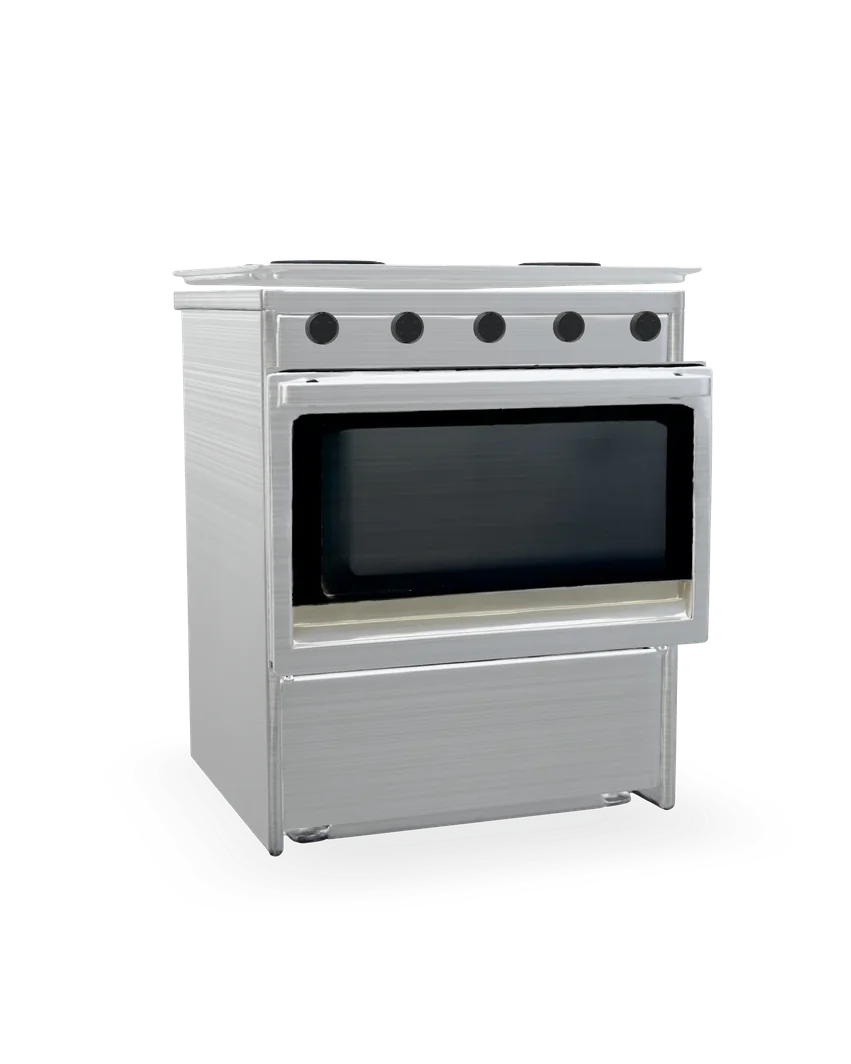
Oven runs too hot, too cold or heats unevenly
Before you buy anything, measure. An oven thermometer and twenty minutes tell you whether it is a calibration tweak or a failing part.
Check these first
Five-minute checks, no tools
Measure it properly
Oven thermometer on the middle rack, set 350°F, wait for preheat, then average several readings over 20 minutes without opening the door much.
Door closes flat
Check the door shuts evenly and the gasket around it is intact. Heat escaping at the top means a poor seal.
Watch the heat come on
On electric, the whole bake element should glow evenly. On gas, the burner should light within about a minute of the igniter glowing.
Likely causes
Ranked by how often they are the problem
- 1DIY fix
Temperature sensor
Big or changing errors, or swings well above and below the setting. It should read about 1,080 Ω at room temperature.
Fix the temperature sensor15–30 min$15–$35 - 2DIY fix
Weak igniter (gas)
Gas oven runs cool and preheats slowly because the burner takes a long time to light each cycle.
Fix the oven igniter30 min–1 hr$15–$40 - 3DIY fix
Bake element (electric)
Only part of the element glows, so the oven heats slowly and unevenly.
Fix the bake element15–45 min$20–$60 - 4DIY fix
Door not sealing
A bent hinge or broken spring keeps the door from closing flat, so heat leaks out.
Fix the door hinges15–45 min$80–$300 - 5DIY fix
Control board
The sensor reads correctly but the oven still misses the set temperature by a wide margin.
Fix the control board30 min–1 hr$90–$400
What's happening
What your range is doing
Oven temperatures swing a little around the set point as the heat cycles on and off, so a single reading can mislead. Measure with an oven thermometer on the middle rack at 350°F and average several readings.
If the average is steadily off by a modest amount, most electronic controls let you adjust it by up to about 35°F, as your manual describes.
Bigger errors point to parts: a sensor that has drifted, a bake element with a dead section, a gas igniter that takes so long to light that the oven never catches up, or a door that lets heat out.
Know your limits
When to call a pro
Stop and call a pro if
- The oven runs far over temperature, or keeps heating after it is turned off. Turn off the breaker and call a pro.
- A gas oven lights late with a loud whoomp.
- The sensor and heating parts test good but the temperature is still far off.
FAQ
Common questions
How do I calibrate my oven?
Most electronic ovens have a temperature adjustment in the settings that moves the temperature up or down by up to about 35°F. The steps vary by model, so follow your owner's manual.
My oven is 50°F off. Can I just calibrate it?
That is more than most controls can correct. An error that big usually means a part is failing. Test the temperature sensor first.
Why does my oven thermometer show the temperature going up and down?
That is normal. The oven cycles its heat on and off around the set point. Average several readings instead of trusting one.
Related
Keep going
- SymptomOven not heatingThe oven will not heat, or barely warms. On an electric range the bake element is the usual cause, after the breaker. On a gas range a weak igniter is the most likely, after the gas supply. The sensor and the control come later.Open guide
- Range partOven temperature sensorThe temperature sensor is the thin probe on the oven's back wall. It tells the control how hot the oven is. When it drifts or fails, the oven runs too hot or too cool, or the control shows an error and stops heating.Open guide
- Range partGas oven igniterGas ranges only. The oven igniter glows to light the bake burner and, at the same time, opens the oven safety valve. A weak igniter still glows but cannot draw enough current to open the valve, so the oven heats slowly or not at all.Open guide
- Range partBake elementElectric ranges only. The bake element is the heating loop along the bottom of the oven. When it burns out, the oven heats slowly, unevenly or not at all on bake. It is usually two screws and two wires.Open guide
Get the next fix before it breaks
A short email when the seasons turn: filters to change, detector batteries to check, and new repair guides. No spam, unsubscribe any time.
We send it with Kit. Privacy