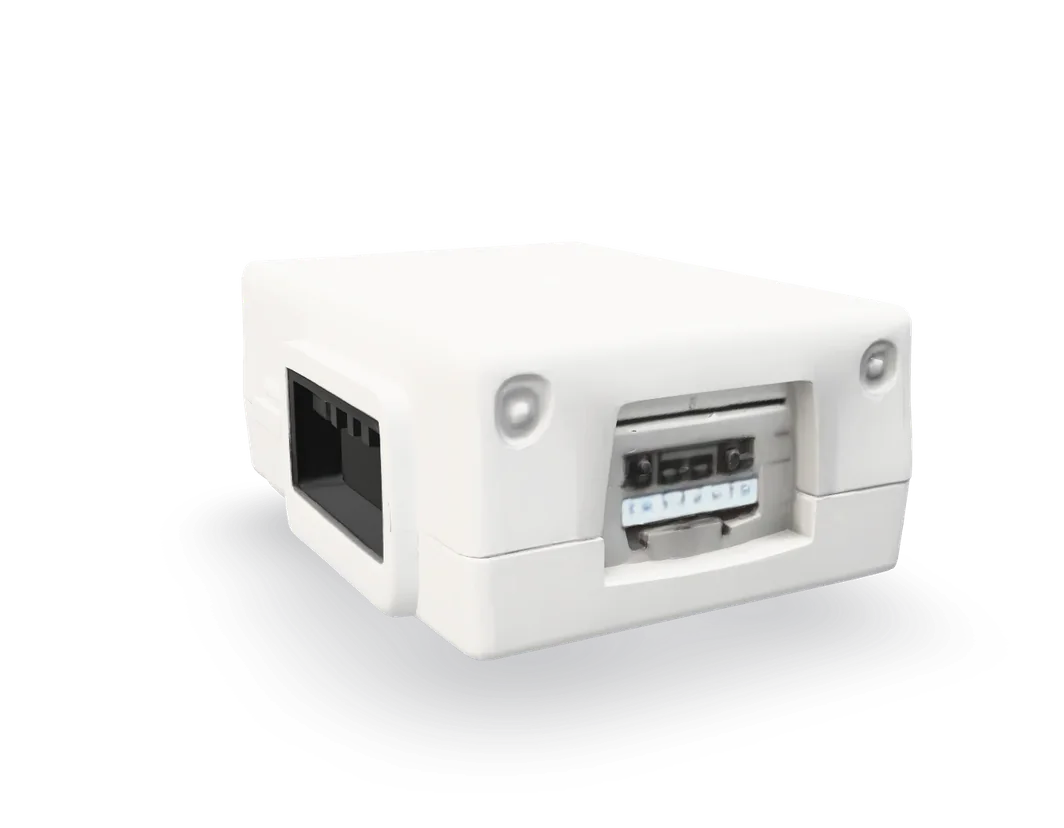
Front-load washer door lock replacement
If your front loader will not start, will not lock or will not let you open the door, this is the usual suspect. It is held by a few screws behind the rubber boot.
- Difficulty
- Easy
- Time
- 20–40 min
- Typical part cost
- $20–$130Pro: $100–$300
- Tools
- 2See the list
Peel back the front of the rubber boot, take out two or three screws, and swap a plug. The boot clamp is the fiddly part.
What it does
What the door lock does
The door lock sits in the front panel beside the door opening. When a cycle starts, a small solenoid or wax motor inside it pushes a pin into the door's hook, and you hear a click.
It also contains a switch that tells the control board the door is shut and locked. The washer will not fill, tumble or spin until it gets that signal.
At the end of the cycle, once the drum has stopped, the lock releases the door.
Why it fails
The switch contacts wear, or the solenoid or wax motor burns out. Then the washer cannot lock, cannot confirm it is locked, or cannot unlock.
The plastic hook on the door, called the strike, can crack or bend and stop catching the lock.
Pulling hard on a locked door can break the lock or the door hook.
Symptoms
Signs of a bad door lock
Will not start, door lock light blinks
The washer tries to lock, clicks or does not, then stops or shows a door lock error.
Full diagnosisStops mid-cycle
It starts, then pauses or stops during the cycle as the control loses the locked signal.
Full diagnosisDoor stays locked at the end
The cycle finished and the drum is still, but the door will not release.
Full diagnosisBroken door hook
Look at the plastic hook on the door. A cracked or bent hook cannot catch the lock, even if the lock is fine.
How to test it
Test the door lock before you buy
- Close the door firmly. Make sure no clothing is caught in the seal.
- Look at the hook on the door. It should be straight, unbroken and line up with the slot in the front panel.
- Unplug the washer for about five minutes, plug it back in and try a short cycle.
- Good
- If the washer now locks and starts, it was a glitch or a door that was not quite shut.
- Bad
- Still no lock, or the hook is damaged. A broken hook is a separate door part. A good hook points to the lock.
- Find the tech sheet for your washer, often inside the console or on the back. It shows which lock pins to test and what to expect.
- Unplug the washer and reach the lock as in steps 1 to 5 below. Unplug the lock.
- Follow the tech sheet's steps and measure across the switch pins it names. Some sheets have you lock the door with a cycle before you unplug.
A good lock switch typically reads
Near 0 Ω (beeps) when closed, as your tech sheet describes
Typical range. Check your part label or manual for the exact spec. Pin layouts and test steps differ a lot between brands. Without the tech sheet, skip this test and judge by the symptoms.
- Good
- Readings that match the tech sheet mean the switch works. A bad lock solenoid can still stop it locking, so if the washer still will not lock, replace the lock.
- Bad
- No continuity where the sheet says it should close means the switch has failed. Replace the lock.
Safety first
Before you touch anything
- 1
Unplug the washer
Pull the plug before you touch the lock or its wires. The lock is wired to the control board.
- 2
Make sure the tub is empty
If water is in the drum, drain it through the pump filter before you open a stuck door, or it will pour onto the floor.
Tools you'll need
Grab these first
Tool and part links are affiliate links. We may earn a commission at no extra cost to you, and it never changes what we tell you to check first. How this works
- Multi-bit screwdriverPhillips, flat, squarePries the boot clamp spring and removes Phillips lock screws.Typically $10–$25Shop this tool
- Torx driver bitsT15, T20, T25OptionalSome door locks use T20 Torx screws instead of Phillips.Typically $6–$15Shop this tool
- Putty knifeStiff, 1-1/2 in.Releases a door that is stuck locked, and helps tuck the boot back on.Typically $5–$12Shop this tool
- Digital multimeterΩ, V, µF, µAOptionalChecks the lock switch for continuity before you replace it.Typically $25–$60Shop this tool
Step by step
How to replace the door lock
- 1
Unplug and open the door
Pull the power plug.
If the door is stuck locked, first drain any water and make sure the drum has stopped. Then take off the top panel and reach down to the lock from above, or use a putty knife to work the latch free. Your manual may show an emergency release on your model.
- 2
Release the boot clamp
A wire spring clamp holds the front edge of the rubber boot to the cabinet. Find the spring, usually at the bottom or the side, and pry it out with a flat screwdriver until the clamp comes free.
You only need to loosen it around the lock side.
- 3
Peel back the boot
Pull the edge of the boot off the cabinet lip near the lock and tuck it inside the drum. Now you can see the screws that hold the lock.
- 4
Remove the lock screws
Take out the two or three screws beside the door opening. Hold the lock from behind with your other hand so it does not drop into the cabinet.
- 5
Unplug the lock
Ease the lock out through the gap behind the boot. Squeeze the tab on the wire plug and pull it free.
- 6
Fit the new lock
Check that the new lock matches the old one, then click the plug on until it locks.
Feed the lock back into place and put the screws in. Snug, not tight.
Buy the part
Door lock assembly
Opens Amazon in a new tab. Where’s my model number?
What to look for
- The part number on the old lock's label, or the part listed for your washer's model number.
- The same plug and the same screw positions.
- 7
Refit the boot and clamp
Stretch the boot back over the cabinet lip all the way around, with any drain holes at the bottom.
Start the clamp at the top and work it into its groove, then hook the spring last.
Tip. Holding the clamp in place with a couple of strips of tape while you work around makes this much easier.
- 8
Test it
Plug in and start a short cycle. You should hear the lock click and see the lock light come on.
Let the cycle finish. The door should release within a few minutes of the end. Some washers take up to about five minutes.
Buy the part
Get the right replacement
Buy the part
Door lock assembly
Opens Amazon in a new tab. Where’s my model number?
What to look for
- The part number on the old lock's label, or the part listed for your washer's model number.
- The same plug and the same screw positions.
Know your limits
When to call a pro
Stop and call a pro if
- A new lock does not fix it. The wiring harness or the control board may be at fault.
- The door is stuck locked with a full tub of water and you cannot drain it.
- The door hinge or the door itself is damaged and the door no longer lines up with the lock.
FAQ
Door lock assembly questions
How do I open a front-load washer that is stuck locked?
First wait up to about five minutes, since many washers finish draining before they unlock. Check the child lock is off. If water is inside, drain it through the pump filter. If it still will not open, unplug it and take off the top panel to reach the lock from above, or check your manual for an emergency release.
Can I bypass the door lock to finish a load?
No. The lock keeps the door shut while the drum spins and while water is above the door. Bypassing it risks injury and a flood.
Is the clicking at the start normal?
Yes. Many locks click as they lock and again as they release. No click and no lock light is the sign to look at.
Related
Keep going
- SymptomWasher door won't lock or unlockThe lock light blinks and the cycle will not start, or the door stays locked after the cycle. Check the door closes cleanly, drain any water, then test or replace the door lock.Open guide
- SymptomWasher won't startNothing happens when you press Start, or it lights up but will not begin. Power, the child lock or delay start, and the lid switch or door lock cause most of it.Open guide
- SymptomWasher won't spinThe clothes come out soaking, or the washer agitates but never spins. Check drainage, the lid switch or door lock, and the load first, then the belt or motor coupler.Open guide
- Washer partDoor boot sealThe rubber boot seals the front-load door to the tub. Soap and lint in its folds cause smells and small leaks, and a tear causes real ones. Clean it, check it, and replace it if it is torn.Open guide
- Washer partControl boardThe control board runs every step of the cycle and powers the pump, valve, lock and motor. It is the last part to suspect. When it is the cause, swap it plug by plug.Open guide
- Washer partDrain pumpThe drain pump pushes the water out at the end of each wash and rinse. Clean the filter first. If it still will not drain, test the pump and swap it.Open guide
Get the next fix before it breaks
A short email when the seasons turn: filters to change, detector batteries to check, and new repair guides. No spam, unsubscribe any time.
We send it with Kit. Privacy